Key takeaways
- Heat granularity: Six settings is workable; nine or ten is better. Sleep-onset warming and all-night maintenance heat are different jobs, and finer steps let you preheat aggressively then drop to a low simmer without overshooting into sweat territory.
- Auto-off range: Look for a spread rather than a single fixed shutoff. A 1-hour option covers pre-bed warming; a 10- or 12-hour ceiling suits anyone who genuinely cannot sleep without residual heat. Blankets stuck at 8 hours leave you cold at dawn, which is exactly when your body temperature bottoms out.
- Fabric pairing: Flannel conducts heat quickly and breathes reasonably well. Sherpa insulates and traps warmth longer. Dual-sided flannel-to-sherpa gives you a seasonal choice; single-sided flannel suits people who run warm or share a bed with a radiator of a partner.
- Certification and wire feel: ETL listing is the baseline for North American electrical safety, and FCC or OEKO-TEX marks signal additional testing. Run your palm across the blanket before first use — well-engineered heating elements should be barely perceptible, not ridge-like.
- Washability and controller design: Confirm the controller detaches and the blanket is machine washable. Then check whether the controller has memory function and a backlit display, since fumbling with an unlit dial at 2 a.m. defeats the purpose entirely.
What's inside
Cold sleepers face a frustrating trade-off every winter. Crank the thermostat and you wake up dehydrated with a scratchy throat and a heating bill you’d rather not open. Pile on quilts and you get weight without much warmth, plus the shoulder-freeze that comes from blankets sliding sideways at 3 a.m. Neither approach addresses the real issue: the human body needs a cool room and a warm skin surface to fall asleep efficiently. Ambient heating gives you the opposite of that on both counts.
A twin heated blanket solves the problem at the source. It warms the microclimate directly around you — roughly the 62″ × 84″ envelope that actually matters — while the room stays in the 60–67°F range that supports the natural drop in core temperature at sleep onset. This guide covers what to look for in a twin-size heated blanket in 2026, including heat-level granularity, auto-off timers, fabric construction, and the safety certifications worth insisting on, followed by hands-on assessments of the models currently worth your money.
As an Amazon Associate we earn from qualifying purchases.


🛒 Best Price Today on Amazon
Prime members get fast, free shipping on everything above, plus member-only deals. New members get a 30-day free trial — cancel anytime.
How to Choose a Twin Heated Blanket (2026)
- Heat granularity: Six settings is workable; nine or ten is better. Sleep-onset warming and all-night maintenance heat are different jobs, and finer steps let you preheat aggressively then drop to a low simmer without overshooting into sweat territory.
- Auto-off range: Look for a spread rather than a single fixed shutoff. A 1-hour option covers pre-bed warming; a 10- or 12-hour ceiling suits anyone who genuinely cannot sleep without residual heat. Blankets stuck at 8 hours leave you cold at dawn, which is exactly when your body temperature bottoms out.
- Fabric pairing: Flannel conducts heat quickly and breathes reasonably well. Sherpa insulates and traps warmth longer. Dual-sided flannel-to-sherpa gives you a seasonal choice; single-sided flannel suits people who run warm or share a bed with a radiator of a partner.
- Certification and wire feel: ETL listing is the baseline for North American electrical safety, and FCC or OEKO-TEX marks signal additional testing. Run your palm across the blanket before first use — well-engineered heating elements should be barely perceptible, not ridge-like.
- Washability and controller design: Confirm the controller detaches and the blanket is machine washable. Then check whether the controller has memory function and a backlit display, since fumbling with an unlit dial at 2 a.m. defeats the purpose entirely.
The Best Twin Heated Blankets of 2026, Reviewed
Westinghouse Heated Blanket Twin
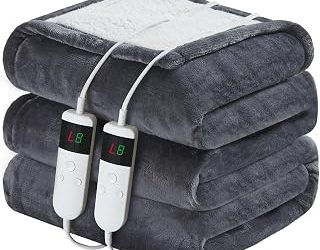
The strongest all-rounder here, thanks to a 1-to-12-hour auto-off range that accommodates both quick preheating and full-night use — a flexibility most competitors don’t match. The flannel-to-sherpa construction effectively gives you two blankets, letting you flip to the flannel face in shoulder season and the sherpa side in deep January.
Sealy Electric Blanket Twin, Sherpa
Sealy’s sherpa surface holds warmth notably well after the elements cycle down, which suits sleepers who want steady thermal mass rather than rapid response. Ten heat levels and a 1-to-12-hour timer put it functionally alongside the Westinghouse, with a plusher hand-feel that some will prefer and others will find too insulating.
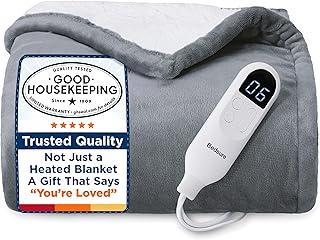
Bedsure Electric Blanket Twin with Preheat
The dedicated preheat function is genuinely useful from a sleep-hygiene standpoint: warming the bed before you get in shortens sleep latency without requiring the blanket to stay on all night. Six heat and six time settings are fewer than rivals offer, but the increments are sensibly spaced and the soft flannel is comfortable against bare skin.
Twin Heated Blanket, 9 Heat Levels, White
The standout choice for anyone sensitive to textiles or chemical finishes, with OEKO-TEX fabric alongside ETL and FCC certification. The memory function is an underrated convenience — it returns to your last setting instead of defaulting to a level you’ll have to correct half-asleep.
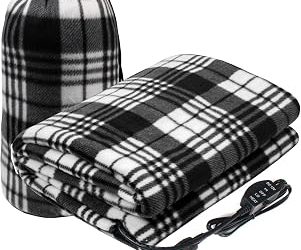
Homemate Heated Electric Blanket Twin, Flannel
Fast heat-up and ten levels at an accessible price point make this the sensible entry into heated bedding. The 8-hour auto-off ceiling is the main limitation, so it fits people who use warmth to fall asleep rather than those who need it until the alarm goes off.
Frequently Asked Questions
Is sleeping with a heated blanket on all night safe?
With an ETL-listed blanket that has overheat protection and a functioning auto-off timer, yes, for most healthy adults. Use a low maintenance setting rather than a high one, and never sleep on top of the blanket or tuck it tightly under a mattress, since compression traps heat around the elements.
Won’t extra warmth disrupt my sleep?
Only if you overdo it. Warming the skin while the room stays cool actually accelerates sleep onset by encouraging blood flow to the extremities and heat loss from the core. Problems arise when the blanket keeps your core warm all night, which is why dropping to a low setting after the first hour is the better protocol.
Who should avoid heated blankets?
Anyone with reduced sensation in the limbs — including people with diabetic neuropathy — plus infants, and anyone unable to operate the controller independently. Those with implanted medical devices or who are pregnant should ask a clinician first.
How long should one last?
Expect five to ten winters with reasonable care. Store it loosely rolled rather than sharply folded, wash it sparingly on a gentle cycle with the controller detached, and retire it immediately if you notice scorch marks, exposed wiring, or uneven hot spots.
Final Thoughts
For most buyers, the Westinghouse twin is the one to get — its 1-to-12-hour timer range and reversible flannel-to-sherpa build cover the widest set of sleeping habits without compromise. The Sealy sherpa is the better pick if you prioritize plushness and sustained warmth, while the Homemate flannel delivers surprising performance for anyone who mainly needs help falling asleep rather than staying warm until morning.