Key takeaways
- Heat transfer: Core temperature has to fall roughly a degree for sleep to begin. Loose-weave naturals like linen and cotton keep drawing heat away; finished leather feels cool on contact, then plateaus; faux leather traps fastest. Match the material to how warm your living room runs after sunset.
- Moisture handling: You perspire even in a twenty-minute nap. Breathable weaves release it; sealed surfaces leave you clammy and likely to surface early. If you want a leather look in a humid climate, favor perforated or semi-aniline finishes over heavily pigmented ones.
- Allergen load: Textured piles are pleasant to lie on and generous to dust mites. A removable, machine-washable cover is the single most useful feature for anyone with rhinitis or eczema, since a hot wash actually kills mites rather than redistributing them.
- Support architecture: Upholstery is the top two millimeters; your neck and lumbar position are set by the fill beneath it. Pocket springs or high-resilience foam over a solid hardwood frame resist the center trough that ruins side-lying alignment within a few years.
- Off-gassing window: New foam, adhesives, and polyurethane coatings release VOCs for weeks. Ventilate aggressively for the first fortnight, and treat “odor-free” marketing with suspicion — look for CertiPUR-US or OEKO-TEX documentation instead.
What's inside
Sofa shopping is usually framed as a decorating decision: pick a color, match the rug, move on. That framing misses something a sleep specialist notices immediately — the average household couch absorbs somewhere between three and ten hours of horizontal human being every week. Afternoon naps, the accidental 9 p.m. doze through a documentary, the sick day spent under a blanket. Whatever your sofa is upholstered in becomes a surface your skin, your thermoregulation, and your spine all have to negotiate.
This guide grades the upholstery materials worth buying in 2026 on the criteria that actually govern rest quality: how a surface sheds body heat, what it does with the moisture you lose during a nap, how much dander it holds, and how the structure underneath keeps you neutral when you’re side-lying rather than sitting upright. The picks are below, followed by a framework you can apply in any showroom.
As an Amazon Associate we earn from qualifying purchases.


How to Choose Sofa Materials (2026)
- Heat transfer: Core temperature has to fall roughly a degree for sleep to begin. Loose-weave naturals like linen and cotton keep drawing heat away; finished leather feels cool on contact, then plateaus; faux leather traps fastest. Match the material to how warm your living room runs after sunset.
- Moisture handling: You perspire even in a twenty-minute nap. Breathable weaves release it; sealed surfaces leave you clammy and likely to surface early. If you want a leather look in a humid climate, favor perforated or semi-aniline finishes over heavily pigmented ones.
- Allergen load: Textured piles are pleasant to lie on and generous to dust mites. A removable, machine-washable cover is the single most useful feature for anyone with rhinitis or eczema, since a hot wash actually kills mites rather than redistributing them.
- Support architecture: Upholstery is the top two millimeters; your neck and lumbar position are set by the fill beneath it. Pocket springs or high-resilience foam over a solid hardwood frame resist the center trough that ruins side-lying alignment within a few years.
- Off-gassing window: New foam, adhesives, and polyurethane coatings release VOCs for weeks. Ventilate aggressively for the first fortnight, and treat “odor-free” marketing with suspicion — look for CertiPUR-US or OEKO-TEX documentation instead.
The Best Sofa Materials (2026) Reviewed
Valencia Artisan Full Leather Sofa, 88″
Full Italian Nappa is the one leather that genuinely improves under skin contact: it stays supple, breathes far better than pigmented splits, and equalizes with room temperature instead of clinging. At 88 inches over a solid wood frame it’s a real nap platform, though the cognac finish will lighten wherever you habitually lie.
85″ Natural Linen 3-Seat Sofa
Linen is the thermoregulation benchmark — high air permeability and a rate of moisture release no synthetic matches, which makes it the right call if you nap hot or live somewhere humid. The removable cover and spring cushions keep it launderable and stop it flattening under repeated horizontal use.
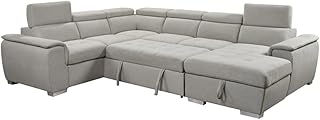
EASE MOOSE Modular L-Shaped Sectional
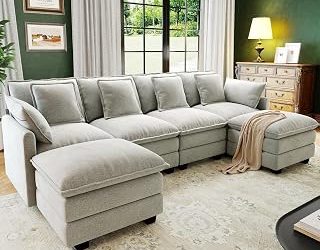
Faux leather runs warmer than hide, but this configuration earns its spot in households where scratch resistance and wipe-clean hygiene outrank breathability — pets on the furniture, in other words. The wide, deep seats give you enough platform to lie fully on your side, and removable covers solve the usual faux-leather cleaning headache.
DOPEDIO 71″ Chenille Loveseat
Chenille’s pile holds a thin insulating layer of air, which is precisely what you want for a cool-room evening doze and precisely what you don’t want in August. For small apartments it’s the most comforting surface here, and pocket springs on a hardwood frame keep a compact footprint from sagging through the middle.
Easy-Going Reversible Couch Cover, X-Large
The cheapest sleep upgrade on this list: a water-resistant, washable layer that lets you strip and launder the surface you actually breathe against every couple of weeks. Reversibility gives you a warmer face and a cooler one — a crude but effective way to seasonally tune a sofa you have no intention of replacing.
Frequently Asked Questions
Is leather or fabric better for napping?
Fabric, for most sleepers. Leather feels cool initially because it conducts heat away quickly, then saturates and holds it, while woven naturals keep moving air and vapor for the whole nap. Leather wins if you have significant dust-mite allergy, since there’s no pile to colonize.
Do removable covers reduce breathability?
Cotton and poly-blend covers add negligible resistance. Waterproof-backed protectors are a different story — the membrane blocks vapor transfer, so deploy them where pets or spills justify the trade-off and expect to sleep warmer.
Which upholstery is best for allergies?
Smooth, non-porous surfaces first: real and quality faux leather hold the least dander. Tightly woven linen with a washable cover is a close second. Chenille and velvet demand weekly HEPA vacuuming to stay comparable.
How long before a new sofa is safe to sleep on?
Allow two to four weeks with the room ventilated. VOC emissions peak in the first several days and decay sharply after that; if a chemical smell persists past a month, that’s a manufacturing red flag, not a break-in period.
Final Thoughts
If your sofa doubles as a sleep surface, the 85″ Natural Linen 3-Seat is the most sleep-literate buy here — breathable, washable, and properly sprung. Step up and the Valencia Artisan Nappa leather gives you a surface still conditioning to your body fifteen years from now; step down and the HULALA HOME 84″ faux leather three-seater, or an Easy-Going reversible cover over what you already own, captures most of the benefit for a fraction of the outlay.