Key takeaways
- Seat depth over seat count: Anything under about 38 inches deep forces a curled, side-lying posture with the shoulder jammed against the backrest. Deep-seat designs in the 40-inch range let an adult lie supine with the lumbar curve supported — the difference between a nap and a neck injury.
- Fill density and recovery: Ultra-plush foam feels wonderful in the showroom and bottoms out under a sleeping adult by month six. Look for high-resilience foam cores rather than pure fiber fill, and expect a good cushion to spring back within a few seconds of standing up.
- Fabric thermoregulation: Core body temperature has to drop roughly one to two degrees for sleep to consolidate. Corduroy, chenille, and open-weave blends vent that heat; tightly sealed velvet and faux leather trap it, which is why kids wake up damp on them.
- Removable, washable covers: Anything slept on collects skin cells, and skin cells feed dust mites — a leading indoor trigger for the nighttime congestion that fragments children’s sleep. Zip-off covers you can wash quarterly are a health feature, not a convenience feature.
- Modularity and real measurements: Confirm at least one configuration gives you a continuous 72-inch flat run. Then measure doorways and stairwells — boneless modular builds ship in manageable pieces, which matters more than most buyers expect.
What's inside
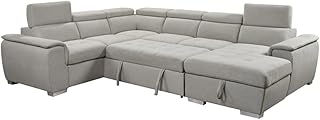
A family sectional lives a double life. From breakfast cartoons to dinner it is seating; by nine at night it becomes a sleep surface. A toddler fades halfway through a movie, a teenager migrates downstairs at 2 a.m., a partner rides out a head cold, a cousin stays the weekend. Most people buy a sofa by looking at it. Almost nobody lies down on it first — which is how households end up with a handsome piece of furniture that quietly generates stiff necks, night sweats, and 3 a.m. wake-ups.
I assess furniture the way I’d assess a mattress: pressure distribution, foam recovery, surface temperature, and how realistically it can be kept clean. The models below are oversized modular “cloud” sectionals — the category that has become the most-used unofficial bed in the American home — reviewed for seat depth, fill support, fabric breathability, and how well each one reconfigures into a flat, adult-length place to genuinely rest.
As an Amazon Associate we earn from qualifying purchases.



How to Choose a Sectional Sofa For Families (2026)
- Seat depth over seat count: Anything under about 38 inches deep forces a curled, side-lying posture with the shoulder jammed against the backrest. Deep-seat designs in the 40-inch range let an adult lie supine with the lumbar curve supported — the difference between a nap and a neck injury.
- Fill density and recovery: Ultra-plush foam feels wonderful in the showroom and bottoms out under a sleeping adult by month six. Look for high-resilience foam cores rather than pure fiber fill, and expect a good cushion to spring back within a few seconds of standing up.
- Fabric thermoregulation: Core body temperature has to drop roughly one to two degrees for sleep to consolidate. Corduroy, chenille, and open-weave blends vent that heat; tightly sealed velvet and faux leather trap it, which is why kids wake up damp on them.
- Removable, washable covers: Anything slept on collects skin cells, and skin cells feed dust mites — a leading indoor trigger for the nighttime congestion that fragments children’s sleep. Zip-off covers you can wash quarterly are a health feature, not a convenience feature.
- Modularity and real measurements: Confirm at least one configuration gives you a continuous 72-inch flat run. Then measure doorways and stairwells — boneless modular builds ship in manageable pieces, which matters more than most buyers expect.
The Best Sectional Sofas For Families (2026) Reviewed
107″ U-Shaped Modular Sectional with 2 Ottomans (Light Grey)
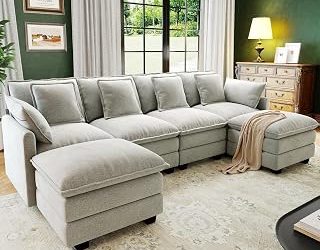
The U-shape is the most underrated sleep layout available: two people can stretch out on opposite arms without disturbing each other, and the ottomans close the gap into a platform. Six washable pillows and a pale, light-reflecting grey make it the easiest pick to maintain in a household with young kids.
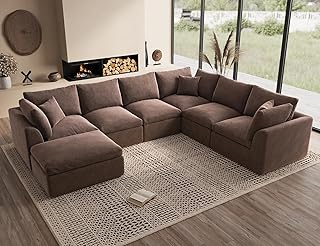
ohllob Oversized Cloud Couch, 7-Seater
Genuinely boneless construction means the fill conforms rather than resists, which suits side sleepers and anyone with hip or shoulder pressure points. The coffee brown finish hides the inevitable, and the seven-seat footprint means nobody gets displaced when the whole family piles on.
139.4″ Oversized U-Shaped Sectional, 8-Seater (Black)
This is the choice for large or blended families and frequent hosts — two chaise sections plus two middle seats create multiple independent sleep zones. The plush corduroy is the standout here, breathing far better than the velvet finishes typical at this size.
HOOOWOOO 8-Piece Modular Sectional (Black Velvet Corduroy)
At 164 by 66 inches with eight rearrangeable pieces, this is the most adaptable option on the list; reconfigure it into a guest bed on Friday and back into an L-shape on Sunday. Velvet corduroy splits the difference between softness and airflow.
URRED 87″ L-Shaped Modular Sectional (Gray)
The right answer for apartments and smaller living rooms, where an oversized sectional would crowd the walkways and make the room feel agitating rather than restful. Deep seats and a movable ottoman still deliver a legitimate nap surface in a compact footprint.
Frequently Asked Questions
Is sleeping on a sectional every night harmful?
Occasionally, no. Habitually, it’s worth examining. A sofa lacks edge support and consistent zoning, so the body compensates with micro-adjustments that fragment deep sleep. If someone in the house has defaulted to the couch nightly, the cause is usually snoring, temperature, or conflict — address that rather than upgrading the sofa.
What size does a family of five need?
Roughly 110 to 140 inches of total run gives five people space without shoulder contact. Below 100 inches, seating becomes a negotiation on movie nights.
How do I stop a cloud sofa from sagging?
Rotate and flip the seat cushions monthly, exactly as you would a mattress. Uneven compression, not poor materials, causes most premature sagging complaints.
Which fabric is best for kids with allergies?
Washable corduroy or chenille covers over foam cores. Wash covers at 60°C quarterly, and vacuum the frame with a HEPA attachment between washes.
Final Thoughts
For most families, the 107″ U-Shaped Modular Sectional offers the best balance of sleep-friendly geometry and easy upkeep. Larger households should size up to the 139.4″ 8-seater for its breathable corduroy and dual chaise zones, while apartment dwellers get everything essential from the URRED 87″ L-Shaped in a footprint that still leaves the room calm.