Key takeaways
- Tooth count: Match it to the cut, not the price tag. 32–40 teeth is right for rough-cutting bed rails and pine framing; 60 teeth handles plywood and MDF panels; 80 to 100+ teeth is where you go for show surfaces like headboard trim, mitered nightstand corners, and hardwood edge banding.
- Diameter and arbor: Confirm both before you buy. Most 10-inch sliding and compound miter saws use a 5/8-inch arbor, while 12-inch saws typically take a 1-inch arbor. A shim-and-hope approach here causes vibration and unsafe runout.
- Grind geometry: ATB (alternate top bevel) teeth score the wood fibers on each side of the cut, which is what suppresses tear-out in veneers and crossgrain. TCG (triple chip grind) is the flat-topped alternative built for aluminum, laminate, and dense composites — the wrong choice for solid wood, the right one for metal trim.
- Plate quality and RPM rating: Look for a tensioned, laser-cut plate with expansion slots and a stated max RPM at or above your saw’s no-load speed. Thin-kerf plates waste less material and load the motor less, but need a rigid body to stay flat under heat.
- Sets versus singles: If you build varied furniture, a two- or three-blade set costs less than buying separately and saves you from finishing a walnut miter with a framing blade because it’s the only one on the bench.
What's inside
Anyone who has built a bed frame, a floating nightstand, or a slatted headboard knows the moment where a project either earns its keep or quietly falls apart: the miter joint. A bedroom is the one room where flaws get studied at close range, night after night, from eighteen inches away on a pillow. Tear-out along a headboard edge, a corner that gapes by a hair, a rail that rocks because the cut drifted off square — these are the details that make a handmade bed read as “homemade” instead of “custom.” And almost always, the culprit isn’t the saw. It’s the blade that came bolted to it.
Stock miter saw blades are shipped as generalists, usually 24 to 40 teeth, tuned for framing lumber and jobsite speed. Ask one to slice through walnut veneer plywood or a strip of aluminum edging for a platform bed, and it will chip, burn, and fuzz the cut. This guide covers the blades worth upgrading to in 2026 for bedroom and case furniture work: what tooth counts actually deliver, how grind geometry changes the surface you get, and which options give you the cleanest possible edge without sending you to the sander for an hour. Below are our current recommendations, followed by a buying framework and reviews.
As an Amazon Associate we earn from qualifying purchases.


🛒 Best Price Today on Amazon
Prime members get fast, free shipping on everything above, plus member-only deals. New members get a 30-day free trial — cancel anytime.
How to Choose a Saw Blade For Miter Saw (2026)
- Tooth count: Match it to the cut, not the price tag. 32–40 teeth is right for rough-cutting bed rails and pine framing; 60 teeth handles plywood and MDF panels; 80 to 100+ teeth is where you go for show surfaces like headboard trim, mitered nightstand corners, and hardwood edge banding.
- Diameter and arbor: Confirm both before you buy. Most 10-inch sliding and compound miter saws use a 5/8-inch arbor, while 12-inch saws typically take a 1-inch arbor. A shim-and-hope approach here causes vibration and unsafe runout.
- Grind geometry: ATB (alternate top bevel) teeth score the wood fibers on each side of the cut, which is what suppresses tear-out in veneers and crossgrain. TCG (triple chip grind) is the flat-topped alternative built for aluminum, laminate, and dense composites — the wrong choice for solid wood, the right one for metal trim.
- Plate quality and RPM rating: Look for a tensioned, laser-cut plate with expansion slots and a stated max RPM at or above your saw’s no-load speed. Thin-kerf plates waste less material and load the motor less, but need a rigid body to stay flat under heat.
- Sets versus singles: If you build varied furniture, a two- or three-blade set costs less than buying separately and saves you from finishing a walnut miter with a framing blade because it’s the only one on the bench.
The Best Saw Blade For Miter Saw (2026)s Reviewed
12-Inch 100-Tooth ATB Ultra Fine Finish Blade
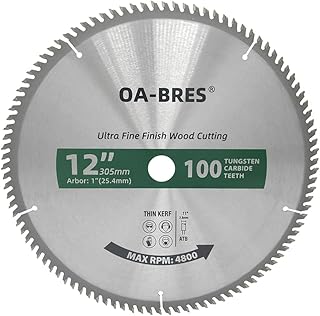
For 12-inch saws cutting wide headboard stock or tall bed posts, this 100-tooth ATB blade with a 1-inch arbor produces a surface clean enough to go straight to finish on most hardwoods. The high tooth count means a slower, deliberate feed rate — rush it and you’ll get burning rather than tear-out.
10-Inch 120-Tooth TCG Aluminum Blade
A specialist worth owning if your designs include aluminum bed frame extrusions, metal drawer channels, or laminate edging. The triple chip grind shears non-ferrous metal without grabbing, and at 120 teeth it leaves an edge that needs little more than a file pass.
KENDO 10-Inch 2-Pack, 40T and 60T
The most sensible starting point for a home shop. The 40-tooth blade rips bed rails and slat stock efficiently, while the 60-tooth handles plywood, MDF, and laminate carcass panels with minimal chipping — two blades that cover the majority of bedroom furniture work.
10-Inch 80-Tooth Carbide Fine Finish Blade
An excellent everyday finish blade, with a 7000 RPM rating that comfortably exceeds typical 10-inch miter saw speeds. Tungsten carbide teeth hold their edge through repeated crosscuts in oak and maple, which matters when you’re cutting sixteen identical mitered corners.
WEN BL1080 10-Inch 80-Tooth Blade
Reliable, widely available, and consistently flat out of the package — the carbide-tipped WEN is the low-drama choice for ultra-fine crosscuts in solid wood and veneered panels. A strong value pick for occasional builders who still want joinery-grade results.
Frequently Asked Questions
How many teeth do I need for a headboard or nightstand?
Aim for 80 teeth or more on any visible miter or crosscut. Below 60, the tooth spacing is too wide to sever fibers cleanly on veneer and figured hardwood.
Can I use a table saw blade in my miter saw?
Often yes, provided diameter, arbor size, and RPM rating all match, and the blade isn’t a negative-hook design intended solely for radial arm use. Check the manufacturer’s stated compatibility.
Why is my blade burning the wood?
Usually resin buildup, a dull carbide edge, or feeding too slowly through a high-tooth-count blade. Clean the plate with a dedicated blade cleaner before assuming it needs replacing.
Is a thin-kerf blade better for furniture?
It wastes less material and reduces strain on smaller motors, which helps on repetitive cuts. On very wide stock, a full-kerf plate resists deflection better.
Final Thoughts
For most people building bedroom furniture, the KENDO 40T/60T two-pack is the smartest first purchase, covering rough and panel work in one buy. Add the WEN BL1080 or the 10-inch 80-tooth carbide blade for show-face miters, and step up to the 12-inch 100-tooth ATB if your saw takes a 1-inch arbor and your projects demand a finish-ready edge.