Key takeaways
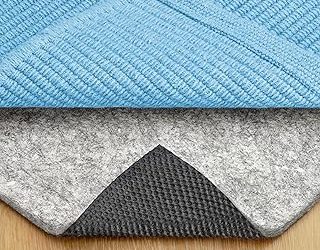
- Grip mechanism: On carpet, friction alone won’t do it. Look for a mesh or textured surface that mechanically engages carpet fibers, or cloth-backed gripper discs that anchor at the corners and edges where creeping starts.
- Thickness restraint: Over existing carpet you already have cushion. A 1/8″ to 1/4″ pad is plenty; anything thicker creates a soft, unstable stack that shifts when you plant a foot and can make the rug edge a stubbing risk.
- Off-gassing and materials: A bedroom is where you breathe for eight hours. Favor natural rubber, needle-punched felt, or PVC-free constructions, and air any new pad out for a day or two before installing it under the bed.
- Rug weight and pile: Heavy wool rugs need less help than lightweight flatweaves and machine-woven synthetics, which are the worst offenders for sliding. Match the aggressiveness of the gripper to how light your rug is.
- Coverage strategy: Full-surface pads deliver even support and reduce rug wear; corner grippers are cheaper, invisible, and ideal for large rugs already sitting on dense carpet. Decide which problem you’re solving before you buy.
What's inside
Anyone who has stumbled toward the bathroom at 2 a.m. and felt the bedroom rug slide sideways underfoot understands the problem intuitively. Layering an area rug over wall-to-wall carpet is one of the fastest ways to warm up a bedroom — it softens acoustics, defines the space around the bed, and adds the tactile comfort that makes a room feel restful rather than merely furnished. The trouble is physics: carpet fibers offer nothing for a rug’s backing to bite into, so the rug creeps, bunches, and curls at the corners. What should be a calming layer becomes a nightly trip hazard and a low-grade irritation you notice every time you straighten it.
The fix is a rug pad built specifically for carpet-over-carpet installations, which behaves very differently from the rubber-and-felt pads sold for hardwood. This guide explains what actually holds a rug still on a plush or low-pile carpet, which materials to avoid, and how thickness affects both stability and the barefoot feel underfoot. Below you’ll find the standout options for 2026, evaluated with an eye toward bedroom use: quiet, stable, low-off-gassing, and safe for the first few steps of the morning.
As an Amazon Associate we earn from qualifying purchases.




🛒 Best Price Today on Amazon
Prime members get fast, free shipping on everything above, plus member-only deals. New members get a 30-day free trial — cancel anytime.
How to Choose a/an Rug Pad For Rug On Carpet (2026)
- Grip mechanism: On carpet, friction alone won’t do it. Look for a mesh or textured surface that mechanically engages carpet fibers, or cloth-backed gripper discs that anchor at the corners and edges where creeping starts.
- Thickness restraint: Over existing carpet you already have cushion. A 1/8″ to 1/4″ pad is plenty; anything thicker creates a soft, unstable stack that shifts when you plant a foot and can make the rug edge a stubbing risk.
- Off-gassing and materials: A bedroom is where you breathe for eight hours. Favor natural rubber, needle-punched felt, or PVC-free constructions, and air any new pad out for a day or two before installing it under the bed.
- Rug weight and pile: Heavy wool rugs need less help than lightweight flatweaves and machine-woven synthetics, which are the worst offenders for sliding. Match the aggressiveness of the gripper to how light your rug is.
- Coverage strategy: Full-surface pads deliver even support and reduce rug wear; corner grippers are cheaper, invisible, and ideal for large rugs already sitting on dense carpet. Decide which problem you’re solving before you buy.
The Best Rug Pad For Rug On Carpet (2026)s Reviewed
16-Pack Carpet-to-Carpet Rug Grippers
This is the most targeted solution here, using a patented mesh face designed to interlock with carpet pile rather than simply resist it — the mechanism that actually matters on soft flooring. With sixteen 4″ pads you can secure corners plus mid-edge points on a large rug, which is where curling and tripping usually begin.
Slip-Stop Magic Stop Non-Slip Rug Pad
A thin, open-weave USA-made pad that adds almost no height, making it the safest choice for a rug you walk onto directly from bed. It’s marketed explicitly for keeping rugs in place on carpet, and the low profile means the rug’s own edge stays flat instead of ramping up.
Mohawk Home Non Slip Rug Pad 8′ x 10′
The felt-and-latex dual-surface build is the workhorse of the category, quietly damping footfall and protecting rug fibers from abrasion. At 1/4″ it’s the upper limit of what I’d stack over plush carpet, so reserve it for low-pile carpeting or heavier rugs that won’t wobble.
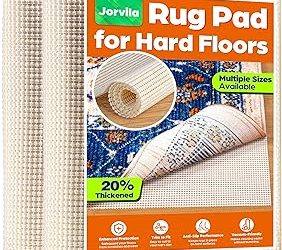
Jorvila Non-Slip Rug Pad Gripper 8×10
A generously cushioned anti-skid mat that suits a bedroom’s acoustic goals well, adding a muffled, plush step around the bed frame. Trim it an inch or two smaller than your rug on all sides so the perimeter lies perfectly flush.
GORILLA GRIP Strong Rug Pad Gripper 2×3
The 2×3 size is purpose-built for the small runner or accent rug beside a bed or bassinet, where a shifting mat is most dangerous during night wakings. Grip is genuinely strong for the price, though it performs best on shorter carpet pile.
Frequently Asked Questions
Will a rubber rug pad damage my carpet?
Natural rubber is generally safe, but low-grade synthetic adhesive backings can leave residue or discolor light carpet over time. Choose a woven or needle-punched pad and check it every six months when you vacuum underneath.
Do I need a pad if my rug is heavy wool?
Often not for sliding, but you may still want one for edge control. Heavy rugs on carpet tend to ripple in the middle rather than slide, and a thin full-surface pad distributes that tension.
Can rug pads help with noise in a bedroom?
Yes — felt pads absorb impact sound and reduce the hollow footstep noise that carries between floors, which matters if a light sleeper is below you. This is one of the underrated wellness benefits of layering.
Why does my rug still curl at the corners?
Corner curl is usually memory from shipping rather than a pad failure. Reverse-roll the rug for a few hours, then place a gripper pad directly under each corner to hold it flat while it relaxes.
Final Thoughts
For most bedrooms layering a rug over carpet, the 16-Pack Carpet-to-Carpet Rug Grippers solve the specific engineering problem most elegantly, while the Slip-Stop Magic Stop pad is the best full-surface option when you want stability without adding height. If your priority is quiet, cushioned comfort on low-pile carpet, the Mohawk Home felt and latex pad is the one worth the extra investment.