Key takeaways
- Recline angle and leg elevation: Look for models that raise the feet to or above heart level — often marketed as “zero gravity.” This position reduces lower-limb venous pressure and is the single most restorative thing a recliner can do for you. A seat that only tips back 15 degrees is a chair with ambitions.
- Lumbar and neck support at full recline: Many sofas support you beautifully upright and abandon you reclined. Sit in the position you’ll actually use and check whether your head falls back unsupported. Unsupported cervical extension is a reliable recipe for waking up with a stiff neck.
- Upholstery and thermoregulation: Body temperature needs to drift downward for sleep onset. Bonded leather and PU faux leather trap heat; breathable chenille and woven polyester don’t. If you nap on your sofa regularly, favor fabric. If you want easy cleaning, look for water-repellent performance blends as a compromise.
- Wall clearance: Traditional reclining sofas need 12 or more inches behind them. Wall-hugger designs need as little as three. Measure before you fall in love with anything.
- Power versus manual: Power reclining gives you infinite positioning and is far kinder to anyone with shoulder, back, or grip limitations. Manual mechanisms cost less and never need an outlet. Both are durable; the choice is ergonomic, not qualitative.
What's inside
Recliners occupy a strange middle ground in the home: too casual to be furniture, too permanent to be a nap prop. Yet for most households, the reclining sofa is where the day actually winds down — the twenty minutes of shallow rest between dinner and bed, the Sunday afternoon doze, the long stretch of evening reading that decides whether you fall asleep at 10:30 or 1:00. As someone who spends a lot of time talking to people about why their sleep falls apart, I can tell you the living room seating is almost never on their radar, and it should be. A sofa that lets your legs elevate, your lumbar spine decompress, and your shoulders drop out of their daytime hunch is doing quiet preparatory work for the night ahead. A sagging, too-shallow, too-upright one is quietly undoing it.
This guide looks at reclining sofa brands through that lens: not just upholstery durability and warranty length, but recline geometry, leg support, heat and massage features that genuinely help circulation, and the practical stuff — wall clearance, USB ports, cup holders — that determines whether you actually use the thing. Signature Design by Ashley dominates the category at accessible price points, so several of their lines appear below, alongside two value-focused manual options worth knowing about. Here’s what’s worth your money in 2026.
As an Amazon Associate we earn from qualifying purchases.


🛒 Best Price Today on Amazon
Prime members get fast, free shipping on everything above, plus member-only deals. New members get a 30-day free trial — cancel anytime.
How to Choose a Reclining Sofa Brand (2026)
- Recline angle and leg elevation: Look for models that raise the feet to or above heart level — often marketed as “zero gravity.” This position reduces lower-limb venous pressure and is the single most restorative thing a recliner can do for you. A seat that only tips back 15 degrees is a chair with ambitions.
- Lumbar and neck support at full recline: Many sofas support you beautifully upright and abandon you reclined. Sit in the position you’ll actually use and check whether your head falls back unsupported. Unsupported cervical extension is a reliable recipe for waking up with a stiff neck.
- Upholstery and thermoregulation: Body temperature needs to drift downward for sleep onset. Bonded leather and PU faux leather trap heat; breathable chenille and woven polyester don’t. If you nap on your sofa regularly, favor fabric. If you want easy cleaning, look for water-repellent performance blends as a compromise.
- Wall clearance: Traditional reclining sofas need 12 or more inches behind them. Wall-hugger designs need as little as three. Measure before you fall in love with anything.
- Power versus manual: Power reclining gives you infinite positioning and is far kinder to anyone with shoulder, back, or grip limitations. Manual mechanisms cost less and never need an outlet. Both are durable; the choice is ergonomic, not qualitative.
The Best Reclining Sofa Brands (2026) Reviewed
Ashley Boyington Power Reclining Sofa (Heat & Massage)
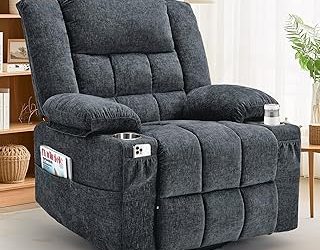
This is the most feature-complete option here, and the heat and air-massage functions are more than gimmicks — gentle warmth applied to the lower back before bed encourages peripheral vasodilation, which is part of the natural cooling cascade that precedes sleep. Zero-gravity positioning plus a drop-down table makes it the strongest choice for anyone who genuinely unwinds on the sofa rather than just sitting on it.
Ashley Next-Gen DuraPella Power Reclining Sofa
The water-repellent DuraPella surface is the practical pick for households with kids, pets, or evening tea habits, and the medium-plush foam strikes a sensible balance between support and give. Zero-gravity recline at this price point is unusually good value, though the faux-leather surface runs warmer than fabric.
Ashley Yarrow Lane Reclining Sofa with Drop-Down Table
Chenille upholstery breathes well, pillow-top arms give your shoulders somewhere to rest, and the integrated USB ports let you charge a phone without keeping it at arm’s reach on the cushion beside you. A quietly well-designed sofa for people who read or stream before bed.
Ashley Tulen Manual Reclining Sofa
The three-inch wall-hugger design makes this the obvious answer for apartments and tighter living rooms, and the dual-sided manual mechanism is simple enough to outlast most power systems. Breathable gray chenille keeps it comfortable for extended sitting.
Extra-Wide Overstuffed Manual Reclining Sofa
Generously deep and softly padded, this one suits taller sitters and anyone who wants a sofa they can fully stretch out on. The breathable fabric is a real advantage over faux leather if you nap here often, though the plush build offers less structured lumbar support than firmer models.
Frequently Asked Questions
Is sleeping on a reclining sofa bad for you?
Occasional reclined sleep is fine and can even help people with reflux or mild sleep apnea, since a slight head elevation reduces airway collapse and acid regression. Nightly sofa sleeping is a different matter — it usually means less total sleep, more awakenings, and joint stiffness. Use the recliner for the wind-down, then move to bed.
Do heated seats help or hurt sleep?
Used before bed, warming your back and legs helps: it pushes blood toward the skin, which accelerates core cooling once you get up. Falling asleep with heat running is counterproductive, so favor models with a timer or simply switch it off as you settle in.
How long should a reclining sofa last?
Expect eight to twelve years from a well-built frame with a quality mechanism. The upholstery and foam typically fail before the frame does, so favor removable, replaceable cushions where available.
Power or manual for someone with back pain?
Power, almost always. Manual recliners require you to brace and pull, which loads exactly the structures you’re trying to relieve. Power reclining also lets you make small mid-session adjustments, which matters more than most buyers expect.
Final Thoughts
If your sofa doubles as your evening decompression chamber, the Ashley Boyington with heat and massage earns its premium — the combination of zero-gravity elevation and targeted warmth is legitimately useful for sleep preparation. For a breathable, everyday-comfortable option with smart charging built in, the Yarrow Lane is the smarter buy, and the Tulen remains the best answer for small rooms where every inch of wall clearance counts.