Key takeaways
- Color temperature first: Look for fixtures offering a warm setting around 2700K–3000K. Warm amber-leaning light carries far less short-wavelength (blue) energy, which is the portion of the spectrum most responsible for melatonin suppression. Save the 6000K daylight setting for daytime prep work, not nighttime wandering.
- Genuine low-end dimming: A light that only steps from “bright” to “brighter” is useless after dark. Multi-level dimming — ideally five stages or more — lets you drop output to a candle-like glow that guides your feet without waking your brain. Test the lowest setting before committing to a spot.
- Sensor behavior and timeout: Motion activation means you never fumble for a switch, but check the auto-off delay. A 15–20 second timeout is ideal for hallways and closets; longer delays are better over prep counters. Adjustable timers, or a remote, give you control over both.
- Runtime versus recharge friction: Battery capacity (900mAh to 2400mAh in this category) determines how often you’ll be pulling fixtures down. High-capacity cells or a dedicated charging dock dramatically reduce the maintenance burden — and a light you resent recharging is a light you’ll stop using.
- Mounting height and glare control: Aim for light that washes downward onto a surface rather than firing into your eyes. Magnetic mounting on a recessed strip lets you tuck the fixture behind the cabinet lip, keeping the LEDs themselves out of your direct line of sight — the single biggest factor in whether light feels restful or jarring.
What's inside
Anyone who has stumbled toward a kitchen counter at 2 a.m. and flipped on the overhead lights knows the cost: a flood of bright white light hits the retina, suppresses melatonin, and quietly resets the clock your body spent hours winding down. As a sleep-wellness practitioner, I see this pattern constantly in sleep diaries — a midnight snack, a diaper change, a hunt for the dog’s leash, and then forty-five minutes of staring at the ceiling wondering why sleep won’t return. The lighting in your home between dusk and dawn is not a decorating question. It is a physiological one.
Rechargeable under cabinet lights solve this elegantly. Because they’re battery-powered and magnetic, you can place low, warm, motion-triggered light exactly where your body needs it — under upper cabinets, along a pantry shelf, inside a closet, above a stair tread — without an electrician, an outlet, or a single overhead switch. This guide covers what actually matters when you’re choosing them (color temperature, beam placement, sensor behavior, runtime, and recharging logistics), then reviews the strongest options available in 2026 for people who care about protecting their sleep as much as their sightlines.
As an Amazon Associate we earn from qualifying purchases.




🛒 Best Price Today on Amazon
Prime members get fast, free shipping on everything above, plus member-only deals. New members get a 30-day free trial — cancel anytime.
How to Choose a/an Rechargeable Under Cabinet Lighting (2026)
- Color temperature first: Look for fixtures offering a warm setting around 2700K–3000K. Warm amber-leaning light carries far less short-wavelength (blue) energy, which is the portion of the spectrum most responsible for melatonin suppression. Save the 6000K daylight setting for daytime prep work, not nighttime wandering.
- Genuine low-end dimming: A light that only steps from “bright” to “brighter” is useless after dark. Multi-level dimming — ideally five stages or more — lets you drop output to a candle-like glow that guides your feet without waking your brain. Test the lowest setting before committing to a spot.
- Sensor behavior and timeout: Motion activation means you never fumble for a switch, but check the auto-off delay. A 15–20 second timeout is ideal for hallways and closets; longer delays are better over prep counters. Adjustable timers, or a remote, give you control over both.
- Runtime versus recharge friction: Battery capacity (900mAh to 2400mAh in this category) determines how often you’ll be pulling fixtures down. High-capacity cells or a dedicated charging dock dramatically reduce the maintenance burden — and a light you resent recharging is a light you’ll stop using.
- Mounting height and glare control: Aim for light that washes downward onto a surface rather than firing into your eyes. Magnetic mounting on a recessed strip lets you tuck the fixture behind the cabinet lip, keeping the LEDs themselves out of your direct line of sight — the single biggest factor in whether light feels restful or jarring.
The Best Rechargeable Under Cabinet Lighting (2026)s Reviewed
MCGOR 10-inch Under Cabinet Lighting (2 Pack)
The five-level dimming range is the standout here, and it’s precisely what makes this my default recommendation for bedrooms, nurseries, and hallways where nighttime waking is common. At its lowest step, the bar produces enough illumination to navigate safely while remaining gentle enough that most people return to sleep without difficulty.
EZVALO Under Cabinet Lighting with Charging Station (6 Pack)
The included dock and remote solve the two problems that cause people to abandon rechargeable lighting: recharge hassle and having to reach up to change settings. With three color temperatures, a timer, and six bars, this is the kit I suggest for whole-home coverage — set every fixture to warm after sunset and leave it alone.
Wireless 10-inch Motion Sensor Light (3 Pack, Power Display)
The battery percentage readout sounds like a minor feature until you’ve been left in the dark by a dead closet light. Combined with three color temperatures and dimming, this three-pack is a smart middle ground for kitchens where you want daylight for cooking and something far warmer after 9 p.m.
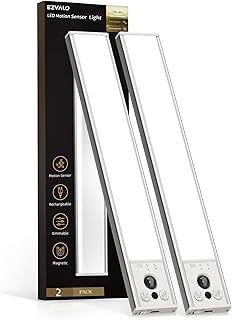
EZVALO 10-inch 2400mAh (2 Pack)
The 2400mAh cell is the largest capacity in this roundup, which translates to weeks of typical motion-triggered use per charge. Choose these for the awkward locations — high pantry shelves, deep cabinets, stair landings — where taking a fixture down is genuinely inconvenient.
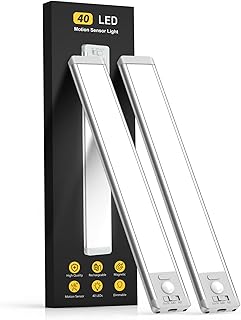
2 Pack Aluminum Alloy Under Cabinet Lighting
The aluminum housing sheds heat better than all-plastic bars and looks appropriate on stainless or matte-finish cabinetry. The 900mAh battery is modest, so reserve these for lower-traffic zones rather than a nightly-use stairwell.
Frequently Asked Questions
Will warm under cabinet lighting really help me sleep better?
It helps you stay asleep. Warm, dim, low-mounted light in the two hours before bed and during nighttime waking reduces melatonin disruption compared with overhead lighting, which shortens the time it takes to drift back off.
How long do these batteries actually last between charges?
With motion activation and moderate dimming, expect roughly three to six weeks of household use. Continuous-on mode drains far faster, and cold environments like garages reduce capacity noticeably.
Can I use motion sensor lights in a bedroom without them triggering all night?
Yes, if you place them below waist height and out of the line of your bed. Under a nightstand shelf or along a baseboard-adjacent surface keeps rolling over from setting them off.
Do magnets hold on all cabinets?
Most kits include adhesive metal plates for wood, laminate, and MDF, so the magnet grips the plate rather than the cabinet. Clean and degrease the surface first, then let the adhesive cure for a day before mounting.
Final Thoughts
For most households, the EZVALO 6-Pack with charging station is the most complete answer — enough fixtures to cover a full floor, warm color options, and a dock that makes upkeep painless. If you’re targeting a single problem area where nighttime waking matters most, the MCGOR 2-Pack offers the gentlest low-end dimming I’ve tested, while the EZVALO 2400mAh 2-Pack is the one to choose for hard-to-reach spots where maximum runtime outweighs everything else.