Key takeaways
- Noise level (dBA): Treat 60 dBA as the “conversation-friendly” ceiling and 70 dBA as the point where hearing protection and considerate scheduling become non-negotiable. Published figures are measured at roughly one metre in open air; enclosed garages add several decibels through reflection.
- CFM before horsepower: Horsepower sells units; cubic feet per minute actually sprays. Match the compressor’s CFM at 40 PSI to your gun’s requirement with headroom to spare, or the motor will cycle constantly and your finish will show it.
- Tank size versus duty cycle: A larger steel tank means fewer restarts, which translates to steadier pressure and fewer noise spikes. For furniture panels and cabinet doors, 8 gallons is a comfortable sweet spot; under 3 gallons suits touch-ups and small pieces.
- Oil-free versus lubricated: Oil-free pumps eliminate the risk of oil carryover contaminating a clear coat and need almost no maintenance. Lubricated pumps last longer under commercial abuse but demand ventilation, upkeep, and patience.
- Cleanup realism: Be honest about how much scrubbing you’ll tolerate. Systems advertising ten-minute teardown get used on weeknights; pressure pots and multi-piece HVLP outfits get postponed indefinitely.
What's inside
Anyone who has finished a set of dining chairs at 9 p.m. knows the real cost of the wrong compressor. It isn’t the price tag — it’s the hammering drone that carries through drywall, wakes a sleeping toddler two rooms away, and leaves your own ears ringing long after the gun is clean. As someone who spends most of my professional life studying what wrecks people’s rest, I’ve come to see the garage air compressor as a genuinely underrated sleep variable in the modern home. Sustained noise above roughly 70 decibels raises heart rate and cortisol, and an old-style oil-lubricated pancake unit routinely clears 90.
The good news: 2026’s crop of quiet, oil-free compressors and self-contained electric sprayers has made high-quality furniture finishing a genuinely evening-friendly hobby. Below, I’ve paired the best low-noise air sources with the guns and kits that suit them, whether you’re spraying lacquer on a walnut sideboard or rolling latex onto a hallway. Every pick is judged on three things I care about: atomization quality, cleanup time, and how much acoustic havoc it wreaks on the rest of the household.
As an Amazon Associate we earn from qualifying purchases.



🛒 Best Price Today on Amazon
Prime members get fast, free shipping on everything above, plus member-only deals. New members get a 30-day free trial — cancel anytime.
How to Choose a Paint Sprayer Air Compressor (2026)
- Noise level (dBA): Treat 60 dBA as the “conversation-friendly” ceiling and 70 dBA as the point where hearing protection and considerate scheduling become non-negotiable. Published figures are measured at roughly one metre in open air; enclosed garages add several decibels through reflection.
- CFM before horsepower: Horsepower sells units; cubic feet per minute actually sprays. Match the compressor’s CFM at 40 PSI to your gun’s requirement with headroom to spare, or the motor will cycle constantly and your finish will show it.
- Tank size versus duty cycle: A larger steel tank means fewer restarts, which translates to steadier pressure and fewer noise spikes. For furniture panels and cabinet doors, 8 gallons is a comfortable sweet spot; under 3 gallons suits touch-ups and small pieces.
- Oil-free versus lubricated: Oil-free pumps eliminate the risk of oil carryover contaminating a clear coat and need almost no maintenance. Lubricated pumps last longer under commercial abuse but demand ventilation, upkeep, and patience.
- Cleanup realism: Be honest about how much scrubbing you’ll tolerate. Systems advertising ten-minute teardown get used on weeknights; pressure pots and multi-piece HVLP outfits get postponed indefinitely.
The Best Paint Sprayer Air Compressor (2026)s Reviewed
California Air Tools 8010 PK Ultra Quiet Compressor and LVLP Kit
At 60 dBA with an 8-gallon steel tank and a bundled LVLP gun, this is the closest thing to a turnkey furniture-finishing station that won’t dominate the house. The oil-free pump and wheeled frame make it the pick I recommend to anyone who paints after dinner rather than at dawn.
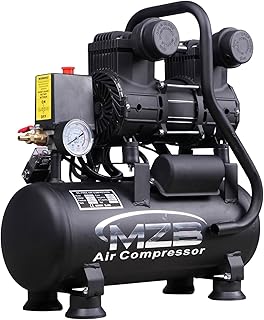
MZB 2.4 Gallon Ultra Quiet Oil-Free Compressor
Rated 1.2 HP and 5.65 CFM at 70 dB, this compact steel-tank unit punches above its footprint and stores on a shelf when idle. It’s the sensible choice for apartment workshops and small-piece work, though the modest tank means it cycles more often on large surfaces.
Binks Pressure Pot Spray Gun Outfit Kit
The 2.8-gallon galvanized pot, 1.4 mm nozzle Trophy Series HVLP gun, and 25 feet of hose deliver the kind of consistent, mirror-flat lay-down that separates professional casework from weekend results. It demands a properly sized compressor and a disciplined cleanup routine — earn those, and nothing here finishes better.
InoKraft NEO Airless Paint Sprayer Kit
A 3000 PSI airless setup that handles unthinned latex and stain without a compressor at all, plus genuinely quick teardown and tidy accessory storage. Ideal for interior walls, fences, and painted cabinets; less suited to fine automotive-grade clear coats.
1000W Electric Paint Sprayer with 6 Nozzles
With a 47 oz container, six nozzles, and three spray patterns, this all-in-one gun is the most forgiving entry point for someone refinishing their first dresser. Motor whine replaces compressor thump, so noise is short-lived rather than cyclical.
Frequently Asked Questions
How quiet is quiet enough for evening projects?
Under 60 dBA is roughly the level of ordinary conversation and rarely disturbs sleepers behind a closed door. Between 60 and 70 dBA, keep the door shut and finish before bedtime routines begin.
Do I need a compressor at all?
Not for latex walls, fences, or basic cabinet work — modern airless and HVLP electric guns cover that comfortably. Compressors earn their keep with lacquers, waterborne clear coats, and any project where atomization fineness matters.
What CFM should I look for?
Most LVLP furniture guns run happily on 4 to 6 CFM at 40 PSI. Conventional HVLP guns can demand 10 CFM or more, which is where undersized compressors fail.
Will an oil-free pump last?
For hobby and light-professional use, yes — expect many years of service with occasional tank draining and filter checks. Daily commercial spraying still favours a lubricated pump.
Final Thoughts
For most home furniture makers, the California Air Tools 8010 PK is the complete answer: quiet enough to respect the household, capacious enough for cabinet doors and tabletops. Choose the MZB 2.4 Gallon if space is tight and your pieces are small, and step up to the Binks Pressure Pot Outfit when your standards outgrow convenience.