Key takeaways
- CFM at 90 PSI, not “peak” CFM: Most HVLP guns want 4–7 CFM sustained; LVLP guns often run happily on 1.5–3 CFM. Match the gun’s rated consumption first and treat every other spec as secondary.
- Tank size buys you continuity: A 2-gallon tank forces the motor to restart constantly, which shows up as pressure dips mid-pass. Five to eight gallons lets you finish a cabinet door on stored air before the pump kicks in.
- Decibel rating in real terms: 60 dBA is conversational; 70 dBA is roughly four times as loud to the ear. If your workspace shares a wall with a bedroom or nursery, treat 68 dBA as your ceiling and spray during waking hours regardless.
- Oil-free versus oil-lubricated: Oil-free pumps eliminate the risk of oil misting into your finish and need almost no upkeep. Oil-lubricated units last longer under heavy commercial use but demand maintenance and careful filtration.
- Moisture and air quality: Budget for an inline water separator and regulator. Compressed air carries condensation, and a single water droplet in a lacquer coat means sanding back to bare wood.
What's inside
Anyone who has tried to refinish a dresser or spray a set of cabinet doors in a home garage knows the real bottleneck isn’t the paint gun — it’s the compressor feeding it. Too little airflow and your finish goes from silky to orange-peel in one pass. Too much noise and a Saturday afternoon project turns into the reason nobody in the house can nap, work, or hold a phone conversation. Because I spend most of my professional life studying how ambient noise wrecks rest and recovery, I look at compressors a little differently than most tool reviewers: sustained sound above roughly 70 dB is genuinely fatiguing, and a machine that cycles at 90 dB in an attached garage will carry straight through drywall into a bedroom.
The good news is that oil-free, dual-piston “ultra quiet” compressors have matured enough that you no longer have to choose between a usable finish and a livable house. This guide covers what actually matters when pairing a compressor to an HVLP or LVLP spray gun — CFM at 90 PSI, tank volume, duty cycle, moisture control, and measured decibel ratings — followed by hands-on notes on the models worth your money in 2026, whether you’re spraying a single nightstand or a full bedroom suite.
As an Amazon Associate we earn from qualifying purchases.

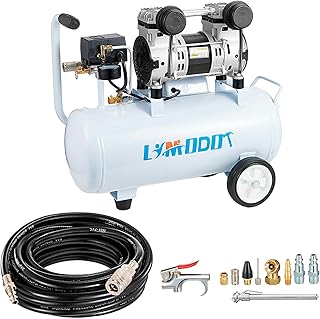

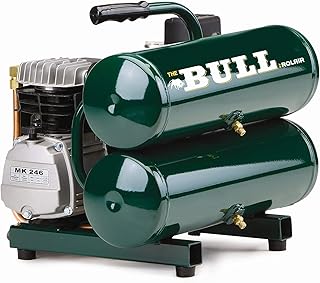
🛒 Best Price Today on Amazon
Prime members get fast, free shipping on everything above, plus member-only deals. New members get a 30-day free trial — cancel anytime.
How to Choose a/an Air Compressor For Paint Gun (2026)
- CFM at 90 PSI, not “peak” CFM: Most HVLP guns want 4–7 CFM sustained; LVLP guns often run happily on 1.5–3 CFM. Match the gun’s rated consumption first and treat every other spec as secondary.
- Tank size buys you continuity: A 2-gallon tank forces the motor to restart constantly, which shows up as pressure dips mid-pass. Five to eight gallons lets you finish a cabinet door on stored air before the pump kicks in.
- Decibel rating in real terms: 60 dBA is conversational; 70 dBA is roughly four times as loud to the ear. If your workspace shares a wall with a bedroom or nursery, treat 68 dBA as your ceiling and spray during waking hours regardless.
- Oil-free versus oil-lubricated: Oil-free pumps eliminate the risk of oil misting into your finish and need almost no upkeep. Oil-lubricated units last longer under heavy commercial use but demand maintenance and careful filtration.
- Moisture and air quality: Budget for an inline water separator and regulator. Compressed air carries condensation, and a single water droplet in a lacquer coat means sanding back to bare wood.
The Best Air Compressor For Paint Gun (2026)s Reviewed
California Air Tools 8010 PK with LVLP Spray Kit
This is the pick I recommend most often for furniture work: an 8-gallon tank and 60 dBA operation mean you can lay down long, uninterrupted passes without the motor screaming behind you, and the bundled LVLP gun is genuinely tuned to the compressor’s output rather than thrown in as filler. It’s heavier than the small portables, but the wheels make garage-to-driveway moves painless.
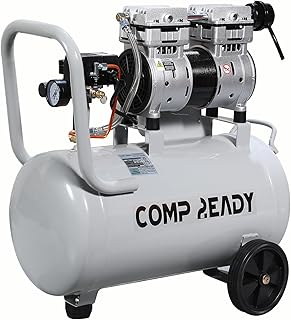
5 Gallon Quiet Oil-Free Compressor, 68 dB
A smart middle ground — 2.8 CFM at 90 PSI and a 5-gallon steel tank handle detail guns, trim work, and brad nailers without the constant cycling you get from 2-gallon units. The included hose kit means you’re spraying the day it arrives.
BairDplusL 3.2 Gallon Ultra Quiet Compressor
The 1.5 HP twin-motor design delivers noticeably more air than its tank size suggests, making it a strong option for automotive touch-ups and larger painted surfaces. At 70 dB it’s the loudest of the “quiet” group here, so keep it out of shared-wall spaces.
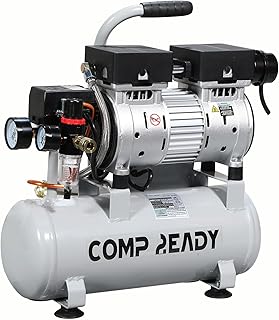
2 Gallon Ultra Quiet Portable Compressor (0.75 HP)
At 60 dB and 1.7 CFM, this is a detail-work and touch-up machine — excellent for LVLP guns, small chair frames, hardware, and tire duty. Don’t ask it to spray a whole wardrobe in one session.
2 Gallon 60 dB Oil-Free Compressor (Tire & Tool)
Functionally the twin of the model above and often the better buy when it’s the cheaper listing of the two. Quiet, light, oil-free, and ideal as a second compressor for apartment balconies or shared workshops.
Frequently Asked Questions
How many CFM do I really need for a paint gun?
Check the gun’s spec sheet. Full-size HVLP guns typically need 4–7 CFM at 90 PSI; LVLP and detail guns often need under 3 CFM. Buy a compressor rated at least 20% above your gun’s requirement to avoid running at 100% duty cycle.
Is a 2-gallon compressor enough for furniture painting?
For spindles, drawer fronts, hardware, and touch-ups, yes. For a full dresser or a bed frame, the constant restarts make consistent coverage hard — step up to 5 gallons or more.
Will a quiet compressor bother my neighbors or wake a sleeping child?
A 60 dBA unit sits around normal speech level and rarely transmits meaningfully through a closed door. Anything above 75 dBA carries through walls and floors, which is exactly the kind of intermittent noise that fragments sleep.
Do I need a dryer or filter for spray painting?
An inline regulator with a water separator is essential. A desiccant dryer is worth adding if you spray automotive clears or work in a humid climate.
Final Thoughts
For most home furniture projects, the California Air Tools 8010 PK is the best overall balance of airflow, tank capacity, and genuinely low 60 dBA noise — it’s the one I’d put in an attached garage without hesitation. If you want strong performance for less footprint, the 5 Gallon 68 dB oil-free unit is the value pick, while the BairDplusL 3.2 Gallon is worth the trade in decibels when you need more air for automotive-scale work.