Key takeaways
- SCFM at 90 PSI: This is the only airflow figure that matters. Match it to your gun’s requirement with roughly 30% headroom — most LVLP guns want 2–4 SCFM, while conventional HVLP guns can demand 10 or more. Ignore “peak” or “displacement” CFM claims entirely.
- Measured noise level: Look for a stated dBA figure in the 60–70 range. Below 65 dBA you can hold a conversation beside the machine; above 80 dBA you’re in leaf-blower territory and shouldn’t run it near occupied bedrooms, early mornings, or late evenings.
- Tank volume versus duty cycle: Larger tanks mean fewer motor starts, which translates directly to less noise and steadier pressure. Two to four gallons suits touch-ups and small pieces; 8 gallons and up is the realistic floor for spraying a full furniture set in one session.
- Oil-free versus oil-lubricated: Oil-free pumps eliminate the risk of oil mist contaminating a finish and need no maintenance, which is why they dominate this category. Oil-lubricated units run cooler and last longer under heavy commercial use, but demand upkeep.
- Portability and moisture control: Wheels and a low carry weight decide whether the compressor lives in your workflow or in a corner. Budget separately for an inline water separator and filter — humid tank air will blister a finish no matter how good the pump is.
What's inside
Anyone who has tried to refinish a dresser in a garage attached to a sleeping house knows the real problem with spray painting: it isn’t the paint. It’s the compressor. A budget pancake unit screaming at 90 decibels through a shared wall will wake a napping toddler, rattle a bedroom above the garage, and turn a relaxing weekend project into a source of household friction. Noise is a wellness issue, not a nuisance — sustained exposure above roughly 70 dB elevates stress hormones, and anything crossing the wall at night fragments sleep for everyone in the building. That’s before you get to the mechanical problem: paint guns need steady, sustained air, and an undersized compressor cycles constantly, spitting pressure fluctuations that show up as orange peel and dry spray in your finish.
This guide approaches the category from both directions. We looked at the airflow numbers that actually determine whether an HVLP or LVLP gun can lay down a wet, even coat on a cabinet door or headboard, and we weighted decibel ratings heavily — because a furniture project happens in the spaces where people live. Below you’ll find the quietest capable machines currently worth buying, what specifications to check before you spend, and answers to the questions that come up most often from readers finishing furniture at home.
As an Amazon Associate we earn from qualifying purchases.



🛒 Best Price Today on Amazon
Prime members get fast, free shipping on everything above, plus member-only deals. New members get a 30-day free trial — cancel anytime.
How to Choose an Air Compressor For Spraying Paint (2026)
- SCFM at 90 PSI: This is the only airflow figure that matters. Match it to your gun’s requirement with roughly 30% headroom — most LVLP guns want 2–4 SCFM, while conventional HVLP guns can demand 10 or more. Ignore “peak” or “displacement” CFM claims entirely.
- Measured noise level: Look for a stated dBA figure in the 60–70 range. Below 65 dBA you can hold a conversation beside the machine; above 80 dBA you’re in leaf-blower territory and shouldn’t run it near occupied bedrooms, early mornings, or late evenings.
- Tank volume versus duty cycle: Larger tanks mean fewer motor starts, which translates directly to less noise and steadier pressure. Two to four gallons suits touch-ups and small pieces; 8 gallons and up is the realistic floor for spraying a full furniture set in one session.
- Oil-free versus oil-lubricated: Oil-free pumps eliminate the risk of oil mist contaminating a finish and need no maintenance, which is why they dominate this category. Oil-lubricated units run cooler and last longer under heavy commercial use, but demand upkeep.
- Portability and moisture control: Wheels and a low carry weight decide whether the compressor lives in your workflow or in a corner. Budget separately for an inline water separator and filter — humid tank air will blister a finish no matter how good the pump is.
The Best Air Compressor For Spraying Paint (2026)s Reviewed
California Air Tools 8010 PK with LVLP Spray Kit
At 60 dBA this is the quietest genuinely capable option here, and the bundled LVLP gun means the airflow and the tool are already matched — a real advantage for first-time sprayers. The 8-gallon steel tank and wheeled frame handle a full dresser or set of cabinet doors without nuisance cycling.
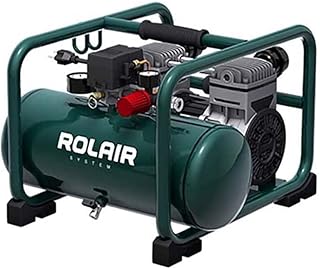
Rolair JC20 Hand-Carry
Rolair builds contractor-grade pumps, and the JC20 pairs that durability with a 70 dB rating in a package you can carry up a flight of stairs with one hand. The small tank means it works harder on continuous spraying, so treat it as a precision tool for trim, chairs, and detail work rather than large flat panels.
VEVOR 13-Gallon Wheeled Compressor
The best value for anyone spraying full pieces regularly: 4.6 SCFM at 90 PSI and a 13-gallon reservoir let most LVLP guns run near-continuously, while the 66 dB rating keeps it usable in an attached garage. The thickened steel body and wheels make it a permanent shop fixture rather than a portable.
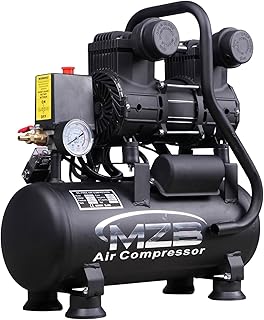
MZB 2.4 Gallon Ultra Quiet
A strong entry point at 70 dB with a surprising 5.65 CFM rating and twin steel tanks. The small capacity limits it to touch-ups, small furniture, and staged sessions, but it’s oil-free, apartment-workshop friendly, and priced accordingly.
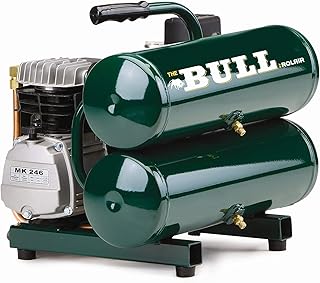
Rolair FC2002 Twin Stack
The professional’s pick, with overload protection, manual reset, and a 2 HP pump built for daily abuse. It’s louder than the ultra-quiet models, so plan sessions around household schedules — but nothing here will outlast it.
Frequently Asked Questions
How much SCFM do I actually need to spray furniture?
Most modern LVLP guns run comfortably on 2–4 SCFM at 90 PSI, so any compressor rated at 4.5 SCFM or higher will keep up. Check your specific gun’s rating before buying — it, not the compressor, sets the requirement.
Is a small pancake compressor good enough?
For touch-ups and small parts, yes. For a full dresser or six cabinet doors, a 2-gallon tank forces the motor to run almost continuously, which produces heat, moisture, and pressure swings that show up in the finish.
Can I run one in a garage under a bedroom?
With a 60–66 dBA model, generally yes during waking hours. Place it on a rubber anti-vibration mat, since structure-borne vibration transmits through framing far more effectively than airborne noise.
Do I need extra filtration?
Yes. Even with an oil-free pump, compressed air carries water vapor. An inline desiccant filter and water separator at the gun costs little and prevents fisheyes and blistering.
Final Thoughts
For most people finishing furniture at home, the California Air Tools 8010 PK is the clear recommendation — 60 dBA, a matched LVLP gun, and enough tank to work without interruption. Step up to the VEVOR 13-Gallon if you spray large pieces frequently and want airflow headroom, or choose the Rolair FC2002 if you need a compressor that will still be running a decade from now.