Key takeaways
- Seat width and depth: Measure your hips while seated, then add four to six inches of clearance. Anything from 23 to 26 inches of seat width lets the pelvis stay square instead of wedged, which is what keeps the lower back from aching after the first hour.
- Weight capacity, honestly rated: Look for 400 to 450 pounds and treat that number as a durability signal, not just a limit. Frames built for higher loads use thicker hardwood or steel and hold their shape years longer under daily use.
- Recline range and lay-flat travel: For occasional napping, 140 degrees is adequate. For upright sleeping, post-surgical recovery, or elevating legs above the heart, prioritise a lay-flat or near-180-degree model with an extended footrest so your calves aren’t dangling.
- Head and neck support: A power-adjustable headrest is the single most underrated sleep feature in this category. It lets you decouple neck angle from back angle, which prevents the chin-to-chest posture that narrows the airway and worsens snoring.
- Wall clearance and mechanism type: Manual levers cost less and never need an outlet, but power units allow micro-adjustments without disturbing your position. Measure rear clearance before buying — most oversized models want six to twelve inches behind them, and lift chairs need front space for the base to travel.
What's inside
Anyone who has spent a night in a recliner — recovering from shoulder surgery, sleeping upright to quiet reflux, or simply losing a battle with the sofa at 11pm — knows the difference between a chair that merely reclines and one that actually supports rest. From a sleep-wellness standpoint, the failure points are almost always the same: a seat too narrow to let the hips settle, a footrest that stops at the ankles, and a back angle that pins the neck forward instead of letting it fall into neutral. Larger and taller bodies feel every one of those compromises first, and most standard 20-inch-wide recliners were never engineered for them.
This guide looks at oversized recliners through that lens: seat width and weight capacity, yes, but also whether the chair can hold a genuinely restorative position for hours rather than minutes. Below you’ll find the models worth shortlisting in 2026, spanning manual rockers, power recliners with lay-flat travel, and dual-motor lift chairs for anyone who needs help standing. After the picks, there’s a short framework for matching a chair to your body, your room, and how you actually plan to use it.
As an Amazon Associate we earn from qualifying purchases.


🛒 Best Price Today on Amazon
Prime members get fast, free shipping on everything above, plus member-only deals. New members get a 30-day free trial — cancel anytime.
How to Choose an Oversized Recliner (2026)
- Seat width and depth: Measure your hips while seated, then add four to six inches of clearance. Anything from 23 to 26 inches of seat width lets the pelvis stay square instead of wedged, which is what keeps the lower back from aching after the first hour.
- Weight capacity, honestly rated: Look for 400 to 450 pounds and treat that number as a durability signal, not just a limit. Frames built for higher loads use thicker hardwood or steel and hold their shape years longer under daily use.
- Recline range and lay-flat travel: For occasional napping, 140 degrees is adequate. For upright sleeping, post-surgical recovery, or elevating legs above the heart, prioritise a lay-flat or near-180-degree model with an extended footrest so your calves aren’t dangling.
- Head and neck support: A power-adjustable headrest is the single most underrated sleep feature in this category. It lets you decouple neck angle from back angle, which prevents the chin-to-chest posture that narrows the airway and worsens snoring.
- Wall clearance and mechanism type: Manual levers cost less and never need an outlet, but power units allow micro-adjustments without disturbing your position. Measure rear clearance before buying — most oversized models want six to twelve inches behind them, and lift chairs need front space for the base to travel.
The Best Oversized Recliners (2026) Reviewed
Watson & Whitely Oversized Genuine Leather Power Recliner
The strongest all-round choice here: genuine leather, an extra-wide seat, and a power headrest paired with lay-flat travel, which is the combination that makes upright sleeping genuinely comfortable rather than merely tolerable. Leather runs cooler than chenille for anyone who sleeps warm, though it benefits from conditioning once or twice a year.
MCombo Dual Motor Lift Recliner with Heat and Massage (R7891)
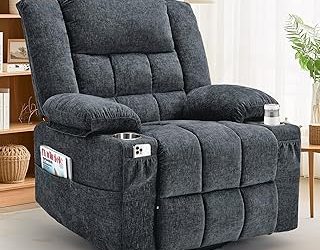
Dual motors move the back and footrest independently, so you can find a zero-gravity-style position with knees above the heart — useful for oedema, circulation, and settling restless legs before sleep. The heat and massage functions are a real aid to winding down, and the large-wide frame accommodates big-and-tall builds without pinching at the arms.
MCombo Power Lift Recliner with Extended Footrest (R7289)
A more affordable lift option with a 26-inch seat, 150-degree recline, and an extra 4.7 inches of footrest extension that keeps taller users’ heels supported instead of hanging. The standing-assist lift is smooth and unhurried, which matters enormously for anyone with knee or hip limitations rising from a deep chair.
52″ Oversized Power Recliner with USB & Type-C
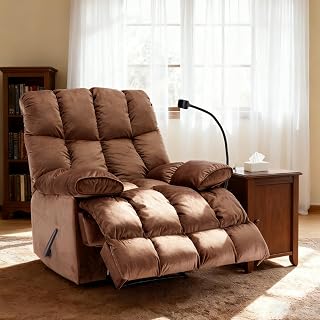
The widest seat on this list and the plushest, with cloud-soft chenille, two pillows, and a 450-pound capacity — closer to a single sofa than a conventional recliner. The USB and Type-C ports are a practical touch for overnight use, letting you charge a phone or CPAP accessory without a trailing extension cord.
COOSLEEP Oversized Swivel Rocker Recliner
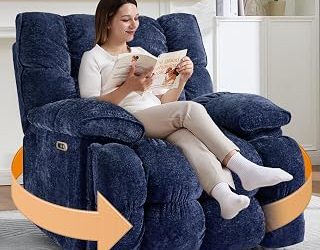
A manual glider-rocker with a high, overstuffed back — the rhythmic motion is genuinely effective for soothing infants or easing yourself toward sleep, and the swivel base makes it flexible in nursery or living-room layouts. No cords or motors means nothing to fail, but you’ll adjust position by shifting your weight rather than at the touch of a button.
Frequently Asked Questions
Is it healthy to sleep in a recliner every night?
Occasionally, or for a defined recovery period, it’s fine — and for reflux, sleep apnoea, or post-shoulder-surgery patients an inclined position can be measurably better than lying flat. Long-term nightly use carries risks of stiffness, hip flexor shortening and reduced circulation, so treat it as a therapeutic tool and discuss ongoing use with your clinician.
What recline angle is best for sleeping?
Roughly 30 to 45 degrees from horizontal suits most people with reflux or breathing concerns, deep enough to unload the spine but steep enough to keep the airway open. Adjust the headrest separately so your ears sit over your shoulders rather than tipping forward.
How much wall clearance does an oversized recliner need?
Most need six to twelve inches at the rear, though wall-hugger mechanisms reduce that to three or four. Lift chairs are the exception — the whole base tilts forward, so plan for clearance in front rather than behind.
Manual, power, or lift — which should I choose?
Choose manual if budget matters most and you have the core strength to work a lever, power if you want fine positional control or plan to sleep in the chair, and a lift model if standing from a low seat is difficult or painful.
Final Thoughts
For most buyers, the Watson & Whitely leather power recliner offers the best balance of durability, width and genuine sleep support thanks to its power headrest and lay-flat range. If mobility is the deciding factor, the MCombo dual-motor lift chair with heat and massage is the more therapeutic choice, while the 52-inch chenille power recliner remains the value pick for anyone who simply wants the widest, softest seat in the room.