Key takeaways
- Match the orifice to your machine: Orifice size, not PSI alone, governs performance. A 4.0 orifice suits higher-flow units around 4.0 GPM, while 2.5 GPM machines need correspondingly smaller tips. Oversizing drops your pressure; undersizing strains the pump.
- Understand the spray angles: 0° is a pinpoint jet for stubborn spot work, 15° strips paint and heavy buildup, 25° is the everyday workhorse, 40° rinses safely, and the black soap tip drops pressure to draw detergent.
- Insist on 1/4″ quick connect: A standard quick-connect coupler lets you swap tips mid-job in seconds. Push, click, done — no wrenches, no thread tape, no interrupted rhythm.
- Add a rotating turbo tip for large surfaces: Turbo nozzles spin a 0° jet in a cone, combining cutting power with coverage. On driveways and paver patios they can halve your working time.
- Consider surface hardness first: Brick, concrete and stone tolerate aggression. Vinyl siding, cedar, composite decking, outdoor furniture and vehicle paint do not — start wide, stand back, and test in a hidden corner.
What's inside
Anyone who has stood on a patio at 7 a.m., trigger squeezed, watching a wide fan of water push grime around instead of lifting it off, understands the real problem: the machine is rarely the bottleneck. The nozzle is. Pressure washers deliver whatever force the pump can muster, but the tip decides how that force lands — as a needle, a sheet, or a spinning cone. Choose wrong and you spend an entire Saturday chasing streaks, burning daylight and, frankly, borrowing hours from your recovery time. As someone who spends most of my working life talking to people about sleep architecture and the quiet mechanics of rest, I’ve come to see weekend chores as a wellness variable. Outdoor work that drags into the evening raises core temperature and cortisol at exactly the wrong hour, and a stained deck you keep meaning to deal with is its own low-grade mental load. Finishing the job in forty minutes instead of four hours is not a small thing.
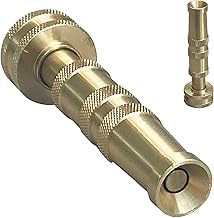
This guide covers the nozzle tips worth owning in 2026, from multi-degree quick-connect sets to rotating turbo tips that cut cleaning time dramatically, plus a brass garden-hose option for lighter rinse work. I’ll explain what the degree numbers actually mean, how orifice sizing and GPM interact with your specific machine, and which tips belong nowhere near painted siding or composite decking. The goal is a small, well-chosen kit that handles concrete, brick, vinyl, vehicles and furniture without guesswork — so the work ends early and the evening stays yours.
As an Amazon Associate we earn from qualifying purchases.


🛒 Best Price Today on Amazon
Prime members get fast, free shipping on everything above, plus member-only deals. New members get a 30-day free trial — cancel anytime.
How to Choose a/an Nozzle For Pressure Washer (2026)
- Match the orifice to your machine: Orifice size, not PSI alone, governs performance. A 4.0 orifice suits higher-flow units around 4.0 GPM, while 2.5 GPM machines need correspondingly smaller tips. Oversizing drops your pressure; undersizing strains the pump.
- Understand the spray angles: 0° is a pinpoint jet for stubborn spot work, 15° strips paint and heavy buildup, 25° is the everyday workhorse, 40° rinses safely, and the black soap tip drops pressure to draw detergent.
- Insist on 1/4″ quick connect: A standard quick-connect coupler lets you swap tips mid-job in seconds. Push, click, done — no wrenches, no thread tape, no interrupted rhythm.
- Add a rotating turbo tip for large surfaces: Turbo nozzles spin a 0° jet in a cone, combining cutting power with coverage. On driveways and paver patios they can halve your working time.
- Consider surface hardness first: Brick, concrete and stone tolerate aggression. Vinyl siding, cedar, composite decking, outdoor furniture and vehicle paint do not — start wide, stand back, and test in a hidden corner.
The Best Nozzle For Pressure Washer (2026)s Reviewed
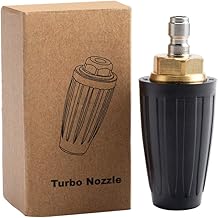
AURORA CAR Turbo Nozzle, 4000 PSI
A well-built rotating tip with a 4.0 orifice, this is the one to reach for when a concrete driveway or brick walkway needs restoring rather than rinsing. The 1/4″ quick connect makes it easy to drop in for the heavy stretch of a job and swap out before you move to gentler surfaces.
Tool Daily Nozzle Tips, 5-Pack
Five tips covering the full angle range at 2.5 GPM, sized for the mid-range electric and gas washers most homeowners actually own. The stainless construction holds its spray pattern well over repeated seasons, which is more than can be said for cheaper plated tips.
Hourleey Nozzle Tips with Holder
Seven tips plus an included holder — an unglamorous addition that quietly solves the most common pressure-washing annoyance, which is losing a tip in wet grass. The broader angle selection gives you finer control when moving between siding, furniture and hardscape.
Twinkle Star Nozzle Tips Set
A dependable multi-degree set at 2.5 GPM with clean o-ring seals and consistent machining, so tips seat firmly without weeping at the coupler. A sensible first upgrade over whatever shipped in the box with your washer.
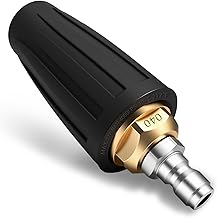
Turbo Nozzle, 360° Rotating, 4000 PSI
This upgraded turbo tip runs a tight, well-balanced rotation that resists the wobble and premature bearing wear common in budget spinners. Excellent on paver joints and weathered concrete; keep it away from decking and paint.
Frequently Asked Questions
Which nozzle should I use on vinyl siding?
Use the 40° white tip, work from a distance of at least 18 inches, and spray slightly downward to avoid driving water behind the panels. Never use 0°, 15° or a turbo tip on siding.
Do turbo nozzles increase pressure?
No. They deliver the same pressure as a 0° tip but rotate it into a cone, so you get concentrated cutting force across a wider path. The gain is in coverage speed, not raw force.
Will a 2.5 GPM tip work on a 4.0 GPM washer?
It will attach, but it restricts flow and can spike pressure beyond what your hose and pump are rated for. Always match the orifice number to your machine’s flow rate.
Why won’t my soap nozzle draw detergent?
Downstream injectors need the low-pressure black tip to create suction. If it still won’t siphon, check for a clogged injector screen or overly thick detergent.
Final Thoughts
For most homeowners, a complete angle set plus one rotating tip covers everything. The Hourleey set with holder is the most practical all-around buy, the Tool Daily 5-pack is the better match for 2.5 GPM machines, and the AURORA CAR turbo nozzle is what turns an all-day driveway project into a pre-lunch task — which is really the point. Finish early, cool down, and let the evening do what evenings are for.