Twin mattresses occupy an odd corner of the sleep market. They get bought in a hurry — for a kid outgrowing a toddler bed, a guest room that’s been empty for a year, a bunk that needs filling before cousins arrive — and the decision usually comes down to whatever ships fastest. That urgency is exactly why so many twins end up too soft for a growing spine, too thick for a bunk rail, or too heat-trapping for a child who already sleeps hot. A mattress you’ll own for five to eight years deserves ten minutes of scrutiny, even when the deadline is Saturday.
This guide looks at memory foam twins through the lens of what actually determines sleep quality: foam density and support layering, surface temperature over a full night, edge integrity for restless sleepers, and whether the height suits the frame you already own. Below you’ll find current standout models, followed by a buying framework, individual assessments, and answers to the questions that come up most often once the box is on the floor.
Our top picks

 Novilla Bliss Twin Mattress
- Just move the box to the room you…
- Introducing our signature combination of fabrics and foams…
- Whether you're a side sleeper, back sleeper, stomach…

As an Amazon Associate we earn from qualifying purchases at no extra cost to you.
🛒 Best Price Today on Amazon
Prime members get fast, free shipping on everything above, plus member-only deals. New members get a 30-day free trial — cancel anytime.
How to Choose a Memory Foam Twin Mattress (2026)
- Match height to the frame, not to instinct: Bunk beds and daybeds typically need 5 to 8 inches so guardrails stay effective, while a standard platform frame comfortably takes 10 to 12 inches. Measuring the rail height before ordering prevents the most common return.
- Read firmness as a support question: Children, stomach sleepers, and anyone with lower-back complaints generally do better on medium-firm foam, which keeps the pelvis from sinking below the ribcage. Plush feels luxurious in a showroom but allows more spinal flexion over eight hours.
- Look for real cooling mechanisms: Gel infusion, open-cell structures, and plant-derived additives like green tea extract each move heat differently. Any of them beats a sealed, undifferentiated foam core — treat marketing adjectives as secondary to the construction description.
- Insist on CertiPUR-US, and prize OEKO-TEX: The former caps emissions and restricted substances in the foam itself; the latter extends scrutiny to the cover fabric. Both matter more in a child’s room, where the mattress sits closer to a smaller body for more hours per day.
- Weigh the trial period against the break-in curve: Foam needs two to four weeks to reach its settled feel, so a 30-night window is barely adequate. Longer trials genuinely reduce buyer risk, particularly when you’re choosing on someone else’s behalf.
The Best Memory Foam Twin Mattresses of 2026, Reviewed
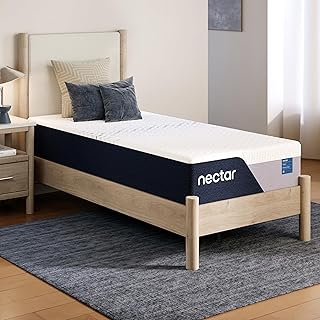
Nectar 12″ Twin Memory Foam
At 12 inches with a medium-firm profile, this is the most substantial option here and the closest to an adult-grade sleep surface in a twin footprint — a sensible pick for a teenager, a guest room you actually care about, or a small primary bedroom. The year-long trial is unusually generous and removes most of the guesswork from buying foam unseen.
Novilla Bliss 10″ Gel Memory Foam
The zoned support layer is the distinguishing feature: firmer foam beneath the lumbar region, softer response at the shoulders, which suits side sleepers who wake with upper-back tightness. Its medium-plush surface reads noticeably softer than the standard Novilla, so choose it deliberately rather than by default.
Novilla 10″ Gel Memory Foam
A dependable middle-of-the-road twin that balances contouring pressure relief against enough support to keep the hips aligned, with gel infusion doing measurable work on surface temperature. It’s the version to pick when you want conventional 10-inch height without the plusher zoned feel of the Bliss.
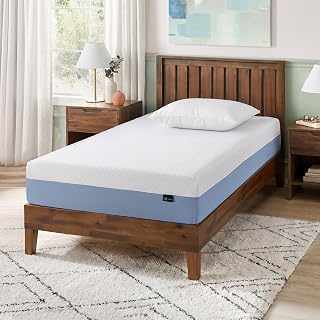
Zinus 8″ Cooling Essential
Eight inches and a true medium feel make this the versatile choice for bunks, trundles, and platform frames alike, and the dual CertiPUR-US and OEKO-TEX certification is reassuring for a nursery or shared kids’ room. Expect competent, unfussy performance rather than deep pressure-point contouring.
MLILY 8″ Green Tea Memory Foam for Kids
Built specifically for younger sleepers, its medium-firm core provides the support a developing spine needs, while green tea gel addresses both odor and heat retention in rooms that see heavy daily use. The 75″ x 38″ footprint fits standard twin frames and daybeds without overhang.
Frequently Asked Questions
How long does off-gassing take?
The initial odor from compressed foam usually clears within 48 to 72 hours in a ventilated room. Unzipping the plastic immediately and leaving a window open shortens that considerably; CertiPUR-US certification means the emissions involved are held to strict limits.
Does a memory foam twin need a box spring?
No — foam requires continuous, rigid support rather than the flex a box spring provides. A solid platform, a slatted base with gaps under three inches, or the floor all work; sagging slats are the leading cause of premature body impressions.
Is a 5-inch mattress ever the right choice?
For trundles, camp bunks, and occasional-use daybeds with strict clearance limits, yes. Something like the FDW 5-inch gel foam, with its washable cover, handles intermittent duty well, but it isn’t built for nightly sleep by an adult-sized body.
How firm should a child’s mattress be?
Medium-firm is the reliable answer. Growing bodies are light enough that plush foam offers little resistance, and a firmer surface keeps the spine neutral while making it easier for a child to roll over and get out of bed independently.
Final Thoughts
For a full-time sleeper who needs the most mattress a twin frame can hold, the Nectar 12″ earns its place through height, support, and a trial period no competitor matches. Side sleepers and anyone chasing targeted lumbar support should look at the Novilla Bliss, while the Zinus 8″ Cooling Essential remains the smartest all-purpose choice for bunks, guest rooms, and kids’ beds where clearance and certified materials matter most.