Key takeaways
- Decide: cushion or correction: Quilted fiber-fill pillow tops add plushness and soften a firm surface. Memory foam redistributes pressure at the hips and shoulders and does more for genuine ache and numbness. Pick one job and buy for it — products that promise both usually deliver neither well.
- Measure your mattress depth honestly: Include any protector or existing pad already on the bed. Deep-pocket skirts rated to 20 inches are forgiving; a 6″–15″ stretch pocket will pop off a thick hybrid at the corners by week two. Twin dimensions themselves vary too — confirm 39″ × 75″ versus a Twin XL at 39″ × 80″.
- Read the cooling claim carefully: “Rayon derived from bamboo” and viscose covers move moisture and feel cool to first touch. Gel infusion slows foam’s heat buildup but doesn’t eliminate it. Neither is a substitute for airflow, so avoid stacking a waterproof protector over any cooling topper you paid extra for.
- Check the fill weight, not the thickness: Loft is easy to fake with air. GSM (grams per square meter) tells you how much down-alternative fiber is actually in there; roughly 700–1000 GSM holds its shape through repeated washing, while thin fill compresses into ridges within a season.
- Plan for laundering from day one: Children’s and dorm beds see spills. A machine-washable quilted pad you can strip and clean on a Sunday will outperform a technically superior foam slab you can only spot-treat. Confirm the maximum washer size and whether tumble-drying is permitted.
A twin mattress is often the hardest-working bed in the house. It absorbs the growth spurts of a nine-year-old, the all-nighters of a college sophomore, the restless turning of a guest who insists the couch would have been fine. And because twin mattresses tend to be the ones we replace last — the hand-me-down, the dorm-issue slab, the bunk that came with the frame — they’re also the ones most likely to sag in the middle, run hot at 3 a.m., or feel like sleeping on a stack of plywood. Buying an entirely new mattress for a bed someone may outgrow in two years rarely makes sense. Adding a well-chosen topper almost always does.
From a sleep-medicine standpoint, the appeal is straightforward: surface comfort and thermal regulation are two of the strongest predictors of whether a person falls asleep quickly and stays asleep through the early-morning hours when body temperature naturally dips and rises. A topper is the cheapest lever you can pull on both. Below, I’ve assessed the twin toppers worth considering in 2026 — what they’re actually made of, who they suit, and where each one compromises — so you can match the product to the sleeper rather than to the marketing copy.
Our top picks




As an Amazon Associate we earn from qualifying purchases at no extra cost to you. Ratings are shown as listed on Amazon.
🛒 Best Price Today on Amazon
Prime members get fast, free shipping on everything above, plus member-only deals. New members get a 30-day free trial — cancel anytime.
How to Choose a Twin Mattress Topper (2026)
- Decide: cushion or correction: Quilted fiber-fill pillow tops add plushness and soften a firm surface. Memory foam redistributes pressure at the hips and shoulders and does more for genuine ache and numbness. Pick one job and buy for it — products that promise both usually deliver neither well.
- Measure your mattress depth honestly: Include any protector or existing pad already on the bed. Deep-pocket skirts rated to 20 inches are forgiving; a 6″–15″ stretch pocket will pop off a thick hybrid at the corners by week two. Twin dimensions themselves vary too — confirm 39″ × 75″ versus a Twin XL at 39″ × 80″.
- Read the cooling claim carefully: “Rayon derived from bamboo” and viscose covers move moisture and feel cool to first touch. Gel infusion slows foam’s heat buildup but doesn’t eliminate it. Neither is a substitute for airflow, so avoid stacking a waterproof protector over any cooling topper you paid extra for.
- Check the fill weight, not the thickness: Loft is easy to fake with air. GSM (grams per square meter) tells you how much down-alternative fiber is actually in there; roughly 700–1000 GSM holds its shape through repeated washing, while thin fill compresses into ridges within a season.
- Plan for laundering from day one: Children’s and dorm beds see spills. A machine-washable quilted pad you can strip and clean on a Sunday will outperform a technically superior foam slab you can only spot-treat. Confirm the maximum washer size and whether tumble-drying is permitted.
The Best Twin Mattress Toppers (2026) Reviewed
Niagara Sleep Solution Ultra Soft & Cooling Bamboo Topper
The rayon-from-bamboo surface is the standout here — it wicks efficiently and stays neutral against the skin rather than trapping warmth the way brushed microfiber does. With a 20″ deep pocket and genuine pillow-top loft, it’s my default recommendation for a hot sleeper on a firm or aging twin mattress.
Niagara Sleep Solution 100% Cotton Top Cooling Topper
Same architecture, different skin: a cotton face sheet that breathes naturally and softens with every wash, which suits anyone sensitive to the slick hand of synthetic covers. The cloud-like quilting adds real cushion without the sinking sensation foam produces, making it a sensible pick for children’s rooms.
EGO 2 Inch Gel Memory Foam Topper
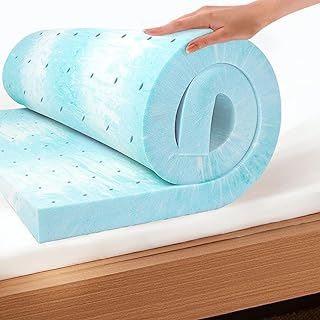
This is the corrective option in the group — two inches of CertiPUR-US certified gel-infused foam that contours at the shoulders and lumbar region instead of simply padding the surface. Cut to 75″ × 38″ for standard twins and shipped compressed, it’s the most practical fix for a thin dorm mattress causing morning back pain.
BEDLORE Viscose Bamboo Thick Pillow Top
A generously lofted quilted pad with stretch pockets sized for 6″–15″ mattresses, which makes it an easy fit on bunk beds and trundles where thinner mattresses are the norm. The viscose bamboo face keeps things breathable, and the darker colorway hides wear better than white on a heavily used bed.
Cooling Extra Thick Viscose Bamboo Topper (1000 GSM)
At 1000 GSM of down-alternative fill, this is the plushest option reviewed and the one most likely to still have shape after a year of laundering. The 8″–21″ pocket range accommodates almost any twin build, though sleepers who dislike a deep, enveloping surface should size down in loft.
Frequently Asked Questions
Will a topper fix a sagging mattress?
It masks a shallow dip and buys you time, but it can’t restore lost support. If you can see a visible valley or feel coils through the surface, the mattress itself has failed and a topper is a stopgap, not a solution.
Foam or quilted fiber for a child’s bed?
Quilted fiber, in most cases. It’s washable, breathable, and won’t retain heat around a small body that regulates temperature less efficiently than an adult’s. Reserve memory foam for older children and teens reporting genuine pressure discomfort.
Do I still need a mattress protector?
Yes — and it belongs underneath the topper, against the mattress. Layering a waterproof barrier on top of a cooling pad defeats the breathability you paid for while leaving the mattress exposed to anything that soaks through.
Does a Twin topper fit a Twin XL?
No. A Twin XL is five inches longer, and the shortfall will pull the skirt off the corners nightly. Utopia Bedding’s quilted fitted pad and similar deep-pocket models are sized specifically, so buy the exact size listed.
Final Thoughts
For most twin beds, the Niagara Sleep Solution Ultra Soft & Cooling bamboo topper is the best-balanced choice — cool, genuinely plush, and deep-pocketed enough to stay put. Choose the EGO 2 Inch Gel Memory Foam instead if the complaint is aching hips or shoulders rather than firmness, and consider the Utopia Bedding quilted fitted pad when durability and easy washing matter more than luxurious loft.