Key takeaways
- Polypropylene (the all-rounder): Solution-dyed polypropylene resists UV bleaching, shrugs off spills, and dries fast because the fiber itself doesn’t absorb water. It’s the safest default for uncovered patios and the only synthetic that convincingly mimics a woven wool look.
- Recycled PET and polyethylene straw (the workhorses): Flat plastic weaves are genuinely waterproof, hose off in seconds, and usually reverse for two patterns. They run warm in direct sun and feel smooth rather than plush — ideal for pool decks, RVs, and beach setups.
- Jute and jute blends (the barefoot choice): Nothing synthetic matches jute’s dry, grounding texture, which is why it belongs on covered porches and screened rooms. Treat it as semi-outdoor: it tolerates humidity and splashes but not standing water.
- Weave density and pile height: Low-profile flatweaves shed debris and dry quickly; high pile traps pollen, sand, and moisture. If anyone in the house has allergies that fragment their sleep, stay under half an inch of pile.
- Drainage and airflow: Look for open weaves or perforated backings, and lift the rug monthly. Mildew forms in the gap between rug and hardscape, not on the surface — and that musty smell drifts indoors through open doors and windows.
What's inside
Most people shop for an outdoor rug the way they shop for a doormat — quickly, by color, hoping for the best. Then July arrives, the rug holds water like a sponge after a thunderstorm, the underside goes sour and mildewed, and the sunny side fades three shades lighter than the shady side. By season two it’s curling at the corners and heading for the curb. The culprit almost always traces back to one decision made in the first thirty seconds of browsing: the fiber.
I spend my working life studying how environments affect rest and recovery, and patios matter more than people assume. The hour you spend on a porch before bed — barefoot, screens down, light dimming — is one of the most reliable wind-down rituals available to a household, and texture underfoot is part of what signals the nervous system to downshift. A rug that feels gritty, damp, or plasticky undermines that. This guide breaks down the four materials that actually survive outdoors in 2026, what each one feels like against bare skin, and which specific rugs earn their keep on a patio, a covered porch, or a campsite.
As an Amazon Associate we earn from qualifying purchases.



🛒 Best Price Today on Amazon
Prime members get fast, free shipping on everything above, plus member-only deals. New members get a 30-day free trial — cancel anytime.
How to Choose a Material For An Outdoor Rug (2026)
- Polypropylene (the all-rounder): Solution-dyed polypropylene resists UV bleaching, shrugs off spills, and dries fast because the fiber itself doesn’t absorb water. It’s the safest default for uncovered patios and the only synthetic that convincingly mimics a woven wool look.
- Recycled PET and polyethylene straw (the workhorses): Flat plastic weaves are genuinely waterproof, hose off in seconds, and usually reverse for two patterns. They run warm in direct sun and feel smooth rather than plush — ideal for pool decks, RVs, and beach setups.
- Jute and jute blends (the barefoot choice): Nothing synthetic matches jute’s dry, grounding texture, which is why it belongs on covered porches and screened rooms. Treat it as semi-outdoor: it tolerates humidity and splashes but not standing water.
- Weave density and pile height: Low-profile flatweaves shed debris and dry quickly; high pile traps pollen, sand, and moisture. If anyone in the house has allergies that fragment their sleep, stay under half an inch of pile.
- Drainage and airflow: Look for open weaves or perforated backings, and lift the rug monthly. Mildew forms in the gap between rug and hardscape, not on the surface — and that musty smell drifts indoors through open doors and windows.
The Best Material For An Outdoor Rug (2026)s Reviewed
Unique Loom Heathered Indoor/Outdoor Flatweave
This heathered light gray flatweave is the most convincing indoor-outdoor crossover here — the tonal variation reads like textile, not vinyl, and the 4′ x 6′ size suits a balcony reading chair or a small screened porch. The tight, low weave means no trapped grit under bare feet, which matters if you’re transitioning straight from patio to bedroom.
JONATHAN Y Estrella Boho Medallion
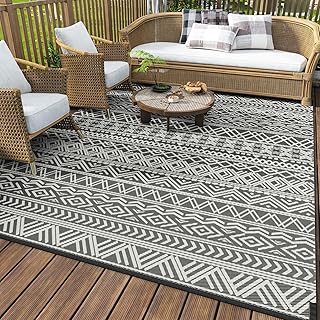
An 8′ x 10′ navy and gray medallion with a textured weave that gives the surface real depth rather than a printed look. It handles pet traffic and doesn’t shed, making it the strongest pick for a family patio that sees daily use in low evening light.
JONATHAN Y Ourika Moroccan Geometric
The orange-and-cream palette brings warmth to shaded, north-facing porches that otherwise feel cold after sundown — a small but real factor in whether people actually use the space. Same durable textured construction and easy hose-down cleaning as the Estrella.
Reversible Recycled Plastic Mykonos Mat
Made from 100% recycled plastic, crease-free, and genuinely water, stain, fade, and UV resistant — this is the rug I recommend for full-sun exposure where nothing else survives more than two summers. The 8′ x 10′ reverses to a second colorway, so a stubborn stain becomes a flip rather than a replacement.
MontVoo Reversible Plastic Straw Rug
Lightweight, waterproof, and rollable, this 5′ x 8′ straw-weave mat is built for movement: camping, tailgates, boat decks, balconies. It’s the least luxurious underfoot but by far the easiest to shake out, dry, and stow.
Frequently Asked Questions
Which outdoor rug material lasts longest in direct sun?
Solution-dyed polypropylene and recycled PET both hold color for years because pigment is locked into the fiber rather than applied to the surface. Untreated natural fibers will fade and weaken within a single harsh summer.
Can I put an outdoor rug on a wooden deck?
Yes, but only with airflow. Choose an open flatweave, lift and sweep beneath it every few weeks, and avoid solid rubber backings that seal moisture against the boards.
Is jute suitable for a fully exposed patio?
Not really. Jute belongs under a roof or awning where it stays dry between uses; repeated soaking will stiffen the fibers and invite mildew.
How do I get rid of a musty smell?
Hose both sides, scrub with diluted white vinegar, and dry the rug fully upright in the sun before it goes back down. Prevention is easier: check underneath monthly during humid stretches.
Final Thoughts
If your patio takes full sun and hard weather, the Reversible Recycled Plastic Mykonos mat is the most durable choice on this list. For a covered patio or porch where comfort and looks carry equal weight, the JONATHAN Y Estrella medallion delivers texture and traffic tolerance in a large size, while the Unique Loom heathered flatweave is the smarter pick for balconies and compact spaces where a soft, low-profile surface makes evening downtime genuinely inviting.