Key takeaways
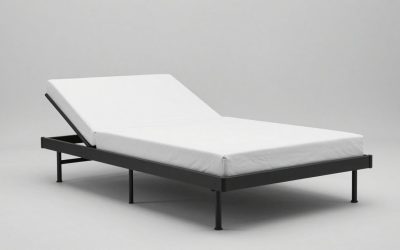
- Deck height and your body: Measure from the floor to the top of your mattress once it’s on the frame. For easy sit-to-stand, most adults do best when their knees sit level with or just below their hips — roughly 20 to 24 inches total. A 4-inch frame under a 12-inch mattress lands right in that window; pair a 7-inch frame with a slimmer mattress instead.
- Slat spacing over slat count: Foam and hybrid mattresses need gaps of about 3 inches or less to avoid sagging between supports. Many warranties are void without it. Count the gaps, not the marketing claims.
- Load rating with a real margin: Add both sleepers, the mattress, bedding, and the occasional kid or dog pile-on, then look for a frame rated well beyond that. A 3,500-pound steel platform isn’t overkill — it’s what keeps the center from flexing after year three.
- Noise engineering: Squeaks come from metal-on-metal contact at the joints and from feet skidding on hard floors. Look for interlocking joints, felt or rubber sleeve inserts, and non-slip foot pads. A frame that’s quiet on night one but not on night three hundred wasn’t designed for silence.
- Edge retention: Low frames sit close to the floor, so a wandering mattress is a genuine trip hazard at 3 a.m. Corner stoppers or a perimeter baffle keep everything aligned without straps.
Most people shopping for a low bed frame aren’t chasing a trend — they’re solving a problem. Maybe the mattress-plus-boxspring stack has crept up to hip height and getting out of bed has started to feel like dismounting. Maybe a partner’s midnight trip to the bathroom ends in a creak that wakes the whole room. Maybe the ceiling in a converted attic simply refuses to negotiate. In my clinical sleep coaching work, bed height comes up far more often than people expect, usually disguised as a complaint about restless nights, morning stiffness, or a child who keeps rolling onto the floor.
A low-profile frame fixes more than aesthetics. Sitting closer to the floor makes transfers safer for older sleepers and anyone with knee, hip, or balance issues, and it lets a thick modern mattress breathe on slats instead of suffocating on a solid platform. This guide covers what actually matters when you shop — deck type, slat spacing, load rating, noise control, and edge retention — then walks through the frames I’d recommend to a client this year, from bare-bones 4-inch steel decks to a floor-level wood platform. No box spring required for any of them.
Our top picks


As an Amazon Associate we earn from qualifying purchases at no extra cost to you.
🛒 Best Price Today on Amazon
Prime members get fast, free shipping on everything above, plus member-only deals. New members get a 30-day free trial — cancel anytime.
How to Choose a Low Bed Frame (2026)
- Deck height and your body: Measure from the floor to the top of your mattress once it’s on the frame. For easy sit-to-stand, most adults do best when their knees sit level with or just below their hips — roughly 20 to 24 inches total. A 4-inch frame under a 12-inch mattress lands right in that window; pair a 7-inch frame with a slimmer mattress instead.
- Slat spacing over slat count: Foam and hybrid mattresses need gaps of about 3 inches or less to avoid sagging between supports. Many warranties are void without it. Count the gaps, not the marketing claims.
- Load rating with a real margin: Add both sleepers, the mattress, bedding, and the occasional kid or dog pile-on, then look for a frame rated well beyond that. A 3,500-pound steel platform isn’t overkill — it’s what keeps the center from flexing after year three.
- Noise engineering: Squeaks come from metal-on-metal contact at the joints and from feet skidding on hard floors. Look for interlocking joints, felt or rubber sleeve inserts, and non-slip foot pads. A frame that’s quiet on night one but not on night three hundred wasn’t designed for silence.
- Edge retention: Low frames sit close to the floor, so a wandering mattress is a genuine trip hazard at 3 a.m. Corner stoppers or a perimeter baffle keep everything aligned without straps.
The Best Low Bed Frames (2026) Reviewed
YUSENHEEI 4 Inch Queen Low Profile Frame
This is the frame I point people toward when their only goal is to lose the box spring and drop the mattress a few inches without changing anything else about their setup. The heavy-duty steel deck stays flat under a dense hybrid, assembly is a genuinely tool-light affair, and the noise-free joints hold up to a partner who shifts positions all night.
Nailsong 4 Inch Queen Bed Frame
A near-identical spec to the YUSENHEEI at a slightly leaner build, and the better value if you’re outfitting a guest room or a teenager’s first real bed. It handles foam mattresses well, though I’d size up on load rating if two heavier adults will sleep on it nightly.
Superay 4 Inch Queen with Rounded Legs
My overall pick. The 3,500-pound rating gives you a margin most low frames don’t, the mattress stopper solves the sliding problem outright, and the rounded legs are a small detail that matters enormously in a dark bedroom — no sharp corners waiting for a bare shin.
ROIL 4 Inch Queen with Corner Mattress Baffle
The perimeter baffle wraps the corners rather than relying on a single stopper, which makes this the strongest choice for restless sleepers or anyone using a mattress topper that likes to travel. Rubber foot pads keep it silent and stationary on hardwood and tile.
GarveeHome Wood Platform Bed Frame (Full)
For sleepers who want the true floor-bed look, this wood-slat platform sits lower and warmer than any steel option here, and the slat support ventilates a foam mattress properly. Best for lighter sleepers and rooms where the frame is part of the visual design.
Frequently Asked Questions
Is sleeping closer to the floor actually better for you?
There’s no evidence that height itself improves sleep quality. What improves is everything around it: safer transfers, less fear of falling, and a firmer overall feel because the mattress isn’t resting on a springy foundation.
Will a low frame make my room feel colder?
Slightly, since cool air settles. It’s rarely noticeable at 4 to 7 inches, but if you sleep in a drafty room, choose a slatted frame with airflow underneath rather than pressing a mattress toward the floor.
Do I lose all my under-bed storage?
Mostly, yes — plan for it. A 7-inch frame like the Upcanso preserves room for flat bins and vacuum bags, which is the main reason to choose it over a 4-inch deck.
Can I use my existing box spring on one of these?
You can, but it defeats the purpose and pushes total height back up past 30 inches. These frames are engineered as complete foundations; mattress goes directly on the deck.
Final Thoughts
For most bedrooms, the Superay 4 Inch Queen is the frame I’d buy — strongest load rating in the group, effective mattress stopper, and no shin-bruising corners. Choose the ROIL if a sliding mattress is your specific complaint and you want a full baffle, or the GarveeHome wood platform if you’re after a warmer, true floor-level bed. All three drop your sleep surface without asking you to give up support.