Key takeaways
- Weave construction: Braided jute delivers chunky, tactile depth and hides crumbs well, while flatwoven or boucle-style weaves sit lower and slide under furniture legs more gracefully. Braided styles tend to feel warmer barefoot — worth considering if your evenings involve floor time.
- Fiber blends: Pure jute is the most durable and the most textured. Blends with cotton or wool trade a little longevity for meaningful softness, which matters if children, pets, or a nightly yoga habit share the space.
- Shedding tolerance: Every natural jute rug shed for a while. Expect four to eight weeks of light fiber loss with regular vacuuming. If loose fiber genuinely bothers you, a tighter, lower-pile weave will settle faster than a loose braid.
- Room dimensions: Undersized rugs visually fragment a room, and fragmented rooms feel busier. Aim for a rug that reaches under the front legs of your seating at minimum; an 8×10 suits most standard living rooms, while 5×7 works for apartments or layering.
- Moisture conditions: Jute dislikes damp. Skip it in basements, near patio doors that leak, or in humid coastal rooms without airflow, since trapped moisture invites both staining and musty odor.
What's inside
Most people shopping for a jute rug are chasing a look — that warm, woven, quietly rustic floor you saw in a magazine. What they rarely consider is how much a living room floor influences the way a household winds down. As someone who spends their days advising people on sleep hygiene and evening environments, I can tell you the hours before bed matter enormously, and the room where those hours happen deserves scrutiny. Hard, echoing floors keep a space acoustically alert. Synthetic fibers off-gas and hold static. Jute does the opposite: it absorbs sound, softens harsh light reflection, and carries a natural texture that signals “slow down” to the nervous system without anyone consciously noticing.
The trouble is that jute varies wildly in quality. Some rugs shed relentlessly for months. Others feel like sandpaper underfoot, which defeats the purpose if your evening ritual involves stretching or sitting on the floor. Below, I’ve assessed six well-reviewed jute rugs for 2026 through both a design and a wind-down lens: how they feel, how they hold up, how they behave in a room you actually want to relax in. You’ll find a buying framework, individual reviews, and answers to the questions I hear most often.
As an Amazon Associate we earn from qualifying purchases.


🛒 Best Price Today on Amazon
Prime members get fast, free shipping on everything above, plus member-only deals. New members get a 30-day free trial — cancel anytime.
How to Choose a Jute Rug For Living Room (2026)
- Weave construction: Braided jute delivers chunky, tactile depth and hides crumbs well, while flatwoven or boucle-style weaves sit lower and slide under furniture legs more gracefully. Braided styles tend to feel warmer barefoot — worth considering if your evenings involve floor time.
- Fiber blends: Pure jute is the most durable and the most textured. Blends with cotton or wool trade a little longevity for meaningful softness, which matters if children, pets, or a nightly yoga habit share the space.
- Shedding tolerance: Every natural jute rug shed for a while. Expect four to eight weeks of light fiber loss with regular vacuuming. If loose fiber genuinely bothers you, a tighter, lower-pile weave will settle faster than a loose braid.
- Room dimensions: Undersized rugs visually fragment a room, and fragmented rooms feel busier. Aim for a rug that reaches under the front legs of your seating at minimum; an 8×10 suits most standard living rooms, while 5×7 works for apartments or layering.
- Moisture conditions: Jute dislikes damp. Skip it in basements, near patio doors that leak, or in humid coastal rooms without airflow, since trapped moisture invites both staining and musty odor.
The Best Jute Rug For Living Room (2026)s Reviewed
KEMA Jute Braided Area Rug, 5×7
A dense, reversible braid with genuine vintage character, and the reversibility effectively doubles its lifespan in a high-use lounge. The 5×7 footprint is ideal for smaller living rooms or as a grounding layer beneath a reading chair where you decompress before bed.
Natural Hand Braided 8’x10′ Jute Rug
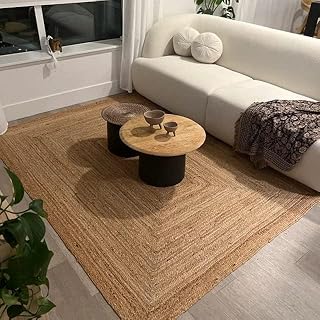
This is the classic farmhouse braid at a size that anchors a full seating arrangement, and the hand-braided construction gives it an irregular, organic surface that photographs beautifully. It’s chunky enough to noticeably dampen footfall noise — a real asset in homes where someone’s asleep down the hall.
nuLOOM Ashli Natural Solid Handwoven Rug
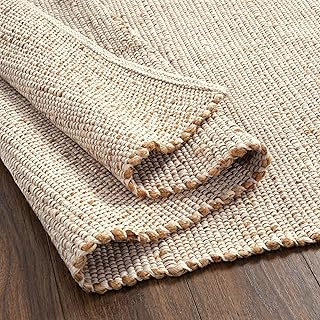
The Ashli’s tight, uniform handweave reads more contemporary than most jute, making it a smart pick for minimalist or Scandinavian rooms. Its lower profile also means less fiber shed and easier door clearance.
SAFAVIEH Natural Fiber Collection, 6’x9′
Safavieh has been refining natural-fiber weaves for decades, and this tasseled jute shows it — consistent construction, honest color, and resilience in traffic paths. The 6×9 is a genuinely useful in-between size for rooms where an 8×10 overwhelms.
Natural Jute & Wool Mini Check Rug, 8’x10′
The wool content is the headline here: it softens the hand feel considerably while the mini-check pattern and 4″ border add quiet visual interest. At 0.6″ pile, it’s my top recommendation for anyone who sits, stretches, or lies on the living room floor as part of their evening routine.
Frequently Asked Questions
Do jute rugs feel too rough for a relaxing living room?
Pure jute has a firm, coarse texture that some people find grounding and others find unpleasant barefoot. If you want softness underfoot, choose a cotton or wool blend such as the GRUHUM jute-cotton or the jute-and-wool mini check.
Can a rug really affect how well I sleep?
Indirectly, yes. Textiles absorb ambient sound and reduce the acoustic sharpness of a room, and a calmer sensory environment in the hour before bed supports an easier transition to sleep. A rug won’t fix insomnia, but a hard, loud, echoing living room genuinely works against you.
Do I need a rug pad?
Always. A felt or natural-rubber pad prevents slipping, protects your floor from jute’s abrasive backing, and adds cushioning that makes the rug feel considerably more comfortable.
How do I clean a jute rug?
Vacuum regularly using suction only, never a beater bar. Blot spills immediately with a dry cloth and avoid wet shampooing entirely, since saturating jute can cause browning and lingering odor.
Final Thoughts
For most living rooms, the Natural Jute & Wool Mini Check is the strongest all-round choice — soft enough for real floor use, handsome enough to define the space. Choose the SAFAVIEH Natural Fiber rug if you want proven durability from an established weaver, or the KEMA braided 5×7 if you’re working with a compact room and want maximum texture and reversible value.