Key takeaways
- Dimming and flame color range: Look for adjustable brightness plus warm amber and deep red options, not just cool blues and violets. Evening light should sit low and warm; a fireplace you can dim to a candle-like glow becomes a wind-down cue rather than a stimulant.
- Fan noise and heat separation: The single most underrated spec. Confirm the unit runs flames independently of the heater, so you can enjoy the visual at bedtime in total silence. Low-noise blowers and multi-speed fans are worth paying for in a bedroom.
- Thermostat, not just wattage: A true thermostat holds a set point and cycles less; a plain 750W/1500W toggle tends to overshoot. Bedrooms sleep best around 65–68°F, and overshooting past that is a reliable way to wake up at 3 a.m.
- Timer and smart scheduling: A 24-hour timer or app-based schedule lets the unit fade out on its own. Alexa, Google Home, and WiFi control mean you never have to get up, turn on overhead lights, or hunt for a remote.
- Framing and clearance reality: Measure your studs first. Some inserts fit standard 2×6 framing; ultra-thin models suit shallower walls. Verify depth, recess dimensions, and the manufacturer’s clearance to combustibles and mantels before committing.
What's inside
Most people shop for an in-wall electric fireplace with their eyes: they want the flicker, the architectural line of light floating above a console, the room that finally looks finished. As someone who spends my working hours on sleep environments, I’d argue the more interesting question is what the unit does to your bedroom or living room after 9 p.m. A fireplace is a light source, a heat source, and a sound source — the exact three variables that govern how easily your body slides into sleep. Get them wrong and you’ve installed a very handsome insomnia machine: a blue-white glare that suppresses melatonin, a fan that hums at an alerting frequency, a heater that pushes your core temperature the wrong direction just as it needs to fall.
The good news is that the 2026 crop of recessed units gives you real control over all three. Dimmable warm flame palettes, heat-off “flame only” modes, thermostats that hold a temperature instead of cycling loudly, and timers that shut everything down after you’ve drifted off. Below I’ve assessed the leading recessed and wall-mount models on the criteria that actually matter for rest — light temperature and dimming range, fan noise, thermostat behavior, and how gracefully each one turns itself off — alongside the practical installation details you’ll need before you open a wall.
As an Amazon Associate we earn from qualifying purchases.


🛒 Best Price Today on Amazon
Prime members get fast, free shipping on everything above, plus member-only deals. New members get a 30-day free trial — cancel anytime.
How to Choose a/an In Wall Electric Fireplace (2026)
- Dimming and flame color range: Look for adjustable brightness plus warm amber and deep red options, not just cool blues and violets. Evening light should sit low and warm; a fireplace you can dim to a candle-like glow becomes a wind-down cue rather than a stimulant.
- Fan noise and heat separation: The single most underrated spec. Confirm the unit runs flames independently of the heater, so you can enjoy the visual at bedtime in total silence. Low-noise blowers and multi-speed fans are worth paying for in a bedroom.
- Thermostat, not just wattage: A true thermostat holds a set point and cycles less; a plain 750W/1500W toggle tends to overshoot. Bedrooms sleep best around 65–68°F, and overshooting past that is a reliable way to wake up at 3 a.m.
- Timer and smart scheduling: A 24-hour timer or app-based schedule lets the unit fade out on its own. Alexa, Google Home, and WiFi control mean you never have to get up, turn on overhead lights, or hunt for a remote.
- Framing and clearance reality: Measure your studs first. Some inserts fit standard 2×6 framing; ultra-thin models suit shallower walls. Verify depth, recess dimensions, and the manufacturer’s clearance to combustibles and mantels before committing.
The Best In Wall Electric Fireplaces (2026) Reviewed
R.W.FLAME 60″ Recessed and Wall Mounted Fireplace
The low-noise blower and 2×6 stud compatibility make this the easiest large-format pick for a bedroom wall, and the touch screen plus timer let you set an evening fade without a phone in hand. Adjustable flame color and speed give you enough range to drop into warm, slow, low-stimulation territory after dark.
Touchstone Sideline Smart 50″
Thirty ember and flame combinations sound like marketing until you realize how precisely you can tune the warmth, and the built-in thermostat is the best sleep-relevant feature here — it holds a temperature rather than blasting and stalling. Alexa and WiFi control mean lights-out is a sentence, not a trip across the room.
Westinghouse 60 Inch Electric Fireplace Heater
A generous 60-inch presence with a genuinely useful 24-hour timer and voice assistant support, making it simple to schedule heat before bed and flames-only afterward. Color-changing flames cover both the cozy warm end and the cooler decorative end, so dim deliberately in the evening.
Smart 50″ Ultra Thin Linear Electric Fireplace
The shallow profile solves the problem of thin interior walls, and thirteen flame options plus optional crackling audio give you a soft, steady soundscape some sleepers find genuinely settling. Timer and overheat protection are standard, and the crackle can be silenced entirely if you’re noise-sensitive.
50 inch Smart Electric Fireplace Insert
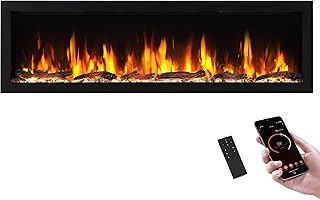
Multicolor realistic flames over a choice of logs or crystals, with app and Alexa control at a friendlier price than the premium names. A solid mid-range choice if you want scheduling flexibility and don’t need a dedicated thermostat.
Frequently Asked Questions
Can I sleep with an electric fireplace running?
Run flames only, or set a timer for the heater. Continuous heat overnight tends to keep your core temperature elevated and fragments sleep; a 60–90 minute pre-bed warm-up followed by automatic shutoff works far better.
Are the flame lights bad for melatonin?
Bright, blue-shifted light in the hour before bed will blunt melatonin release. Dimmed amber and red settings at low brightness are far gentler, which is why adjustable color and intensity matter more than raw flame realism.
How loud are these units?
Heater fans typically produce a soft whoosh in the 40s of decibels — noticeable in a quiet bedroom. Models advertising low-noise operation or multiple fan speeds give you the most control, and flame-only mode is essentially silent.
Do I need an electrician?
Most 1500W units draw enough current that a dedicated 15-amp circuit is recommended, especially for permanent recessed installation. Hardwiring and framing modifications are jobs for a licensed professional.
Final Thoughts
For a bedroom where sleep quality is the priority, the Touchstone Sideline 50″ earns the top spot on the strength of its true thermostat and finely graded warm flame settings. The R.W.FLAME 60″ is the best large-format value thanks to its low-noise blower and straightforward 2×6 fit, while the Smart 50″ Ultra Thin Linear is the one to choose when wall depth is tight and you want scheduling built in.