
Key takeaways
- Item Dimensions D x W x H: 46"D x 16.7"W x 17.2"H
- Material: Superior Alloy Steel
A workout bench is the piece of home gym equipment people research last and regret first. Most buyers obsess over dumbbell sets and squat racks, then grab whatever bench is cheapest, and three months later they are pressing on a pad that flexes under a 60-pound dumbbell in each hand or fighting an adjustment mechanism that requires standing up, lifting the backrest, and guessing at the angle. The bench is the surface your spine rests on while you move heavy objects over your face. It deserves the same scrutiny you gave the barbell.
The good news is that bench quality comes down to about six measurable things: pad width, pad firmness, the gap between seat and back, frame steel, adjustment method, and rated capacity. None of those require you to trust marketing copy — they are numbers on a spec sheet, and once you know which numbers matter, the shortlist shrinks fast. This guide breaks down the main bench categories, what each one is genuinely good at, and the specific tradeoffs that separate a bench you keep for a decade from one you sell at a loss.
Our top picks
 NICEPEOPLE Adjustable Weight Bench for Home Gym
- Item Dimensions D x W x H: 46"D x 16.7"W x 17.2"H
- Material: Superior Alloy Steel
 YOLEO Adjustable Weight Bench for Home Gym
- Item Dimensions D x W x H: 41"D x 12.6"W x 42.5"H
- Material: Alloy Steel
 Multi-Function All in 1 Weight Bench Set
- EU Spare Part Availability Duration: 1 Years
- Item Dimensions D x W x H: 41.73"D x 34.64"W x 13.39"H
- Material: Alloy Steel
| Product | Key specs | |
|---|---|---|
| NICEPEOPLE Adjustable Weight Bench for Home Gym | Item Dimensions D x W x H: 46"D x 16.7"W x 17.2"H Material: Superior Alloy Steel | Check price |
| YOLEO Adjustable Weight Bench for Home Gym | Item Dimensions D x W x H: 41"D x 12.6"W x 42.5"H Material: Alloy Steel | Check price |
| Multi-Function All in 1 Weight Bench Set | EU Spare Part Availability Duration: 1 Years Item Dimensions D x W x H: 41.73"D x 34.64"W x 13.39"H Material: Alloy Steel | Check price |
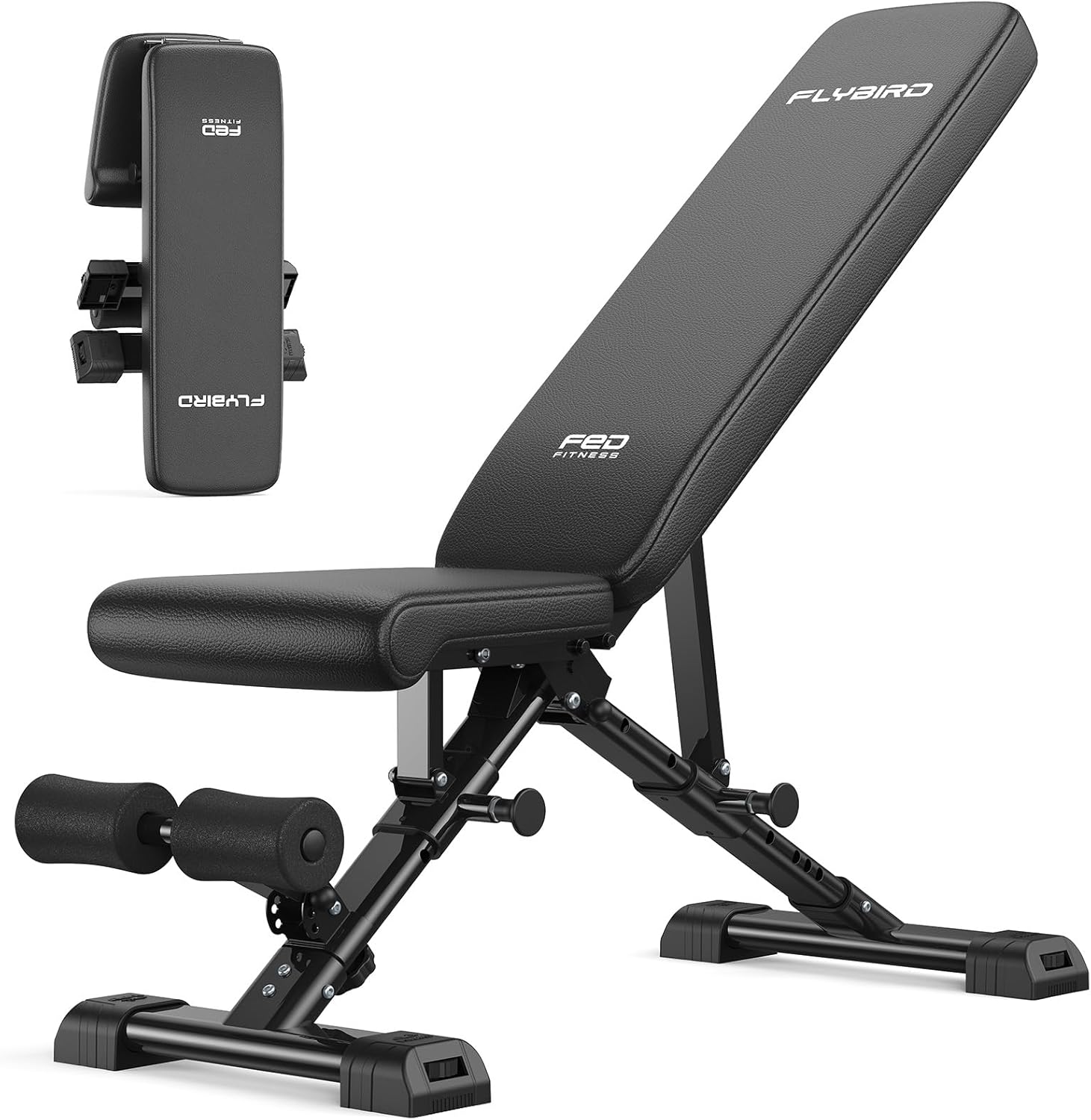 FLYBIRD WB5 Weight Bench FLYBIRD WB5 Weight Bench | Warranty Description: 1 year Item Dimensions D x W x H: 46"D x 13"W x 48.5"H Material: Breathable leather &Alloy Steel | Check price |
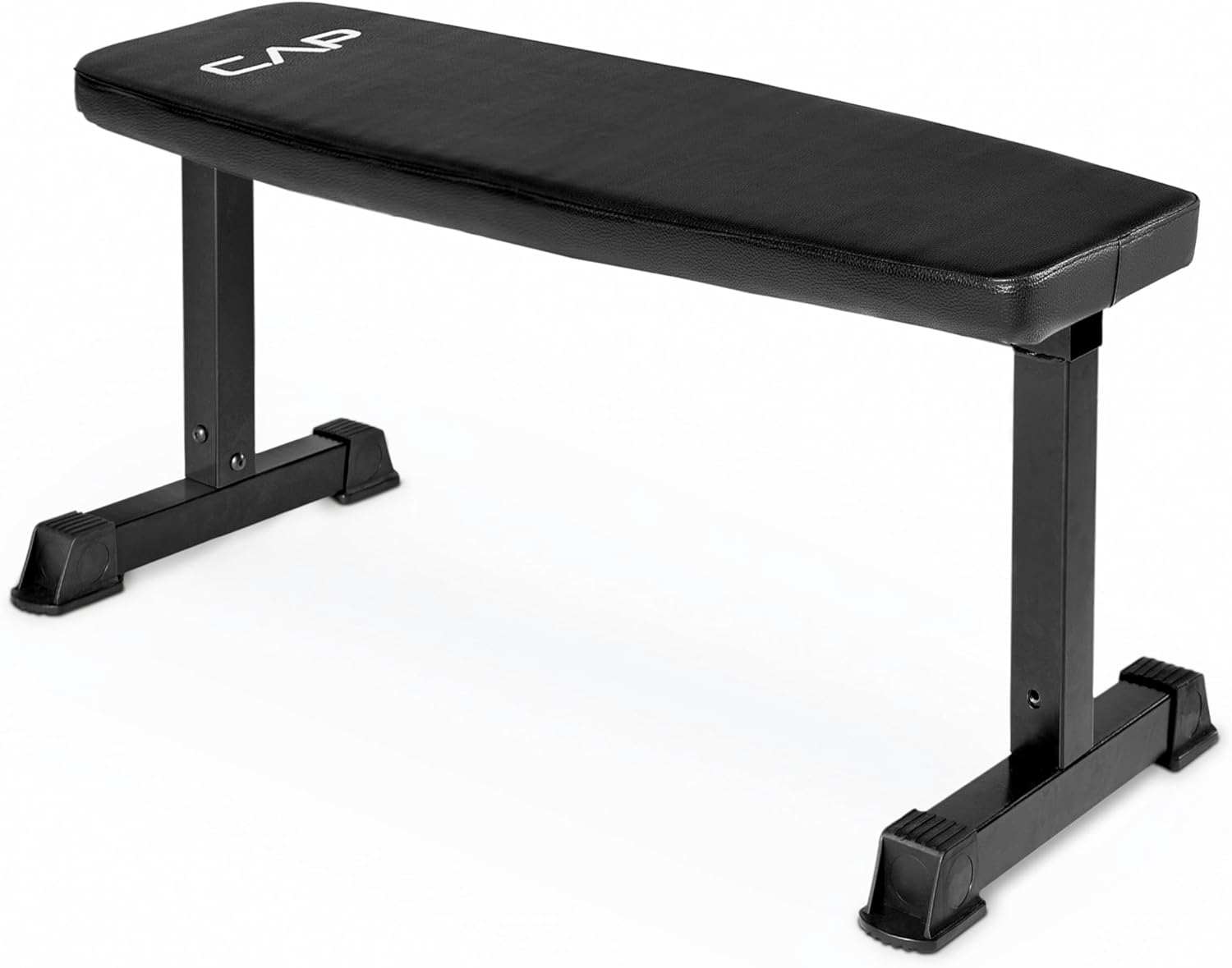 Cap Barbell Flat Weight Bench Color Series Cap Barbell Flat Weight Bench Color Series | Warranty Description: 30 day manufacturer Item Dimensions D x W x H: 18.11"D x 42.52"W x 19.09"H Material: Alloy Steel, Vinyl | Check price |
 FLYBIRD WB2 Weight Bench FLYBIRD WB2 Weight Bench | Material: Sweat-Proof Leather & Alloy Steel Frame Material: Alloy Steel EU Spare Part Availability Duration: 7 Years | Check price |
 Weight Bench Press Weight Bench Press | Item Dimensions D x W x H: 9.84"D x 12.6"W x 31.5"H Material: Alloy Steel | Check price |
As an Amazon Associate we earn from qualifying purchases at no extra cost to you.
As an Amazon Associate we earn from qualifying purchases.
Quick Comparison
| Bench Type | Best For | Typical Capacity | Footprint | Main Tradeoff |
|---|---|---|---|---|
| Flat utility bench | Barbell bench press, dumbbell rows, step-ups | 600–1,500 lb | Small, fixed | No incline work at all |
| Adjustable FID bench | Flat, incline, and decline pressing from one unit | 600–1,000 lb | Medium, often long | Seat-to-back gap and hinge bulk |
| Folding incline bench | Apartments, shared rooms, dumbbell-only setups | 400–700 lb | Small, stores upright | Thinner steel, more flex under load |
| Olympic bench with rack | All-in-one barbell training without a full cage | 400–600 lb combined | Large | Fixed rack height limits safety |
| Zero-gap competition bench | Serious pressing, powerlifting-style training | 1,000 lb and up | Medium, heavy to move | Price, and it rarely folds |
How to Choose
- Pad width, measured at the shoulders. Around 11 inches is the sweet spot for most adults. Narrower and your shoulder blades hang off the edges, which kills stability on heavy presses. Wider than about 12.5 inches and the pad physically blocks scapular retraction, robbing you of the shoulder position that keeps pressing safe.
- Firmness over cushioning. You want roughly two to three inches of dense foam over a plywood or steel core. Squishy foam feels great in a showroom and terrible under load, because your torso sinks and rocks instead of staying locked. Press your thumb into the pad — if it sinks more than half an inch easily, it is too soft for barbell work.
- The seat-to-back gap. On adjustable benches, check how wide the gap opens when the back is set flat. Anything over two inches puts a hard edge right under your lumbar spine or leaves your glutes unsupported. Zero-gap designs solve this with a sliding seat or a shared pad, and it is worth paying for.
- Adjustment mechanism and how many usable angles. Ladder-style notched backrests handle more weight and never slip, but you must unload the pad to change them. Pop-pin systems adjust in seconds and are far better for circuits and drop sets. Also count the angles: seven positions between flat and 85 degrees is generous, four is limiting, and a bench that only offers 30 and 45 degrees will annoy you.
- Frame steel and leg geometry. Look for 11-gauge or 12-gauge tubing over 14-gauge, and check whether the bench uses three legs or four. Three-leg designs give your feet room for leg drive but demand a perfectly flat floor. Four legs are more stable but you will occasionally kick one. Either way, confirm the rated capacity includes both your bodyweight and the load — a “600 lb bench” is not a 600 lb dumbbell bench.
Top Picks Reviewed
Flat Utility Bench
The unglamorous winner for most home gyms. With no hinges, no pins, and no moving parts, a flat bench puts every dollar into steel and padding, which is why entry-level flats often out-stabilize adjustables costing twice as much. Look for a 17 to 18 inch seat height, which lets an average-height lifter plant both feet flat with shins vertical. If your training is mostly barbell bench, rows, hip thrusts, and dumbbell work, this is the honest answer — pair it with a rack and you have a complete pressing station.
Adjustable FID Bench
Flat, incline, and decline in one frame, and the default recommendation for anyone whose gym is dumbbells plus a bench. The compromises live in the hardware: the hinge assembly raises the pad height, the decline leg-roller adds length, and cheaper models let the back pad rattle in its brackets. Prioritize a low seat height, a gap under two inches, and a decline position that actually locks your legs down. Confirm the pad is thick enough to sit level with the seat rather than stepping up an inch at the seam.
Folding Incline Bench
Built for the person whose gym is also a living room. These fold to a few inches thick and slide behind a door, and modern ones handle dumbbell training up to a genuinely respectable load. The tradeoff is structural: folding hinges introduce flex, the frames use thinner tubing to stay light, and capacity ratings drop accordingly. Excellent for dumbbell presses, flyes, and seated shoulder work. Not the bench for a 300-pound barbell.
Olympic Bench with Integrated Rack
A bench, uprights, and often a leg developer and preacher curl pad in one purchase. The appeal is obvious for a first home gym on a budget, and it genuinely works for moderate loads. Be clear-eyed about the limits: the uprights are usually fixed-width, the rack height suits one body type, and there are no adjustable safety catches. If you plan to press heavy alone, budget for a rack with proper spotter arms instead and treat this as a starter setup.
Zero-Gap Competition-Style Bench
Thick steel, a rock-solid pad, four-figure capacity, and a seat that slides to eliminate the gap entirely. This is the bench that stops mattering once you own it, which is the highest compliment equipment can earn. It costs more, weighs enough that you will position it once and leave it, and most models do not fold. If pressing is central to your training and you have dedicated floor space, buying this first is cheaper than buying two lesser benches.
Frequently Asked Questions
How much weight capacity do I actually need?
Add your bodyweight to the heaviest load you realistically expect to press, then double the result for margin. A 180-pound lifter working toward a 250-pound bench should be shopping at 850 pounds or more, not 430. Manufacturers test to static loads, but real training involves dynamic force, lateral rocking, and the occasional dropped dumbbell. Overbuilding here costs very little and buys years of confidence.
Is a decline setting worth paying for?
For most people, no. Decline pressing has a narrow benefit over flat work, the leg rollers add length and cost, and the setup is awkward to get into alone. The exception is if you want decline sit-ups and weighted core work, where the same rollers earn their keep. Given a choice between decline capability and a smaller seat-to-back gap, take the gap every time.
Why does my bench wobble on a flat floor?
Usually rubber feet of slightly unequal height, a common tolerance issue on three-leg designs and on benches shipped with loose hardware. Retorque every bolt after the first week of use, since assembly bolts settle. If it persists, a thin rubber shim under the offending foot fixes it permanently. Wobble that comes from the pad rather than the legs points to worn hinge bushings and is harder to solve.
Do I need a bench if I already have a rack with a pull-up bar?
Yes, if you want to press. Floor presses and push-ups are useful but cap your range of motion and your loading. A bench is also the most versatile non-rack surface in a home gym: rows, hip thrusts, split squats, seated overhead work, tricep dips, and dumbbell work all run through it. It is generally the best value purchase after the rack and barbell.
Final Thoughts
Buy the bench for the training you do most, not the training you imagine doing. If barbell pressing dominates your program, a rigid flat or zero-gap bench with real steel and an 11-inch pad will outlast every adjustable in its price bracket. If dumbbells are your foundation, an adjustable with a small seat gap and fast pop-pin angles will get used far more often. If your gym packs away between sessions, a folding incline bench that you actually deploy beats a superior bench you avoid dragging out. Check the pad width, press your thumb into the foam, measure the gap, read the gauge, and ignore everything else on the box.
8 Best Gym Mats for Home: Rubber vs Foam Picks for Any Floor
Best gym mat for home choices come down to material density and...
8 Best Rowers for Home Gym: Air, Magnetic and Water Compared
Best rowers for home gym shortlists usually collapse once someone measures the...
8 Best Weight Home Gyms: 6 All-in-One Machines for Small Rooms
Best weight home gym decisions come down to two numbers before brand...
8 Best Home Gym Equipment for Beginners: The Starter Setup
Best home gym equipment for beginners is not a machine – it...
Best Treadmills for Home Gym: 5 Picks by Deck and Motor
Best treadmills for home gym decisions come down to two specifications and...
8 Best Home Gym Compact Setups: 6 Space-Saving Picks Ranked
Best home gym compact claims usually quote a stored footprint and stay...
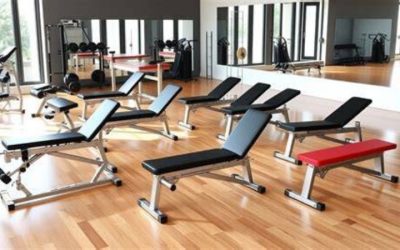
Best Adjustable Bench for Home Gym: 5 Picks Ranked by Use
Best adjustable bench for home gym decisions turn on three numbers most...
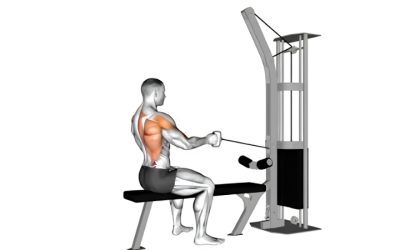
Best Cable Machine for Home Gym: 5 Picks and Pulley Ratios
Best cable machine for home gym shortlists collapse quickly once you convert...
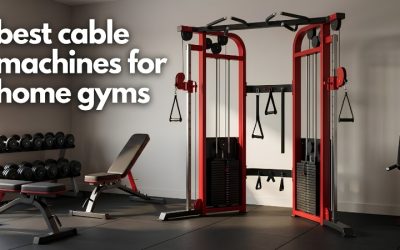
8 Best Cable Machines for Home Gym: 5 Types and Their Limits
Best cable machines for home gym use are not one product category...
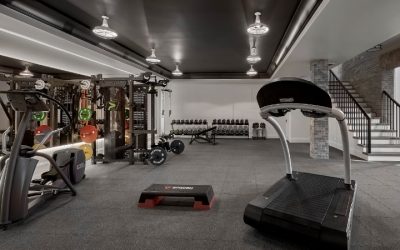
8 Best Home Gym Setups: Floors, Ceilings, Noise and Layout
Best home gym setup guides talk about equipment and skip the room,...
Write Your Review
No reviews yet. Be the first to share your experience!