
Key takeaways
- Warranty Description: 1 year
- Tension Supported: 150LBS
- Item Dimensions D x W x H: 74.8"D x 38.5"W x 79.9"H
Measure before you shop. A spare bedroom that looks generous on paper — say nine feet by eleven — shrinks fast once you account for the four-foot arc a barbell needs during a clean, the eight-foot runway a rower demands, and the three feet of dead space behind a treadmill deck that manufacturers quietly list under “recommended clearance.” Ceiling height matters more than most buyers expect: overhead pressing under a 7’6″ basement joist is fine at 5’8″, uncomfortable at 6’2″, and impossible with a 93-inch rack. Floor load matters too. Stacked plates and a loaded rack concentrate several hundred pounds into a few square feet, which is a real consideration on a second-story wood-frame floor and a non-issue on a slab.
This guide is organized around that reality rather than around brand loyalty. The equipment below covers three jobs — heavy loading, conditioning, and low-footprint accessory work — and each pick was chosen because it does one of those jobs well without forcing you to buy the other two. Prices are approximate and shift with sales cycles, so treat them as ranking signals, not quotes. Where a product has a genuine weakness, it’s named.
Our top picks
 JELENS Home Gym
- Warranty Description: 1 year
- Tension Supported: 150LBS
- Item Dimensions D x W x H: 74.8"D x 38.5"W x 79.9"H
 Mikolo Home Gym
- Tension Supported: Weight Stack 154lbs (12 Levels)
- Item Dimensions D x W x H: 75"D x 36.3"W x 80"H
- Maximum Weight Recommendation: 300 Pounds
 SincMill Home Gym Multifunctional Full Body Workout
- Warranty Description: 10 Years
- Tension Supported: 148 pounds
- Handle Type: Pulldown, Strap
| Product | Key specs | |
|---|---|---|
| JELENS Home Gym | Warranty Description: 1 year Tension Supported: 150LBS Item Dimensions D x W x H: 74.8"D x 38.5"W x 79.9"H | Check price |
| Mikolo Home Gym | Tension Supported: Weight Stack 154lbs (12 Levels) Item Dimensions D x W x H: 75"D x 36.3"W x 80"H Maximum Weight Recommendation: 300 Pounds | Check price |
| SincMill Home Gym Multifunctional Full Body Workout | Warranty Description: 10 Years Tension Supported: 148 pounds Handle Type: Pulldown, Strap | Check price |
 Marcy Multifunctional Workout Station 100lbs to 200lbs Marcy Multifunctional Workout Station 100lbs to 200lbs | This home gym system is made with heavy-duty… This gear comes with a 150-pound selectorized weight… Designed with dual action press arms, this versatile… | Check price |
 XGSW Multi-Function Home Gym Workout Station XGSW Multi-Function Home Gym Workout Station | Material: steels Tension Level: Heavy Duty (> 300 lbs) | Check price |
 YOLEO Adjustable Weight Bench for Home Gym YOLEO Adjustable Weight Bench for Home Gym | Item Dimensions D x W x H: 41"D x 12.6"W x 42.5"H Material: Alloy Steel | Check price |
 SunHome Multifunction Home Gym Equipment Workout Station SunHome Multifunction Home Gym Equipment Workout Station | Warranty Description: 2 Year Tension Supported: 138 pounds Handle Type: Fixed Handle | Check price |
 MQRW Push Up Board MQRW Push Up Board | Maximum Weight Recommendation: 600 Pounds Warranty Type: Push up board Assembly Instructions Description: No assembly required | Check price |
As an Amazon Associate we earn from qualifying purchases at no extra cost to you.
As an Amazon Associate we earn from qualifying purchases.
Quick Comparison
| Equipment | Best For | Approx. Footprint | Rough Price | Main Tradeoff |
|---|---|---|---|---|
| Concept2 RowErg | Full-body conditioning | 8′ × 2′ in use; splits in half | $1,100 | Needs real floor length |
| Bowflex SelectTech 552 | Dumbbell work in tight spaces | Two cradles, ~3 sq ft | $400–450 | Caps at 52.5 lb per hand |
| REP Fitness PR-1100 Rack | Squats, presses, pull-ups | ~4′ × 4′, ~7′ tall | $500–650 | Bar and plates sold separately |
| REP AB-3000 Bench | Pressing at multiple angles | ~4.5′ × 2′ | $450 | Heavy to reposition |
| Sole F80 Treadmill | Walking, running, incline | ~6.5′ × 3′ plus clearance | $1,800–2,000 | Largest and priciest item here |
| TRX Pro4 Suspension Trainer | Travel and unilateral work | Fits a drawer | $200–250 | No true heavy loading |
How to Choose
- Pick your bottleneck first. If you have space but little time, a rower or bike gives you a hard session in twenty minutes. If you have time but a 60-square-foot corner, adjustable dumbbells and a bench will outperform anything larger you can’t actually set up.
- Buy the frame, not the gadget. Steel, bearings, and welds age well; screens, apps, and subscription content age badly. A rack with no electronics will still work in fifteen years. A console-driven machine may lose its software support long before its motor fails.
- Check the loaded weight, not the shipping weight. A 300-pound total load on a bench is meaningless if it’s rated for your bodyweight plus 150 pounds. Look for stated user-plus-load capacity and treat vague specs as a warning.
- Account for the hidden purchases. A rack needs a bar, plates, and usually a platform or stall mats. Budget 40–60% of the rack’s price for those extras or you’ll own an expensive pull-up bar.
- Prioritize things you’ll use unattended. Equipment that requires setup, unfolding, or app pairing gets skipped on low-motivation days. Equipment that’s already assembled and visible gets used.
Top Picks Reviewed
Concept2 RowErg — Best Overall Conditioning Machine
The RowErg is the rare piece of home equipment that’s effectively a commercial product sold at consumer scale. Air resistance scales with your own effort, so it never feels mismatched to your fitness level, and the damper setting adjusts stroke feel rather than difficulty. The PM5 monitor reports watts, pace, and stroke rate with enough precision to run structured intervals off a written plan. It separates into two pieces for storage and stands upright against a wall. The catch is length — you need roughly eight feet of clear floor plus room for your back on the recovery — and the seat is unforgiving without a cushion during long steady-state pieces.
Bowflex SelectTech 552 — Best Space-Saving Strength Buy
Two dials replace fifteen pairs of dumbbells, adjusting from 5 to 52.5 pounds in 2.5-pound increments through the lower range. That fine granularity is the real value: it lets you progress lateral raises and curls in steps small enough to actually matter. The plates are plastic-shelled and rattle slightly, and you can’t drop them, which rules out heavy carries and snatch work. For pressing, rowing, and accessory volume, they’re the highest utility-per-square-foot purchase on this list.
REP Fitness PR-1100 — Best Entry Power Rack
A four-post rack with a pull-up bar, adjustable J-cups, and safety bars that stop a failed squat without heroics. At roughly seven feet tall it clears most basements, and the footprint is small enough to tuck against a wall between sessions. Assembly takes a couple of hours and a second pair of hands for the top crossmember. Remember that the price covers steel only — a decent 20 kg bar and 300 pounds of plates will roughly double your outlay.
REP AB-3000 — Best Adjustable Bench
Benches are where people cut corners and regret it. The AB-3000 has a high stated capacity, a ladder-style adjustment with multiple back and seat positions, and a pad firm enough to give you a stable base rather than sinking under your shoulder blades. It flat-out beats folding department-store benches on wobble. It’s also genuinely heavy, so plan on wheels or a permanent spot rather than dragging it around.
Sole F80 — Best Treadmill for Serious Running
A wide belt, a substantial motor, and real cushioning make this a treadmill you can log twenty-mile weeks on rather than one you walk on twice and abandon. The deck folds hydraulically, which helps in a shared room. Two honest caveats: it’s the biggest and most expensive item here, and treadmills are the single most repair-prone category in home fitness. Verify the warranty terms and whether local service is available before ordering.
TRX Pro4 — Best Low-Cost Addition
Suspension straps won’t build a big squat, but they excel at single-leg work, rows, core, and shoulder health — exactly the areas that get neglected when you own dumbbells and nothing else. The whole system anchors over a door or to a rack upright and packs into carry-on luggage, which makes it the one item on this list that keeps training intact while you travel.
Frequently Asked Questions
What’s the minimum I need for a functional home gym?
Adjustable dumbbells, a sturdy bench, and a pull-up bar cover the majority of hypertrophy and general-strength programming for under $800 in about 25 square feet. Add straps for mobility and unilateral work. Everything beyond that buys specificity, not necessity.
Do I need rubber flooring?
If you’re using barbells or dropping anything, yes. Three-quarter-inch stall mats from a farm supply store cost a fraction of branded gym tiles and perform identically. For dumbbell-only setups, a dense mat under the bench is enough to protect the floor and cut noise for anyone below you.
Is a rower or a treadmill the better cardio investment?
A rower if you want low-impact, full-body conditioning in a smaller footprint with almost nothing to break. A treadmill if you’re training specifically for running or you want a machine anyone in the household will use for walking. Rowers win on durability; treadmills win on transferability to outdoor running.
Are subscription-based connected machines worth it?
Only if class-style instruction is what keeps you consistent — that’s a legitimate reason to pay. But you’re renting motivation on top of buying hardware, and the hardware often loses value once support lapses. If you can follow a written program, spend the subscription budget on plates instead.
Final Thoughts
The best home gym isn’t the one with the most equipment; it’s the one that removes every excuse between waking up and starting your first set. Measure your space, identify whether time or room is your real constraint, and buy in the order you’ll actually train: loading tools first, conditioning second, accessories last. A rack, a bench, a bar, and plates will still be serviceable decades from now, which is more than can be said for most purchases at this price point. Start with one anchor piece, use it consistently for a couple of months, and let the gaps in your training tell you what to buy next.
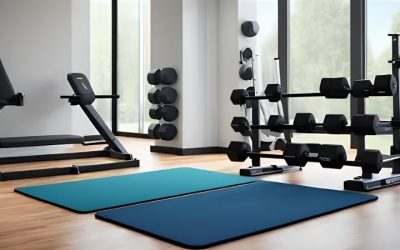
8 Best Gym Mats for Home: Rubber vs Foam Picks for Any Floor
Best gym mat for home choices come down to material density and...
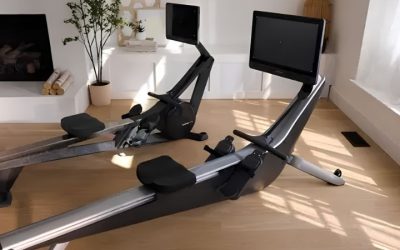
8 Best Rowers for Home Gym: Air, Magnetic and Water Compared
Best rowers for home gym shortlists usually collapse once someone measures the...
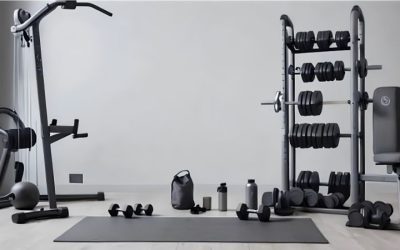
8 Best Weight Home Gyms: 6 All-in-One Machines for Small Rooms
Best weight home gym decisions come down to two numbers before brand...
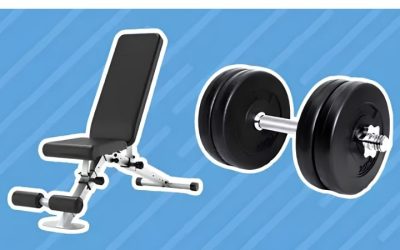
8 Best Home Gym Equipment for Beginners: The Starter Setup
Best home gym equipment for beginners is not a machine – it...
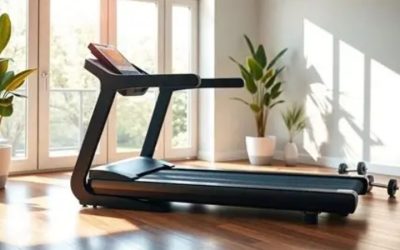
Best Treadmills for Home Gym: 5 Picks by Deck and Motor
Best treadmills for home gym decisions come down to two specifications and...
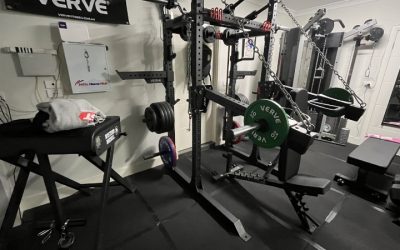
8 Best Home Gym Compact Setups: 6 Space-Saving Picks Ranked
Best home gym compact claims usually quote a stored footprint and stay...
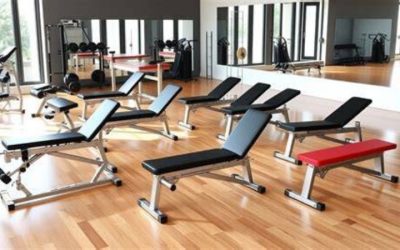
Best Adjustable Bench for Home Gym: 5 Picks Ranked by Use
Best adjustable bench for home gym decisions turn on three numbers most...
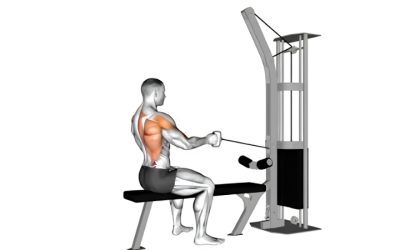
Best Cable Machine for Home Gym: 5 Picks and Pulley Ratios
Best cable machine for home gym shortlists collapse quickly once you convert...
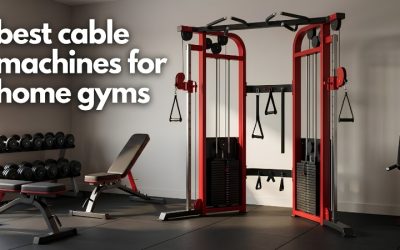
8 Best Cable Machines for Home Gym: 5 Types and Their Limits
Best cable machines for home gym use are not one product category...
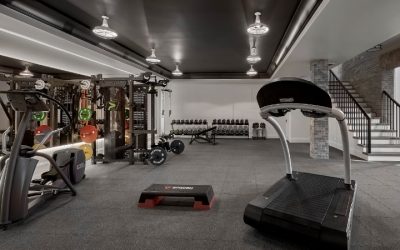
8 Best Home Gym Setups: Floors, Ceilings, Noise and Layout
Best home gym setup guides talk about equipment and skip the room,...
Write Your Review
No reviews yet. Be the first to share your experience!