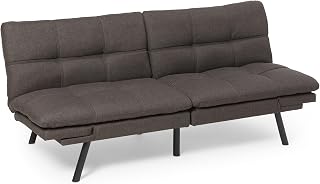
Key takeaways
- Flat-lay geometry: Ask whether the backrest reaches a true horizontal plane or stops a few degrees short. Anything less creates a subtle downhill slope that keeps the body microadjusting all night, which fragments sleep even when the sleeper doesn’t fully wake.
- Seam placement and continuity: The junction between seat cushion and backrest is the single most common comfort failure. Boneless and modular designs tend to close this gap better than hinged metal-frame models, where a hard bar can sit right beneath the lumbar curve.
- Support depth over surface softness: A plush top layer feels great in the store and collapses within weeks. Look for a firmer base foam with a thinner comfort layer above it — that combination keeps hips from sinking past spinal neutral, especially for side sleepers.
- Length versus your actual guests: A 75-inch sleeper works for most adults up to roughly 5’10”; taller sleepers need the 78- to 79-inch range or their feet will hang, which drives restless rotation. Measure before you assume.
- Breathability of the cover: Faux leather wipes clean and suits households with pets or kids, but it traps heat against skin. Corduroy and linen-blend covers move moisture far better and are the smarter pick if you or your guests sleep warm.
What's inside
A futon sofa asks something unusual of a piece of furniture: it has to hold up under weeknight lounging and then, on short notice, become a bed someone actually sleeps on. Most shoppers discover the tension too late. The couch that looked sharp in the listing photos turns out to have a seam running directly under the lumbar spine, or a backrest that reclines to 170 degrees instead of a true flat 180, leaving guests to slide toward the crease at 3 a.m. Sleep quality is decided by surface continuity and support depth — not by upholstery color.
I evaluate convertibles the way I’d evaluate any sleep surface: how evenly weight distributes across the hip and shoulder, whether the transition between seat and back creates a pressure gap, and how much the foam has degraded after months of dual-purpose use. This guide covers what separates a genuinely sleepable futon from a couch that merely folds, then reviews the models worth considering in 2026 — including boneless corduroy designs, split-backrest sleepers, and the compact faux-leather loveseats that dominate small-apartment setups.
As an Amazon Associate we earn from qualifying purchases.


How to Choose a Futon Sofa (2026)
- Flat-lay geometry: Ask whether the backrest reaches a true horizontal plane or stops a few degrees short. Anything less creates a subtle downhill slope that keeps the body microadjusting all night, which fragments sleep even when the sleeper doesn’t fully wake.
- Seam placement and continuity: The junction between seat cushion and backrest is the single most common comfort failure. Boneless and modular designs tend to close this gap better than hinged metal-frame models, where a hard bar can sit right beneath the lumbar curve.
- Support depth over surface softness: A plush top layer feels great in the store and collapses within weeks. Look for a firmer base foam with a thinner comfort layer above it — that combination keeps hips from sinking past spinal neutral, especially for side sleepers.
- Length versus your actual guests: A 75-inch sleeper works for most adults up to roughly 5’10”; taller sleepers need the 78- to 79-inch range or their feet will hang, which drives restless rotation. Measure before you assume.
- Breathability of the cover: Faux leather wipes clean and suits households with pets or kids, but it traps heat against skin. Corduroy and linen-blend covers move moisture far better and are the smarter pick if you or your guests sleep warm.
The Best Futon Sofas (2026) Reviewed
Flamaker Convertible Futon Sofa Bed
The removable armrests are the sleep-relevant feature here — pulling them off widens the usable surface and eliminates the hard boundary that otherwise forces sleepers into a fixed position. Faux leather runs warm, so pair it with a cotton mattress protector if your guest room doubles as a summer bedroom.
MoonSpeak 78.8″ Corduroy Futon Sofa Bed
At nearly 79 inches with a boneless build, this is the most forgiving option for taller sleepers: no internal frame means no pressure bar under the spine, and the corduroy breathes noticeably better than vinyl alternatives. The modular sections do shift slightly with restless sleepers, which is the tradeoff for that seamless surface.
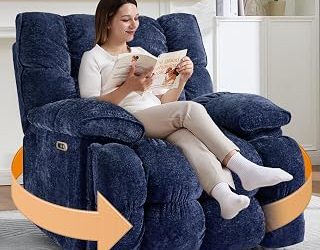
79″ Blue Corduroy Boneless Sleeper Sofa
The fixed-shape frame addresses the main weakness of boneless designs — it holds the cushion blocks in alignment so the sleep surface stays flat rather than drifting apart overnight. A strong choice if you want boneless comfort without the nightly reassembly.
75″ Linen Split-Backrest Sleeper Sofa
The independently adjustable backrest halves make this the most versatile pick for shared use: one side flat for a napper, the other upright for reading. Linen upholstery handles heat and humidity well, and the 75-inch length suits average-height sleepers in genuinely tight rooms.
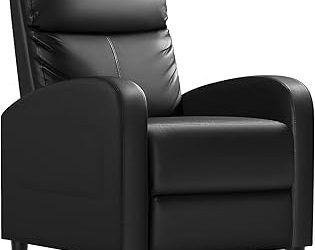
Homall Faux Leather Futon Loveseat
A well-executed compact convertible with multiple backrest stops, so you can dial in a semi-reclined position for evening lounging rather than choosing only between sitting and flat. Best suited to occasional overnight use rather than as a primary bed.
Frequently Asked Questions
Can a futon sofa serve as an everyday bed?
Some can, but most shouldn’t. Foam in dual-purpose furniture compresses faster because it’s loaded in two different orientations daily. For nightly sleep, add a two- to three-inch topper to restore the support layer and rotate it monthly.
Are boneless futons better for your back than framed ones?
Generally yes, for sleeping. Removing the internal frame removes the hinge point that concentrates pressure under the lower back. Framed models often sit more supportively for upright use, so the right answer depends on which function dominates in your home.
How firm should the sleep surface be?
Firmer than feels ideal when you first sit down. A futon that yields immediately under your palm will let hips drop below shoulder level once you’re horizontal, which is what produces morning stiffness.
Do I need a mattress topper?
For anything beyond a night or two, yes. A three-inch topper is the cheapest meaningful upgrade to any convertible, and it also protects the underlying foam from premature breakdown.
Final Thoughts
For the best combination of length, breathability, and an uninterrupted sleep surface, the MoonSpeak 78.8″ corduroy futon is the strongest all-around pick, with the 79″ blue boneless sleeper close behind for anyone who wants that seamless feel with more structural stability. If your priority is a compact daytime sofa that happens to convert, the Flamaker with its removable armrests remains the smarter buy.