Key takeaways
- Breathability first: A weave that lets vapor escape prevents the clammy warmth that makes people fidget after twenty minutes. Open-structure faux linens and cotton-rich blends outperform dense, coated synthetics for seated comfort.
- Thermal neutrality: Look for materials that neither pull heat away nor bank it. Matte, slightly textured surfaces sit closest to skin temperature, which is why linen-look cloth feels effortless in both January and July.
- Abrasion rating and weight: For seats, aim for a mid-to-heavy hand — roughly 300 GSM and up, or a stated 600D construction. Lightweight quilting cotton looks lovely and fails within a season.
- Cleanability over stain-proofing claims: A machine-washable slipcover beats a “stain-resistant” fixed upholstery you can only blot. Confirm cold-wash tolerance and low shrinkage before committing to a set.
- Grip and stretch: Fabric should hold a seated body in place without gripping clothing. Four-way stretch knits shine on curved Parsons backs; woven yardage suits flat, boxed cushions.
What's inside
Most people shop for dining chair fabric the way they shop for paint chips — by color, in good light, on a screen. Then the material arrives, and the problems begin: a weave that pills within a month, a finish that traps heat so the small of your back is damp by dessert, a surface so slick that anyone leaning back after a long meal slides forward. As someone who spends most of my working hours studying how textiles, temperature, and touch affect human rest, I can tell you that these are not cosmetic complaints. They are comfort-architecture complaints, and they decide whether your dining room is a place people linger or a place they escape.
The dinner table is where the evening’s wind-down actually begins. Digestion, dimming light, unhurried conversation — this is the runway to sleep, and a chair that quietly irritates the nervous system shortens it. Below I’ve assessed the fabrics and slipcovers worth your money in 2026, judged on breathability, thermal neutrality, hand-feel, and how they hold up to real households with wine, toddlers, and shedding dogs. Whether you’re reupholstering from scratch or rescuing six tired chairs before the holidays, there’s an option here that will do the job.
As an Amazon Associate we earn from qualifying purchases.



🛒 Best Price Today on Amazon
Prime members get fast, free shipping on everything above, plus member-only deals. New members get a 30-day free trial — cancel anytime.
How to Choose a Fabric For Dining Room Chairs (2026)
- Breathability first: A weave that lets vapor escape prevents the clammy warmth that makes people fidget after twenty minutes. Open-structure faux linens and cotton-rich blends outperform dense, coated synthetics for seated comfort.
- Thermal neutrality: Look for materials that neither pull heat away nor bank it. Matte, slightly textured surfaces sit closest to skin temperature, which is why linen-look cloth feels effortless in both January and July.
- Abrasion rating and weight: For seats, aim for a mid-to-heavy hand — roughly 300 GSM and up, or a stated 600D construction. Lightweight quilting cotton looks lovely and fails within a season.
- Cleanability over stain-proofing claims: A machine-washable slipcover beats a “stain-resistant” fixed upholstery you can only blot. Confirm cold-wash tolerance and low shrinkage before committing to a set.
- Grip and stretch: Fabric should hold a seated body in place without gripping clothing. Four-way stretch knits shine on curved Parsons backs; woven yardage suits flat, boxed cushions.
The Best Fabric For Dining Room Chairs (2026)s Reviewed
Washable Stretch Seat Slipcovers, Set of 6
The most sensible upgrade for anyone with a full set of chairs and no appetite for a staple gun. The knit is genuinely breathable rather than plastic-backed, so it doesn’t build heat over a long meal, and the six-pack pricing makes replacement painless once a cover eventually retires.
TinaKim Thick Faux Linen Upholstery Fabric
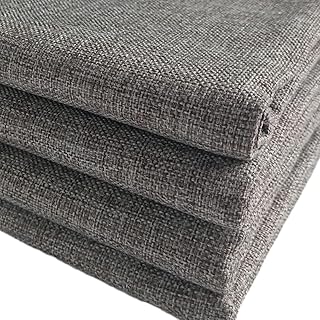
My pick for DIY reupholstery where hand-feel matters most. The slub texture reads as real linen under lamplight, and the substantial weight resists the sagging and seat-print you get from thinner cloth — a two-yard cut covers roughly four standard drop-in seats.
Faux Linen Needlework Fabric, 3.3 Yards
The best value per yard if you’re doing a whole set plus a matching runner or cushion. The grey-blue is a restrained, low-stimulus tone that keeps an evening room calm, though I’d recommend a light backing spray or interlining on very pale chairs in high-traffic homes.
K-Musculo 600D Water-Resistant Upholstery Fabric
The workhorse. This is the fabric I recommend for households with young children, indoor-outdoor dining, or a dog who considers chairs communal property — spills bead rather than soak. Trade-off: it’s the least breathable option here, so reserve it for chairs used briefly rather than lingered in.
Stretch Parsons Chair Covers, Set of 4
Purpose-built for the tall, curved backs that defeat generic slipcovers, with enough four-way give to sit smooth instead of wrinkled. Installation takes under a minute per chair, which matters when you’re washing them monthly as you should.
Frequently Asked Questions
Does chair fabric really affect how well I sleep?
Indirectly, yes. Comfortable seating extends the unhurried, low-arousal portion of your evening, and a room you want to stay in supports a calmer transition to bed than one that quietly pushes you to the sofa or screen.
Are slipcovers or fixed upholstery better?
Slipcovers win on hygiene and reversibility; fixed upholstery wins on tailored appearance and longevity. If your chairs are borrowed, rented, or likely to change color scheme within five years, choose covers.
How much yardage do I need per chair?
Budget roughly half a yard for a simple drop-in seat and one full yard for a seat plus back panel. Add fifteen percent for pattern matching and mistakes — everyone makes at least one.
How often should dining chair fabric be cleaned?
Wash removable covers monthly, vacuum fixed upholstery weekly with a brush attachment, and address spills within minutes rather than hours. Dust and skin cells accumulate faster on seating than most people expect.
Final Thoughts
For most homes, the six-piece washable stretch slipcover set is the highest-return purchase on this list: minimal effort, real breathability, and easy laundering. If you’re reupholstering properly, the TinaKim thick faux linen delivers the best balance of texture and durability, while the K-Musculo 600D is the one to choose when spill resistance simply outweighs everything else.