Key takeaways
- Cushion depth and rebound: Look for thickened or high-density foam of at least two inches. Thin padding compresses to nothing within months, and once you’re effectively sitting on plywood, your lower back starts compensating — which is exactly the low-grade tension that follows people to bed.
- Backrest curvature: A gently curved or contoured back that meets you around the lumbar region encourages the shoulders to drop. Perfectly flat, perfectly vertical backs force micro-adjustments all through the meal, which reads to the body as work rather than rest.
- Textile breathability: Chenille and linen-weave fabrics move air and resist the clammy warmth that vinyl and faux leather trap. Thermal comfort is one of the few sensory variables that reliably affects how relaxed people feel while seated.
- Frame material and joinery: Rubberwood and solid hardwood legs stay quiet; cheap metal and loose joints develop a creak that becomes an ambient irritant. Check whether the seat attaches with bolts into wood blocks rather than staples.
- Seat height versus table height: Aim for ten to twelve inches of clearance between seat and tabletop. Too little and your arms lift; too much and your feet dangle. Either mismatch keeps postural muscles firing when they should be idling.
What's inside
As someone who spends most of my professional life studying how bodies recover — circadian rhythm, sleep architecture, the slow unwinding that has to happen before a nervous system will let go of the day — I’ve come to believe dining chairs are wildly underrated. The evening meal is the hinge between activity and rest. If you’re perched on something hard, cold, and slightly too upright, your shoulders stay braced, digestion slows, and the conversation ends twenty minutes earlier than it should. Most buyers don’t shop with any of this in mind. They shop for a color that matches the table, discover six months later that nobody lingers at dinner anymore, and never connect the two.
Fabric seating solves a real physiological problem: it holds warmth, absorbs sound, and gives the pelvis somewhere soft to settle so the spine can decompress instead of holding itself rigid. The trade-off is durability and cleanability, which is where a lot of upholstered chairs fall apart. This guide walks through the six fabric dining sets I’d actually recommend for 2026, judged on cushion depth and recovery, backrest geometry, frame stability, and how the textile behaves after a year of real meals. I’ve also included the criteria I use when evaluating seating for households where evenings matter.
As an Amazon Associate we earn from qualifying purchases.




🛒 Best Price Today on Amazon
Prime members get fast, free shipping on everything above, plus member-only deals. New members get a 30-day free trial — cancel anytime.
How to Choose Fabric Dining Chairs (2026)
- Cushion depth and rebound: Look for thickened or high-density foam of at least two inches. Thin padding compresses to nothing within months, and once you’re effectively sitting on plywood, your lower back starts compensating — which is exactly the low-grade tension that follows people to bed.
- Backrest curvature: A gently curved or contoured back that meets you around the lumbar region encourages the shoulders to drop. Perfectly flat, perfectly vertical backs force micro-adjustments all through the meal, which reads to the body as work rather than rest.
- Textile breathability: Chenille and linen-weave fabrics move air and resist the clammy warmth that vinyl and faux leather trap. Thermal comfort is one of the few sensory variables that reliably affects how relaxed people feel while seated.
- Frame material and joinery: Rubberwood and solid hardwood legs stay quiet; cheap metal and loose joints develop a creak that becomes an ambient irritant. Check whether the seat attaches with bolts into wood blocks rather than staples.
- Seat height versus table height: Aim for ten to twelve inches of clearance between seat and tabletop. Too little and your arms lift; too much and your feet dangle. Either mismatch keeps postural muscles firing when they should be idling.
The Best Fabric Dining Chairs (2026) Reviewed
VKNOW Wooden Dining Chairs, Set of 4 (Heathered Off-White Chenille)
This is my overall pick, largely because the thickened chenille cushion and curved backrest do the two things that matter most: they distribute weight evenly and let the upper back relax without slouching. The heathered off-white also hides everyday marks far better than a flat cream, which matters more than most buyers expect.
VKNOW Modern Dining Chairs, Linen, Set of 4
The linen-look sibling to the pick above, with a slightly firmer, more supportive padded seat and the same rubberwood legs. I’d choose this version for households that prefer a crisper seat and a lighter, more neutral textile finish.
Linen Fabric Dining Chair, Tufted with Nailhead Trim, Set of 8
The obvious choice for large households and anyone who genuinely hosts, since buying eight matched chairs at once avoids the mismatched-dye problem that plagues later reorders. The tufting is decorative rather than structural, so pay attention to the foam density rather than the button pattern.
Christopher Knight Home Lilia, Set of 2
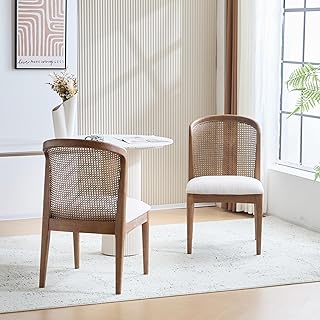
The most refined option here — cane webbing over a rubberwood frame, with fabric upholstery in a beige-and-walnut pairing that reads as considered rather than generic. The cane also introduces a little natural ventilation, which helps in warmer rooms.
COLAMY Upholstered Dining Chairs, Set of 4
A well-balanced mid-range set with a generously padded seat and a back angle that’s forgiving over long meals. Assembly is straightforward and the wood legs stay reassuringly silent, which is more than I can say for several metal-framed competitors.
Frequently Asked Questions
Are fabric dining chairs practical for families?
Yes, provided you choose a mid-tone or heathered weave and treat it with a fabric protector before first use. Solid pale beige is the riskiest choice; textured multi-tone fabrics disguise wear remarkably well.
How firm should a dining chair seat be?
Firmer than a sofa, softer than a bench. You want the cushion to yield about an inch under sitting weight and then stop — enough give to relieve pressure points, enough resistance to keep the pelvis from rolling backward.
Do wood or metal legs last longer?
Well-jointed rubberwood typically ages better in a dining setting because it flexes slightly instead of loosening at welds. Metal is lighter and easier to move, as with the UVV set, but check the weld quality and floor protectors carefully.
Can I clean upholstered dining chairs at home?
Most polyester chenille and linen blends respond well to a mild upholstery foam and a soft brush, worked in the direction of the nap. Blot rather than rub, and let the seat dry fully before use to avoid trapping moisture in the foam.
Final Thoughts
If you want one recommendation, take the VKNOW Wooden Dining Chairs in heathered off-white chenille — the cushion depth and curved back genuinely change how long people stay at the table. Large households should look at the Linen Fabric Tufted Set of 8 for consistency across a full table, while anyone furnishing a smaller, more design-led space will get the most character from the Christopher Knight Home Lilia pair.