Key takeaways
- Absorbency over appearance: A mat that traps water and grit in its fibers keeps both out of your air and off your floors. Dense microfiber or chenille pile outperforms flat woven cotton by a wide margin in wet months.
- Backing that actually grips: Look for TPR or solid rubber bonded to the whole underside, not adhesive dots. A skidding mat at the top of a hallway is a genuine fall risk in low light.
- Low profile for door clearance: Measure the gap under your door before buying. Anything over roughly half an inch tends to jam interior doors and creates a lip you can catch a toe on at night.
- Size to your traffic pattern: Aim for a mat long enough that both feet land on it twice while walking in. A 20″ x 31.5″ mat suits a single-person entry; a 31.5″ x 47″ or 2′ x 3′ covers family and pet traffic properly.
- Washability and drying time: A mat you can throw in the machine monthly is a mat that stops harboring mildew and allergens. Air new rubber-backed mats out for a day before placing them near bedrooms — the initial odor fades quickly with ventilation.
What's inside
Most people judge an entryway rug on how it looks from the doorway. As someone who spends their working life on sleep environments, I judge it on what it stops: the pollen, road grit, pet dander, and fine particulate that ride in on shoe soles and paws, drift through the house, and settle in the one room where you spend a third of your life breathing deeply. A front door without a serious mat is an open intake vent for your bedroom air. The frustration is that so many mats fail at the basic job — they curl at the corners, slide on tile, stay damp for two days after rain, or shed a rubber smell into a closed hallway that you notice at 11 p.m.
This guide covers the entryway rugs worth buying in 2026, evaluated for absorbency, grip, pile height, and how well they survive repeated machine washing. I’ve also weighted two things most roundups ignore: whether the mat is low enough to cross safely in the dark on a half-awake trip to the door, and whether it dampens the hard slap of footsteps on tile when someone comes home late.
As an Amazon Associate we earn from qualifying purchases.


🛒 Best Price Today on Amazon
Prime members get fast, free shipping on everything above, plus member-only deals. New members get a 30-day free trial — cancel anytime.
How to Choose an Entryway Rug (2026)
- Absorbency over appearance: A mat that traps water and grit in its fibers keeps both out of your air and off your floors. Dense microfiber or chenille pile outperforms flat woven cotton by a wide margin in wet months.
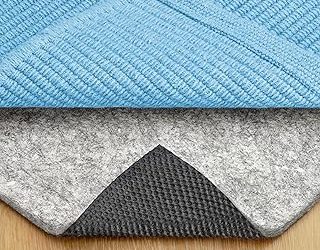
- Backing that actually grips: Look for TPR or solid rubber bonded to the whole underside, not adhesive dots. A skidding mat at the top of a hallway is a genuine fall risk in low light.
- Low profile for door clearance: Measure the gap under your door before buying. Anything over roughly half an inch tends to jam interior doors and creates a lip you can catch a toe on at night.
- Size to your traffic pattern: Aim for a mat long enough that both feet land on it twice while walking in. A 20″ x 31.5″ mat suits a single-person entry; a 31.5″ x 47″ or 2′ x 3′ covers family and pet traffic properly.
- Washability and drying time: A mat you can throw in the machine monthly is a mat that stops harboring mildew and allergens. Air new rubber-backed mats out for a day before placing them near bedrooms — the initial odor fades quickly with ventilation.
The Best Entryway Rugs (2026), Reviewed
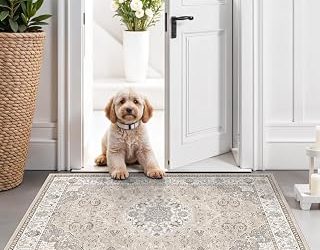
Washable 2′ x 3′ Vintage Entryway Rug (Beige)
This is the pick for entries that open into a living space rather than a mudroom — soft enough to stand on barefoot, with a faded vintage print that hides everyday dust between washes. It handles dry debris and light moisture well, though a household with muddy dogs will want something more aggressive.
Non-Slip Indoor Door Mat, 24″ x 36″ (Khaki)
A well-judged middle option: absorbent enough for wet shoes, thin enough to sit under a door that swings inward, and it washes without the backing crumbling after a few cycles. The neutral khaki is forgiving of the grey film that inevitably builds in winter.
PURRUGS Dirt Trapping Indoor Door Mat, 31.5″ x 47″ (Charcoal)
My overall recommendation for busy front doors. The generous footprint means shoes make full contact before anyone reaches the hallway, and the waterproof TPR backing keeps meltwater off hardwood instead of wicking into it — the single biggest reduction in tracked-in particulate you can buy for the price.
ubdyo Front Door Mat (Grey, 23″ x 36″)
Built for the outside of the threshold, where it does the coarse work: scraping grit off soles before it ever crosses the doorway. It resists fading in direct sun better than most fabric mats and pairs naturally with a softer indoor mat just inside.
PURRUGS Door Mat, 20″ x 31.5″ (Brown)
The same dirt-trapping construction as the larger PURRUGS in a size that fits apartment entries, back doors, and narrow landings. Excellent for a secondary door that gets pet traffic without room for a full-size runner.
Frequently Asked Questions
Can an entryway rug really affect sleep quality?
Indirectly, yes. Outdoor allergens and fine dust tracked indoors circulate and settle in bedding, and nasal congestion is a well-documented contributor to fragmented sleep. Stopping that material at the door is one of the cheapest air-quality interventions available.
Should I use one mat or two?
Two is the professional standard: a coarse outdoor mat like the ubdyo to scrape, and an absorbent indoor mat like the PURRUGS to dry. The pair removes far more than either does alone.
How often should I wash an entryway rug?
Monthly in dry seasons, every two weeks during rain, snow, or pollen peaks. Wash cold, skip fabric softener, and air-dry rubber-backed mats to protect the grip layer.
What if I want colour rather than neutrals?
A printed washable rug such as the RELEANY 2′ x 3′ abstract in blue-grey works well in entries with light foot traffic, where you want the space to read as a room rather than a utility zone.
Final Thoughts
For most homes, the PURRUGS 31.5″ x 47″ in charcoal is the mat to buy — it catches the most and asks the least of you. Add the ubdyo grey mat outside for a proper two-stage barrier, and choose the washable 2′ x 3′ beige rug if your entry doubles as living space and needs to feel soft underfoot rather than functional.