Key takeaways
- Dimmability first: A chandelier that only does 100% is a chandelier that only does daytime. Confirm the fixture is dimmer-compatible, pair it with dimmable bulbs, and install a wall dimmer — being able to drop to roughly 20% output after dinner is the single biggest upgrade you can make for evening comfort.
- Bulb color temperature: Aim for 2700K or warmer for evening use, and skip anything labeled daylight or cool white (4000K+). Warm, amber-leaning light is far less stimulating to the light-sensitive cells in your eyes, so late meals and lingering conversations don’t sabotage your bedtime.
- Glare control: Exposed bare bulbs at eye level create hot spots that force your pupils to work overtime. Frosted glass, fabric, or downward-facing shades diffuse output; if you choose a bare-bulb or sputnik design, use low-lumen filament or opal bulbs rather than clear high-output ones.
- Hang height and spread: Leave 30–36 inches between the tabletop and the bottom of the fixture, and choose a diameter or length roughly half to two-thirds your table width. Correct height keeps the brightest part of the fixture out of your direct sightline while seated.
- Adjustability and install effort: Adjustable rods or chains let you fine-tune height for 8-foot versus vaulted ceilings, and no-assembly models save an hour of fiddling with crystal strands on a ladder.
What's inside
Most people shop for a dining room chandelier the way they shop for a rug: they scroll until something looks good, then hope it works once it’s up. What gets overlooked is that the light hanging over your table is one of the last bright things your eyes take in before bed — and in open-plan homes, it’s often the dominant light source for the entire evening. As someone who spends most days talking to people about why they can’t wind down, I can tell you that a fixture throwing hard, cool-white glare across a table at 9 p.m. is quietly working against you. Your body reads that light as daytime and delays the melatonin release that makes falling asleep feel effortless.
This guide looks at dining room chandeliers through two lenses at once: how they look, and how they behave after dark. Below you’ll find the fixtures worth your money in 2026, plus a short buying framework covering dimmability, bulb color temperature, hang height, shade material, and glare control — the five details that separate a chandelier you love at noon from one you love at midnight. Every pick here uses standard E12 or E26 bases, which means you control the light quality yourself with the right bulbs.
As an Amazon Associate we earn from qualifying purchases.


🛒 Best Price Today on Amazon
Prime members get fast, free shipping on everything above, plus member-only deals. New members get a 30-day free trial — cancel anytime.
How to Choose a Dining Room Chandelier (2026)
- Dimmability first: A chandelier that only does 100% is a chandelier that only does daytime. Confirm the fixture is dimmer-compatible, pair it with dimmable bulbs, and install a wall dimmer — being able to drop to roughly 20% output after dinner is the single biggest upgrade you can make for evening comfort.
- Bulb color temperature: Aim for 2700K or warmer for evening use, and skip anything labeled daylight or cool white (4000K+). Warm, amber-leaning light is far less stimulating to the light-sensitive cells in your eyes, so late meals and lingering conversations don’t sabotage your bedtime.
- Glare control: Exposed bare bulbs at eye level create hot spots that force your pupils to work overtime. Frosted glass, fabric, or downward-facing shades diffuse output; if you choose a bare-bulb or sputnik design, use low-lumen filament or opal bulbs rather than clear high-output ones.
- Hang height and spread: Leave 30–36 inches between the tabletop and the bottom of the fixture, and choose a diameter or length roughly half to two-thirds your table width. Correct height keeps the brightest part of the fixture out of your direct sightline while seated.
- Adjustability and install effort: Adjustable rods or chains let you fine-tune height for 8-foot versus vaulted ceilings, and no-assembly models save an hour of fiddling with crystal strands on a ladder.
The Best Dining Room Chandeliers (2026) Reviewed
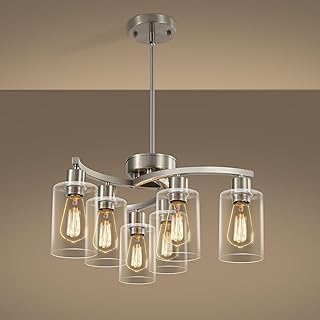
CNRATYE 6-Light Brushed Nickel Chandelier
The clear glass shades give this industrial-leaning fixture a clean, transparent look, and the six-bulb layout spreads light evenly across a standard six-seater rather than pooling it in the center. Because the glass is clear rather than frosted, pair it with low-wattage warm filament bulbs to keep glare in check during evening meals.
12-Light Sputnik Chandelier, Gold and Black
An 11-to-52-inch adjustable drop makes this the most flexible pick here for awkward ceiling heights, and the mid-century silhouette earns its place as a visual centerpiece. Twelve exposed sockets add up fast, so treat dimming as mandatory and choose amber or opal bulbs over clear ones.
Siljoy Rectangular Gold Crystal Chandelier
At 35.4 inches long with two tiers of K9 crystal, this is the best geometric match for rectangular tables, and the built-in dimmable design means you can take it from bright prep light to a soft, low glow without extra hardware. The crystals scatter light rather than beaming it, which softens the overall effect nicely.
10-Light 24″ Black and Gold Crystal Chandelier
A flush-mount, five-tier design that delivers real presence in rooms with lower ceilings where a long drop isn’t an option. Ten lights make it genuinely bright, so a dimmer is the difference between a warm evening room and a showroom.
Modern Black 5-Light Crystal Chandelier
This farmhouse-industrial hybrid is the value standout: adjustable height, a restrained five-bulb count that’s easy to keep at comfortable evening levels, and a matte black frame that reads well against both white and wood-toned rooms. A good fit for smaller dining nooks and kitchen islands.
Frequently Asked Questions
What bulb color should I use over a dining table?
2700K is the sweet spot — warm enough to feel relaxed and flattering, bright enough to see your food clearly. Reserve anything above 3000K for task areas like pantries or laundry rooms.
How high should a dining chandelier hang?
Thirty to thirty-six inches above the tabletop for 8-foot ceilings, adding roughly three inches per additional foot of ceiling height. Sit down and check your sightline before you finalize it.
Do I really need a dimmer switch?
If the chandelier is your main evening light, yes. Dimming lets one fixture serve both a bright family dinner and a low-light wind-down hour, and it reduces the late-night light exposure that pushes your body clock later.
Are crystal chandeliers harder to live with?
They need occasional dusting, but optically they’re an advantage: crystal refracts and disperses light, softening the harsh point-source effect you get from bare bulbs.
Final Thoughts
For most rectangular dining rooms, the Siljoy rectangular crystal chandelier is the strongest all-round choice thanks to its built-in dimmability and light-scattering crystal. If you want a statement piece with maximum installation flexibility, the 12-light sputnik adjusts from 11 to 52 inches to fit nearly any ceiling, and the modern black 5-light crystal fixture is the smart pick for smaller spaces where restrained, easily dimmed light matters more than scale.