Key takeaways
- Sleep surface continuity: Lie across the seam line before you commit. Modular pieces held together only by friction will drift apart under a sleeping body, and waking up in the gap is the single most common complaint I hear. Look for interlocking connectors or a dedicated pull-out mechanism rather than trusting non-slip pads alone.
- Cushion layering over softness: A pillowy “boneless” cushion feels wonderful for ten minutes and collapses by hour three. Three-layer builds — a firm base foam, a resilient middle, and a soft top — hold your lumbar curve through a full night. Single-density fill is fine for lounging, poor for sleeping.
- Seat depth and total length: Anything under 38 inches deep forces a curled posture that strains the hips. For genuine overnight use, aim for deep seats plus a U-shape or long chaise so a 5’10” adult can extend fully without dangling.
- Thermal behavior of the fabric: Body temperature needs to drop to initiate sleep. Chenille is warm and cozy but insulating; velvet is worse. If your room runs above 70°F or you sleep hot, favor a looser weave, or plan to add a breathable cotton throw as your actual sleep layer.
- Maintenance you’ll realistically do: Removable, machine-washable covers matter more on a sofa used for sleep, because skin oils and sweat accumulate faster than on a dining chair. Spill-resistant treatments help, but only washable covers solve the odor problem long-term.
What's inside
Most people shop for a sectional the way they shop for a rug — by color, by size, by whether it fits the wall. As someone who spends their working life studying sleep quality, I’d argue that’s backwards. The sofa in your living room is where the majority of unplanned rest happens: the 20-minute afternoon doze, the Sunday film that ends in a nap, the guest who stays an extra night. If that surface doesn’t support your spine or breathe against your skin, you get the groggy, stiff-necked version of rest instead of the restorative kind. And the modular category makes this worse, not better, because a couch you can reconfigure is also a couch that can be reconfigured badly.
This guide looks at customizable sectionals through a rest-first lens. I’ve weighted seat depth and cushion architecture over aesthetics, paid close attention to which models genuinely sleep two people versus which ones merely claim to, and flagged the fabrics that trap heat overnight. Below you’ll find the shortlist, a checklist for evaluating any modular sofa on your own, honest notes on each contender’s strengths and compromises, and answers to the questions I hear most from clients trying to turn a living room into a viable second bedroom.
As an Amazon Associate we earn from qualifying purchases.


How to Choose a Customizable Sectional Sofa (2026)
- Sleep surface continuity: Lie across the seam line before you commit. Modular pieces held together only by friction will drift apart under a sleeping body, and waking up in the gap is the single most common complaint I hear. Look for interlocking connectors or a dedicated pull-out mechanism rather than trusting non-slip pads alone.
- Cushion layering over softness: A pillowy “boneless” cushion feels wonderful for ten minutes and collapses by hour three. Three-layer builds — a firm base foam, a resilient middle, and a soft top — hold your lumbar curve through a full night. Single-density fill is fine for lounging, poor for sleeping.
- Seat depth and total length: Anything under 38 inches deep forces a curled posture that strains the hips. For genuine overnight use, aim for deep seats plus a U-shape or long chaise so a 5’10” adult can extend fully without dangling.
- Thermal behavior of the fabric: Body temperature needs to drop to initiate sleep. Chenille is warm and cozy but insulating; velvet is worse. If your room runs above 70°F or you sleep hot, favor a looser weave, or plan to add a breathable cotton throw as your actual sleep layer.
- Maintenance you’ll realistically do: Removable, machine-washable covers matter more on a sofa used for sleep, because skin oils and sweat accumulate faster than on a dining chair. Spill-resistant treatments help, but only washable covers solve the odor problem long-term.
The Best Customizable Sectional Sofas of 2026, Reviewed
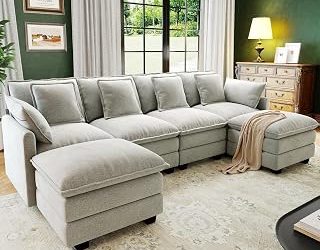
95″ U-Shaped Modular Sectional with Movable Ottomans
The three-layer seat construction here is the standout — it’s the closest thing in this price range to a proper mattress build, and it holds shape through repeated overnight use. The movable ottomans let you close the U into a near-continuous platform, though the chenille runs warm enough that hot sleepers will want lighter bedding.
Cloud Modular Sectional with Reversible Chaise
Genuinely the most comfortable seat on this list for lounging, with deep cushions and no assembly required. My reservation is structural: the boneless design offers minimal lumbar support, so treat this as a nap sofa rather than a nightly bed, and expect the sleeper configuration to need occasional realignment.
M1 Sectional Sofa
The lightweight build and tool-free setup make this the practical pick for renters and anyone who reconfigures often — you can rearrange it solo in minutes. The spill-resistant fabric earns its keep in households with kids, but seat support is moderate, so it suits shorter rest sessions best.
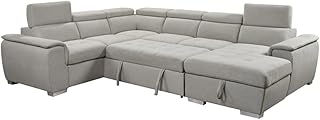
108″ U-Shaped Modular Sleeper with Pull-Out Bed
This is my top recommendation for anyone who hosts regularly. The dedicated pull-out mechanism eliminates the seam-drift problem entirely, the reclining backrest supports a proper wind-down position, and the USB charging keeps phones off the floor — a small detail that meaningfully improves a guest’s night.
135.5″ Velvet Modular Sectional with Storage Ottoman
The removable covers and hidden storage are excellent for keeping sleep linens close at hand, and the six-seat footprint gives you real sprawling room. Velvet is the warmest fabric here, so I’d steer heat-sensitive sleepers elsewhere and reserve this for cooler rooms.
Frequently Asked Questions
Can I sleep on a modular sectional every night?
Occasionally, yes — nightly, only if the model has layered cushions and a locking connection system. Most modular sofas are engineered for seated load, not eight hours of distributed pressure, and cushions will develop permanent depressions within a year of daily sleeping.
Why do I wake up stiff after napping on my couch?
Usually seat depth. If the surface is shallower than your torso length, your spine twists to fit, and the resulting stiffness is muscular rather than mattress-related. A deep-seat or U-shaped configuration that lets you lie fully extended typically resolves it.
Is chenille or velvet better for a sofa used for sleeping?
Chenille, marginally. Both are warm, but chenille’s textured weave allows slightly more air movement and hides wear better. Whichever you choose, sleep with a cotton or linen layer between you and the upholstery.
Do the connectors on modular sofas actually hold?
Mechanical interlocks and bracket systems hold reliably. Adhesive strips and non-slip pads hold for seated use but slip under the lateral force of someone turning over, which is why I favor dedicated sleeper mechanisms for overnight configurations.
Final Thoughts
If rest is the priority, the 108″ U-shaped modular sleeper is the clear choice — it’s the only option here that treats sleeping as an engineered function rather than a bonus. For everyday comfort with occasional naps, the 95″ U-shaped sectional’s three-layer seat offers the best long-term support, while the M1 remains the smartest pick for flexible spaces where you need to move things often.