Key takeaways
- Support depth over softness: Look for high-density foam or sponge fill rather than loose polyfill. A surface that compresses more than a couple of inches under your hip will let the pelvis drop out of alignment, which is the usual source of morning lower-back complaints.
- Frame type versus boneless: Boneless designs are lighter, ship compressed, and need no assembly, but they can drift on hard floors. Fixed-shape or internal-frame models hold their geometry better under nightly use — a real consideration if the futon is a primary bed rather than an occasional one.
- Sleeping length, not sofa length: A 75-inch sofa rarely yields 75 inches of flat sleeping surface once armrests and backrest thickness are accounted for. Anyone over about 5’10” should verify unfolded dimensions and favor 78-inch-plus builds or removable armrests.
- Split versus single backrest: Independently adjustable backrest halves let one person recline while another sits upright, and they allow a slight head elevation that helps with reflux or congestion. Single-piece backs are simpler but all-or-nothing.
- Fabric and thermal behavior: Corduroy and linen breathe well and stay neutral in temperature, which matters because overheating is one of the most common causes of fragmented sleep. Faux leather wipes clean easily but traps heat — plan on a cotton or bamboo topper if you go that route.
What's inside
Most people shopping for a couch futon are solving two problems at once, and that’s exactly where things go wrong. You need a sofa that looks intentional in a living room during the day, and a sleep surface that won’t leave a guest — or you — with a stiff lower back at 3 a.m. From a sleep-wellness standpoint, the second job is the harder one, because a cushion tuned for sitting upright is asking a very different thing of your spine than one supporting a side sleeper for eight hours. Add the recent flood of “boneless,” compressed-in-a-box models and it becomes genuinely difficult to tell which pieces earn their footprint.
This guide looks at today’s best couch futons through that dual lens: daytime comfort, yes, but also sleep-surface depth, support recovery, edge stability, and how easily the thing converts when you’re tired and not in the mood for a wrestling match. Below you’ll find current standouts, followed by the specifications that actually predict good sleep, short expert notes on each pick, and answers to the questions buyers ask most.
As an Amazon Associate we earn from qualifying purchases.


How to Choose a/an Couch Futon (2026)
- Support depth over softness: Look for high-density foam or sponge fill rather than loose polyfill. A surface that compresses more than a couple of inches under your hip will let the pelvis drop out of alignment, which is the usual source of morning lower-back complaints.
- Frame type versus boneless: Boneless designs are lighter, ship compressed, and need no assembly, but they can drift on hard floors. Fixed-shape or internal-frame models hold their geometry better under nightly use — a real consideration if the futon is a primary bed rather than an occasional one.
- Sleeping length, not sofa length: A 75-inch sofa rarely yields 75 inches of flat sleeping surface once armrests and backrest thickness are accounted for. Anyone over about 5’10” should verify unfolded dimensions and favor 78-inch-plus builds or removable armrests.
- Split versus single backrest: Independently adjustable backrest halves let one person recline while another sits upright, and they allow a slight head elevation that helps with reflux or congestion. Single-piece backs are simpler but all-or-nothing.
- Fabric and thermal behavior: Corduroy and linen breathe well and stay neutral in temperature, which matters because overheating is one of the most common causes of fragmented sleep. Faux leather wipes clean easily but traps heat — plan on a cotton or bamboo topper if you go that route.
The Best Couch Futon (2026)s Reviewed
Cloud Boneless 5-in-1 Convertible Futon Sofa Bed
The 70-inch high-density sponge core is the standout here: it resists the hip-sink that plagues cheaper compressed futons, and the five configurations mean you can set it as a chaise for reading before flattening it for sleep. Best suited to shorter sleepers or children’s rooms given the compact length, and the corduroy cover stays pleasantly cool through the night.
MoonSpeak 78.8″ Futon Sofa Bed
At nearly 79 inches, this modular boneless design finally gives taller guests a genuinely full-length surface, and its ship-in-a-box format means no tools and no awkward stairwell maneuvering. The storage pocket is a small thing that matters more than you’d expect — a place for a phone or glasses keeps guests from groping around in the dark.
79″ Convertible Boneless Sleeper Sofa (Blue)
The fixed-shape internal frame is the differentiator: it delivers the no-assembly convenience of a boneless build while keeping the seating edge firm and the sleeping deck level, rather than sagging into a hammock over time. This is the pick if the futon will see several nights of use per week.
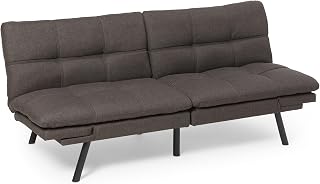
75″ Linen Convertible Sleeper Sofa with Split Backrest
The independently adjustable backrest halves make this the most versatile option for couples or shared apartments, allowing one side to recline while the other stays upright. Linen upholstery handles humidity gracefully, though the twin-size sleeping width means it’s a solo sleeper’s bed rather than a shared one.
Homall Faux Leather Futon Sofa Bed
Removable armrests are the quiet strength here, extending usable sleeping length well past what the folded footprint suggests, and the wipe-clean surface suits offices, basements, and homes with pets. Because faux leather retains body heat, pair it with a breathable mattress protector for extended overnight use.
Frequently Asked Questions
Can a couch futon work as an everyday bed?
Some can, but only those with genuine high-density foam and a stable frame. If you’re sleeping on it nightly, prioritize support recovery — the surface should spring back rather than hold an impression — and add a two- to three-inch topper to soften the transition without sacrificing structure.
Why do boneless futons feel firmer than expected at first?
Compressed foam needs 48 to 72 hours to fully expand and reach its intended density. Judging comfort on night one is misleading; give it three nights before drawing conclusions or initiating a return.
How do I stop a futon from sliding on hardwood?
Non-slip rug underlay cut to the base footprint solves it almost entirely, and it also dampens the small movements that can wake a light sleeper. Felt furniture pads alone tend to make the problem worse.
Does the split-backrest style affect sleep quality?
Slightly, and usually for the better. A modest head-end elevation of a few degrees can ease reflux and nasal congestion, though you’ll want the seam to fall away from your torso rather than beneath it.
Final Thoughts
For most homes, the MoonSpeak 78.8″ Futon Sofa Bed offers the best balance of true sleeping length, breathable corduroy, and effortless setup, while the 79″ Fixed-Shape Boneless Sleeper is the more durable choice if the futon doubles as a regular bed. Shoppers in tighter rooms or shared apartments should look closely at the 75″ Linen Split-Backrest Sleeper, which trades a few inches of length for the most adaptable seating and reclining positions of the group.