Key takeaways
- Paper finish over page count: Matte and satin stocks scatter lamplight softly, while high-gloss pages throw hotspots that force your pupils to keep readjusting. If you read in the evening, finish matters more than sheer volume of content.
- Entry points, not chapters: Look for books organised into short, self-contained spreads. Anything requiring you to track an argument across thirty pages will pull you into an alert, problem-solving mode — the opposite of what you want at that hour.
- Physical handling: Test the weight against how you actually read. A ten-pound folio is magnificent on a table and miserable in an armchair. Sewn bindings that lie flat spare you the low-grade irritation of fighting the spine.
- Caption density: The sweet spot is 40–120 words per image. Bare captions leave the mind restless and searching; long essays keep it working. Enough context to satisfy curiosity, not enough to demand note-taking.
- Emotional register: Choose books that trade in landscape, atmosphere, and history rather than statistics, rankings, or technique. Instructional content activates the same self-improvement circuitry that keeps people staring at ceilings.
What's inside
As someone who spends most of my working life talking to people about their evenings, I’ve noticed a pattern: the hour before bed is where good intentions go to die. Buyers looking for a coffee table book rarely think of it as a sleep tool, and that’s a missed opportunity. The problem isn’t a lack of options — it’s that most large-format golf books are either photo dumps with no editorial spine, or dense reference tomes that demand the kind of focus your brain has already clocked out of by 10 p.m. Add unpredictable print quality, glare-heavy glossy stock, and volumes so heavy they’re genuinely unpleasant to hold in a low chair, and the average purchase ends up as furniture rather than reading material.
This guide approaches golf books through a wind-down lens: which titles hold up under warm, dim lamplight, which ones can be opened at any page without losing the thread, and which are physically comfortable to sit with for twenty unhurried minutes. I’ve weighted paper finish, binding behaviour when a book lies flat, caption length, and whether the pacing invites drifting rather than driving. Six titles made the cut, and below the cards you’ll find selection criteria, individual assessments, and answers to the questions I hear most often from clients redesigning their evenings.
As an Amazon Associate we earn from qualifying purchases.



🛒 Best Price Today on Amazon
Prime members get fast, free shipping on everything above, plus member-only deals. New members get a 30-day free trial — cancel anytime.
How to Choose a Coffee Table Golf Books (2026)
- Paper finish over page count: Matte and satin stocks scatter lamplight softly, while high-gloss pages throw hotspots that force your pupils to keep readjusting. If you read in the evening, finish matters more than sheer volume of content.
- Entry points, not chapters: Look for books organised into short, self-contained spreads. Anything requiring you to track an argument across thirty pages will pull you into an alert, problem-solving mode — the opposite of what you want at that hour.
- Physical handling: Test the weight against how you actually read. A ten-pound folio is magnificent on a table and miserable in an armchair. Sewn bindings that lie flat spare you the low-grade irritation of fighting the spine.
- Caption density: The sweet spot is 40–120 words per image. Bare captions leave the mind restless and searching; long essays keep it working. Enough context to satisfy curiosity, not enough to demand note-taking.
- Emotional register: Choose books that trade in landscape, atmosphere, and history rather than statistics, rankings, or technique. Instructional content activates the same self-improvement circuitry that keeps people staring at ceilings.
The Best Coffee Table Golf Books (2026)s Reviewed
Remarkable Golf Courses
The illustrated guide format is close to ideal for evening reading — each course gets a discrete, generously paced spread you can close out of cleanly, with no narrative debt carried to the next page. The updated edition’s restrained layout and legible type make it forgiving under a 2700K bulb.
Golf Facts & Curiosities
Built almost entirely from short, self-contained entries, this large hardcover is the most genuinely dip-in-able title here, which is exactly what you want when concentration is fading. The trade-off is heft: plan on a table or lap desk rather than holding it aloft.
Golf: The Iconic Courses
Landscape photography dominates, and it leans atmospheric rather than technical — wide horizons, weather, and light, which is precisely the register that helps the nervous system downshift. Captions are brief, so pair it with a more text-forward title if you like a little substance with your images.
Golf – The Ultimate Book
The most comprehensive volume in this group, spanning history, architecture, and personalities with real editorial ambition. It’s a superb daytime read and a handsome centrepiece, though its density and scale make it the least suited to the final half-hour before lights out.
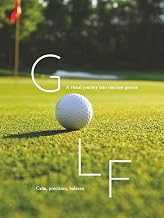
GOLF: A Visual Journey into Timeless Greens
Part of a coffee table series designed for browsing, this one is deliberately light on text and heavy on mood, with sequencing that rewards slow, aimless turning. If your goal is a screen-free ritual rather than learning something, it’s the easiest recommendation on the list.
Frequently Asked Questions
Can reading a book really improve my sleep?
The book itself isn’t the active ingredient — the substitution is. Replacing a phone or tablet with print removes both the light exposure and the endless, arousing scroll, and a consistent pre-bed ritual signals to your body that the day is closing.
Are photography books better than text for winding down?
Generally yes, for most people. Images require less sustained working memory than prose, so attention can soften without the frustration of rereading the same paragraph three times.
Should the book live in the bedroom or the living room?
Wherever your wind-down actually happens. If you read in bed, keep it on the nightstand; if your ritual is an armchair and a lamp, the coffee table is fine — the point is that it’s within reach without a decision.
Does weight and size really matter that much?
More than buyers expect. Physical discomfort creates low-level tension that undercuts the whole purpose, so match the format to your reading posture before you fall for the photography.
Final Thoughts
For a genuine evening ritual, Remarkable Golf Courses offers the best balance of pacing, print quality, and handling, with GOLF: A Visual Journey into Timeless Greens the gentlest option if you want almost no cognitive demand at all. Choose Golf Facts & Curiosities if you prefer short entries you can browse in any order, and save Golf – The Ultimate Book for weekend afternoons when you actually want to concentrate.