Key takeaways
- Rated capacity with margin: Choose a chair rated at least 100 pounds above your body weight. Headroom in the rating means the gas lift, base, and frame are operating well inside their limits, which translates to less flex, less creak, and a seat that still feels solid three years in.
- Seat width and depth over cushion softness: A 22-inch-wide seat that lets you sit cross-legged or shift positions beats a plush 19-inch seat every time. You want two to three fingers of clearance behind the knee — deeper than that and the front edge compresses the vessels that keep your legs from going numb and twitchy at night.
- Pocket-spring or high-resilience foam: Cheap slab foam bottoms out within months, dropping you onto the seat pan and concentrating pressure on the sit bones. Independent pocket springs distribute load and recover their loft overnight, which matters enormously across a full workweek.
- Adjustable lumbar height, not just depth: Taller users have a longer lumbar span, and a support pad fixed at 8 inches will land somewhere useless. Look for a lumbar unit that slides vertically so it meets your actual lordotic curve.
- A recline you’ll genuinely use: Periodic reclining to 120–135 degrees drops spinal disc pressure substantially and gives the postural muscles a real break. Chairs with a footrest or foot ring make these micro-recovery breaks automatic instead of aspirational.
What's inside
Anyone who has spent a fourteen-hour day anchored to a desk knows the particular exhaustion that follows: not the clean tiredness of physical work, but a heavy, buzzing depletion that makes falling asleep harder rather than easier. In my work with shift workers, long-haul developers, and executives who log more chair time than bed time, one variable comes up again and again — the seat itself. When a chair is undersized for the body in it, the nervous system spends the whole day quietly bracing. That low-grade muscular vigilance doesn’t clock out at 6 p.m. It follows you into the evening as restlessness, hip tightness, and the kind of shallow sleep that never quite restores you. For larger and taller users, the problem compounds: standard chairs top out around 250 pounds and 19 inches of seat width, forcing the body into a posture it was never built to hold.
This guide looks at big and tall office chairs through a recovery lens rather than a purely ergonomic one. I’ve focused on the specifications that actually govern how your body feels at hour ten and how well it downshifts afterward — weight capacity with real engineering behind it, seat depth and width that let the pelvis settle neutrally, lumbar support you can tune to your own spinal curve, and recline geometry that permits genuine offloading rather than a token tilt. Below you’ll find the current standouts, followed by a buying framework and answers to the questions I hear most often.
As an Amazon Associate we earn from qualifying purchases.


🛒 Best Price Today on Amazon
Prime members get fast, free shipping on everything above, plus member-only deals. New members get a 30-day free trial — cancel anytime.
How to Choose a Big And Tall Office Chair For Long Hours (2026)
- Rated capacity with margin: Choose a chair rated at least 100 pounds above your body weight. Headroom in the rating means the gas lift, base, and frame are operating well inside their limits, which translates to less flex, less creak, and a seat that still feels solid three years in.
- Seat width and depth over cushion softness: A 22-inch-wide seat that lets you sit cross-legged or shift positions beats a plush 19-inch seat every time. You want two to three fingers of clearance behind the knee — deeper than that and the front edge compresses the vessels that keep your legs from going numb and twitchy at night.
- Pocket-spring or high-resilience foam: Cheap slab foam bottoms out within months, dropping you onto the seat pan and concentrating pressure on the sit bones. Independent pocket springs distribute load and recover their loft overnight, which matters enormously across a full workweek.
- Adjustable lumbar height, not just depth: Taller users have a longer lumbar span, and a support pad fixed at 8 inches will land somewhere useless. Look for a lumbar unit that slides vertically so it meets your actual lordotic curve.
- A recline you’ll genuinely use: Periodic reclining to 120–135 degrees drops spinal disc pressure substantially and gives the postural muscles a real break. Chairs with a footrest or foot ring make these micro-recovery breaks automatic instead of aspirational.
The Best Big And Tall Office Chair For Long Hours (2026)s Reviewed
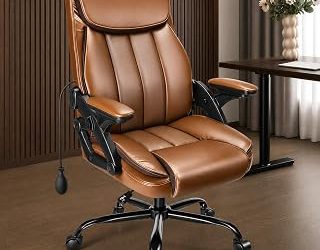
600LBS Heavy Duty Office Chair with 5D Flip Arms
The 600-pound rating here is the headline, but the 5D adjustable armrests are what make it a genuine long-session chair — being able to set height, width, depth, and angle means your shoulders finally stop creeping upward. Pocket-spring cushioning and dual rubber wheels round out a package that feels engineered rather than merely reinforced.
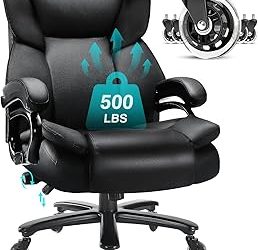
500lbs Big and Tall Executive Desk Chair
A cleaner, more conference-appropriate silhouette with the adjustable lumbar unit that larger users actually need, plus quiet rubber casters that won’t announce every micro-adjustment. The high back supports the thoracic spine well enough that end-of-day neck tension is noticeably reduced.
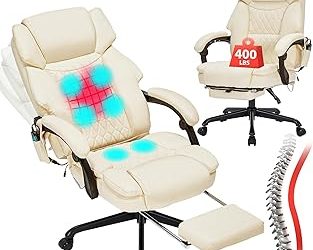
Big and Tall Comfy Office Chair with Foot Rest
The extra-wide spring cushion accommodates cross-legged sitting, and the retractable footrest paired with a deep recline makes this the strongest choice for anyone who needs true midday decompression. Think of it as a workstation and a recovery station in one frame.
400lbs Heavy Duty Drafting Chair
Purpose-built for standing desks and elevated benches, with a 5-inch thickened seat and an adjustable foot ring that keeps the legs supported at height instead of dangling. Flip-up arms let you tuck fully under a tall work surface.
500lbs Extra Wide Executive Office Chair
The most generous seat pan in this group, with thick armrest padding and an upgraded base and caster set that inspires real confidence. If back pain is your primary complaint, the tunable lumbar support here is the most precise of the bunch.
Frequently Asked Questions
Can an office chair really affect how well I sleep?
Indirectly but meaningfully. Sustained postural strain keeps muscles partially contracted for hours, and that residual tension — particularly through the hip flexors, glutes, and upper trapezius — is a common driver of difficulty settling and frequent position changes at night.
How often should I get out of the chair?
Aim for a brief position change every 30 minutes and a standing break every hour. No chair, however well built, replaces movement; the best ones simply make the seated intervals less costly.
Is a higher weight rating worth the extra cost?
Yes, almost always. Over-specified components fail far less often, and the perceived stability of a chair operating below its limits reduces the subtle guarding that tires you out.
Does mesh or leather matter for long sessions?
Thermal comfort affects alertness more than most people expect. If you run warm or work in an unconditioned space, prioritize breathability; otherwise, padded upholstery over pocket springs is the more comfortable long-haul choice.
Final Thoughts
If you want one chair to solve the problem outright, the 600LBS Heavy Duty Chair with 5D Flip Arms offers the best combination of structural margin and fine-grained adjustment. Those prioritizing genuine midday recovery should look hard at the Big and Tall Comfy Chair with Foot Rest, while standing-desk users are best served by the 400lbs Drafting Chair. Any of the three will change how your body feels not just at hour ten, but at bedtime.