Key takeaways
- Washability: The single highest-value feature. A rug you can fold into a home washer gets cleaned when it needs cleaning, not when you finally book a professional. Confirm the weight and folded size will fit your machine before you buy — most 5×7 washable rugs will; most 8×10 rugs need a laundromat drum or spot treatment.
- Pile height and density: Aim for low pile, roughly 1/6″ to 1/4″. Long, loose fibers trap dander and undercoat and snag on claws. Short, densely woven pile releases hair to a vacuum in one or two passes and doesn’t wick liquid down into a pad you can’t reach.
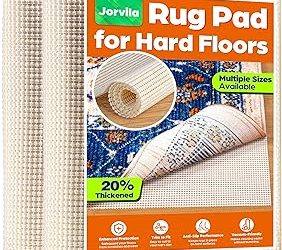
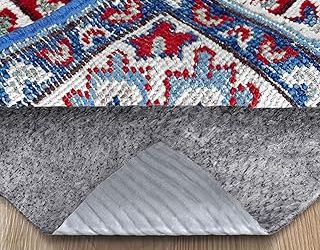
- Grip, not just a “non-slip” claim: A rug that shifts when a dog launches off it is both a joint-injury risk and a nightly noise source. Look for a rubberized or TPR backing; on very smooth hardwood or LVP, add a thin separate gripper pad for insurance.
- Moisture behavior: Water-repellent surface treatments buy you the sixty seconds you need to blot an accident before it reaches the backing. Pair that with a dark or multitonal pattern — solid cream will show every incident, while vintage-style medallions and abstracts camouflage the inevitable.
- Acoustic and thermal comfort: If the rug lives in a bedroom, prioritize a slightly thicker, felt-backed build. It dampens nail-click echo, insulates against cold subfloors, and gives older pets a joint-friendly surface — all of which translate into fewer nighttime resettling episodes for everyone.
What's inside
Pets don’t just share our floors — they share our rest. Anyone who has been woken at 3 a.m. by claws skittering across bare hardwood, or who has watched a dog circle for ten minutes trying to settle on a slick surface, understands that flooring is a sleep variable. Hard floors amplify footfall, offer no thermal buffer, and give animals no stable place to drop into deep rest. The result is a household where nobody — two-legged or four-legged — fully powers down. Then there’s the other half of the problem: the moment you add something soft, you inherit muddy paw prints, shed undercoat, the occasional accident, and a rug that begins to smell faintly of dog by week three.
This guide approaches pet rugs the way I approach any element of a sleep environment: as a system of acoustics, temperature, texture, and hygiene. Below you’ll find the washable, low-pile, grip-backed rugs I’d actually put in a bedroom or a living room where a cat naps at noon and a retriever sprawls at night. I’ve weighted my picks toward machine-washable construction, quiet cushioning underfoot, and pile heights short enough that fur lifts out instead of burrowing in. Sizing notes are included, because a rug that’s too small forces pets to sleep half-on, half-off — the flooring equivalent of a pillow that keeps sliding away.
As an Amazon Associate we earn from qualifying purchases.



🛒 Best Price Today on Amazon
Prime members get fast, free shipping on everything above, plus member-only deals. New members get a 30-day free trial — cancel anytime.
How to Choose a/an Area Rug For Pets (2026)
- Washability: The single highest-value feature. A rug you can fold into a home washer gets cleaned when it needs cleaning, not when you finally book a professional. Confirm the weight and folded size will fit your machine before you buy — most 5×7 washable rugs will; most 8×10 rugs need a laundromat drum or spot treatment.
- Pile height and density: Aim for low pile, roughly 1/6″ to 1/4″. Long, loose fibers trap dander and undercoat and snag on claws. Short, densely woven pile releases hair to a vacuum in one or two passes and doesn’t wick liquid down into a pad you can’t reach.
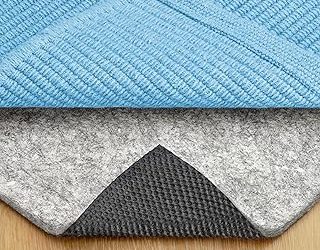
- Grip, not just a “non-slip” claim: A rug that shifts when a dog launches off it is both a joint-injury risk and a nightly noise source. Look for a rubberized or TPR backing; on very smooth hardwood or LVP, add a thin separate gripper pad for insurance.
- Moisture behavior: Water-repellent surface treatments buy you the sixty seconds you need to blot an accident before it reaches the backing. Pair that with a dark or multitonal pattern — solid cream will show every incident, while vintage-style medallions and abstracts camouflage the inevitable.
- Acoustic and thermal comfort: If the rug lives in a bedroom, prioritize a slightly thicker, felt-backed build. It dampens nail-click echo, insulates against cold subfloors, and gives older pets a joint-friendly surface — all of which translate into fewer nighttime resettling episodes for everyone.
The Best Area Rug For Pets (2026)s Reviewed
DUKINO 5×7 Floral Washable Rug (Black)
This is my default bedroom recommendation: a black floral ground hides fur and paw traffic remarkably well, and the low, soft pile is quiet underfoot for midnight trips to the bathroom. It’s lightweight enough for one person to pull up and wash without a second set of hands, which is exactly why it actually gets washed.
JONATHAN Y Slant Abstract (Beige/Gray, 8×10)
The pick for open living rooms and hallways where a smaller rug would just become a bunched-up tripping hazard. The non-shedding construction and busy beige-gray abstract pattern are forgiving in high-traffic zones, though at 8×10 you’ll be spot-cleaning and vacuuming rather than machine-washing.
Washable Vintage Tribal Rug (Navy, 3×5)
A smart, low-commitment size for crate corners, feeding stations, and entryways where paws first hit the floor. Navy plus a busy tribal motif is about as stain-forgiving as patterning gets, and the stain-and-water-resistant surface means muddy mornings don’t become permanent.
RELEANY Washable Rug (Brick/Brown/Green, 5×7)
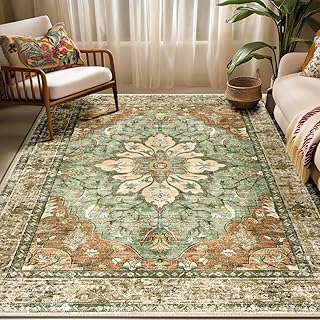
The warmest-looking option here, and the earthy brick-and-green palette is genuinely good at absorbing evidence of daily pet life. Water-repellent, non-slip, and washable — a solid choice for a dining or living area where a dog claims the same spot every evening.
Washable Vintage Charm Rug (Dark Gray + Blue, 5×7)
At roughly 1/6″ thick, this hits the sweet spot between cushioning and easy hair removal, and the dark gray-blue colorway is the most practical shade in this lineup. A strong bedside or nursery candidate where quiet, grippy, and washable all matter at once.
Frequently Asked Questions
Are washable rugs durable enough for dogs?
Modern washable rugs use tightly woven, low-pile synthetics that hold up well to claws — often better than natural-fiber options like wool or jute, which snag and shed. The trade-off is thickness, so add a separate pad if you want more plushness.
Will a rug really help my pet sleep better?
It helps in three measurable ways: insulation from a cold floor, a stable non-sliding surface, and pressure relief for joints. Pets settle faster and shift less on a rug than on tile or hardwood, which reduces the nighttime movement that wakes you.
How often should I wash a pet area rug?
Vacuum two to three times weekly, and machine-wash every one to three months depending on shedding and household size. Blot accidents immediately with an enzymatic cleaner rather than waiting for wash day — odor sets fast in the backing.
Do non-slip backings work on all floors?
They perform best on hardwood, laminate, and vinyl. On polished tile or radiant-heated floors, or under an enthusiastic large dog, layer a thin rubber gripper pad underneath for reliable stability.
Final Thoughts
For most pet households, the DUKINO 5×7 Floral Washable Rug is the best all-around buy — quiet, dark-toned, and light enough to wash on a whim. If you need to cover a larger living area, the JONATHAN Y Slant Abstract in 8×10 offers the most forgiving pattern and traffic durability, while the dark gray-blue Vintage Charm 5×7 is my pick for bedrooms where cushioning and calm underfoot matter most.