Key takeaways
- Compare the best algae scrapers for glass and acrylic tanks, from long-handled blades to floating magnets, and learn how to clean algae without scratches.
Disclosure: As an Amazon Associate, I earn from qualifying purchases.
Algae on the viewing pane is the one job every aquarium owner faces. Soft green film wipes away easily, but green spot algae, brown diatom patches, and coralline growth in saltwater tanks bond tightly to glass and acrylic. The right scraper removes that growth in a few passes, while the wrong blade can leave a permanent scratch in seconds, especially on acrylic.
The five tools below cover the main approaches: a three-in-one hand scraper, magnetic cleaners that work from outside the tank, a floating magnet for small glass aquariums, and a long-handled plastic-blade scraper built for acrylic. Start with tank material: metal blades belong on glass only, while plastic blades and soft pads are safe for acrylic. Then consider reach, pane thickness, and how stubborn your algae tends to be.
1. Seachem Algae Scraper 12 Inch

The Seachem Algae Scraper is a three-in-one hand tool that packs a metal blade, a plastic blade, and a soft pad into one retractable cartridge system. That makes it a practical single purchase for households with more than one tank, or for anyone unsure which cleaning surface a job needs until they stand in front of the glass. The white body helps you see removed algae against the tool, so it is easier to tell when a patch is actually clean.
At 12 inches, this size suits nano and mid-height aquariums where a shorter tool gives better control around rockwork, plants, and corners. The handle can be held in several positions, and the tool floats if it slips from your hand. Replacement blades and pads are sold for the system, so the handle survives an edge wearing down. Use the metal blade only on glass, switch to the plastic blade or soft pad for acrylic, and rinse the pad often as you work.
Specs
- Brand: Seachem Laboratories
- Type: Hand scraper, three-in-one retractable cartridge
- Length: 12 in. (31 cm)
- Cleaning surfaces: Metal blade, plastic blade, and soft pad
- Tank material: Glass and acrylic, metal blade for glass only
- Model number: 3207
- ASIN: B07GWT6MMM
2. FL!PPER Standard Magnetic Aquarium Cleaner

The FL!PPER Standard is a magnetic cleaner: one half scrubs inside the tank while the other steers it from outside, keeping your hands dry. Its signature feature is the flip action. Rotate the outer handle and the inner unit turns over, switching between a scrubbing pad for everyday film and a scraper blade for harder deposits, without removing the cleaner from the water.
The Standard size is rated for panes from 1/4 inch to 1/2 inch thick, covering many mid-sized glass and acrylic aquariums. It is supplied with a stainless steel blade for glass and an ABS plastic blade for acrylic, so the same magnet body can serve both materials as long as the correct blade is fitted first. That discipline is essential, because the steel edge that clears coralline algae will damage acrylic. For routine use, run the pad side every few days so soft film rarely hardens, and check for trapped grit before flipping to the blade.
Specs
- Brand: FL!PPER
- Type: Magnetic cleaner, flip scrubber and scraper
- Pane thickness: 1/4 in. to 1/2 in. (up to 12 mm)
- Cleaning surfaces: Scrubber pad, stainless steel blade for glass, ABS blade for acrylic
- Tank material: Glass and acrylic with the matching blade fitted
- Use: Freshwater and saltwater aquariums
- ASIN: B008ELIQ4Y
3. Gulfstream Tropical Mag-Float Glass Aquarium Cleaner, Small

The Mag-Float line is one of the longest-running names in magnetic aquarium cleaning, and the Small glass model is its compact entry. Like other magnetic cleaners, it pairs an inner scrubbing half with an outer steering half, but with a useful safety net: if the halves separate, the inner half floats to the surface instead of sinking into the substrate where it could pick up sand.
That floating recovery matters. A sunken magnet dragged up through gravel often returns with grains embedded in the pad, and those grains are a common cause of scratches on the next pass. A cleaner that rises to the top can be rinsed before it touches the pane again. This version is for glass, not acrylic, so acrylic owners should choose a cleaner sold with an acrylic-specific pad or blade. Store the halves apart so the strong magnets do not snap together in a drawer.
Specs
- Brand: Gulfstream Tropical (Mag-Float)
- Type: Magnetic cleaner, floating inner half
- Size: Small, model AGU030SM / Float-30
- Tank material: Glass aquariums
- Pane guidance: Small tanks, thin glass up to about 3/16 in.
- Magnet type: Rare-earth neodymium
- UPC: 790950000303
- ASIN: B003WRKVUC
4. Aqueon Algae Cleaning Magnet, Medium
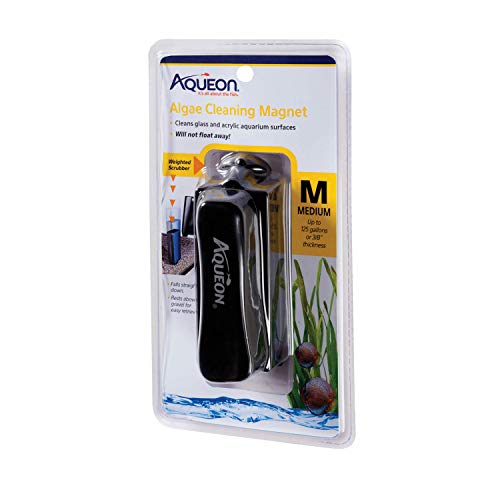
The Aqueon Algae Cleaning Magnet takes the opposite approach to recovery. Its inner scrubber is bottom-weighted, so if the magnets separate it falls straight down and rests above the gravel on a bowed base, ready to reconnect without drifting behind rockwork. That suits tanks with dense planting or decoration where a floating half could lodge somewhere awkward.
Each unit ships with one pad for glass and one pad for acrylic, making the Medium a flexible choice for mixed-material households. The curved pad follows flat panes and gently bowed fronts, helping maintain contact at edges where algae often survives a flat cleaner. Because the action comes from a pad rather than a blade, this Aqueon is best for routine film, diatoms, and soft green algae rather than calcified coralline or very hard spot algae. Clean more often with the pad, and reserve a blade tool for the occasional deep clean.
Specs
- Brand: Aqueon
- Type: Magnetic cleaner, weighted inner scrubber
- Size: Medium
- Cleaning surfaces: One pad for glass, one pad for acrylic included
- Tank material: Glass and acrylic with the matching pad fitted
- Model number: 100106171
- Item weight: 6.4 oz
- ASIN: B004BFGE1Y
5. Continuum Aquatics AquaBlade P Long
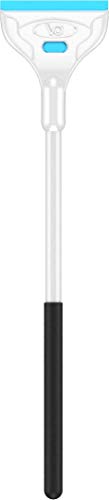
The Continuum AquaBlade P Long is built around one idea: acrylic needs a blade that gives way before the tank does. Its cyan plastic blade uses a self-lubricating plastic blend the maker describes as softer than acrylic, so the blade wears in preference to the panel. That makes this long version a strong candidate for acrylic owners who need reach without a metal edge.
The 15-inch handle is solid fiberglass rather than a hollow tube. Continuum moulds the handle into the head instead of gluing it, which helps the tool feel rigid on a stubborn patch and prevents the handle filling with water. Even an acrylic-safe blade can pick up sand if pushed hard into the substrate, so check its edge before working near the bottom and test first in an inconspicuous area on lower-grade acrylic. Replacement blades are available, and the design stays compatible with earlier AquaBlade handles and blades.
Specs
- Brand: Continuum Aquatics
- Type: Hand scraper with plastic blade
- Length: Long, 15 in.
- Blade: Cyan plastic, acrylic-safe, softer than acrylic
- Handle: Solid fiberglass, moulded into the head
- Tank material: Acrylic, also usable on glass
- Model number: QABP15
- ASIN: B009T7JCNG
How to Choose the Best Algae Scraper
Match the blade to the tank material first. Metal blades are the fastest way to clear green spot and coralline algae from glass, but they should never touch acrylic. For acrylic, choose a plastic blade described as softer than acrylic, an ABS blade supplied for acrylic use, or a soft pad, and accept slower, safer progress on hard growth.
Next, choose between a hand scraper and a magnetic cleaner. A hand scraper gives direct pressure and precise angles for corners, silicone edges, and stubborn patches, and long handles keep sleeves dry in deep tanks. A magnetic cleaner is faster for broad, routine passes over the main pane and keeps hands out of the water, but it must match pane thickness: a magnet that is too weak slips and skips, while one that is too strong is tiring to move.
Consider melamine foam pads as a third option. They lift film algae from glass and acrylic and reach into fine scratches a flat blade bridges over, but they are abrasive, wear quickly, and need constant rinsing so grit does not stay in the foam. Whatever tool you use, rinse pads and blades during cleaning, work slowly near the substrate, and never scrape a dry pane.
Finally, think about livestock. Scraping adds no chemicals, which suits planted and reef tanks, but loosened algae can settle on leaves and corals. Work in sections, siphon out debris afterwards, and avoid pinning fish against the glass with a wide magnet.
Frequently Asked Questions
Can I use a metal blade on an acrylic aquarium?
No. A metal blade that is safe on glass can cut visible scratches into acrylic in a single pass. For acrylic, use a plastic blade made to be softer than acrylic, an acrylic-specific ABS blade, or a soft pad, and check the edge for trapped sand before use near the substrate.
Are magnetic algae cleaners better than hand scrapers?
Neither type is better for every job. Magnetic cleaners are convenient for frequent, light cleaning of the main pane from outside the tank, while hand scrapers give more pressure and control for hard spot algae, corners, and edges. Many owners keep one of each, using the magnet weekly and the blade monthly.
How often should I scrape algae from the glass?
Little and often works best. A light pass every few days stops soft film maturing into hard growth that needs a blade and far more effort. If a faint haze is visible when viewing the tank at an angle, the pane is ready for a quick clean.
Will scraping harm fish or live plants?
Scraping the pane adds no chemicals and is generally safe around fish and plants when done gently. Move slowly so livestock can swim clear, avoid trapping animals between a magnet and the glass, and remove loosened algae with a siphon or fine net so it does not settle on plant leaves.
Conclusion
The best algae scraper matches your tank material and usual algae, not simply the sharpest tool available. Choose the Seachem for versatility, the FL!PPER Standard for a magnetic cleaner that also scrapes, the Mag-Float Small for small glass tanks, the Aqueon Medium for pads for both materials, or the Continuum AquaBlade P Long for acrylic-safe reach. Keep the blade matched to the surface, rinse away grit, and clean little and often.
More from Amazon
Programs that pair well with the guide above. Offers and eligibility are set by Amazon and may change.
Collect the home and kitchen items you want in one registry that guests can shop from.
Create a wedding registrySet up recurring deliveries of everyday items on eligible products. Terms and savings are set by Amazon.
Explore Subscribe & SaveFree shipping on eligible items, Prime Video and more. Eligible new members can start with a free trial.
Start a Prime free trialAudiobooks and podcasts to listen to on the go. Eligible new members can start with a free trial.
Try Audible freeAs an Amazon Associate we earn from qualifying purchases.