Key takeaways
- Compare the best glass cutters for home projects, from oil-fed carbide pencils to circle cutters, with wheel types, grips and thickness ranges explained.
A glass cutter does not slice through glass the way a knife cuts wood. It scores a shallow, controlled line on the surface, and the sheet then separates along that line when you apply pressure or tap beneath it. Because the score does almost all of the work, the wheel material, the wheel angle, and how steadily the tool feeds oil matter far more than brute force. A dull or dry wheel, or an uneven hand, can turn a simple window repair, mirror trim, or stained glass panel into wasted material.
This guide compares five hand glass cutters that cover the jobs most home users actually face: a self-oiling comfort-grip cutter for long sessions, a simple steel-wheel cutter for occasional straight work, a wide-range pencil-style oil-feed cutter for thicker stock, and two suction-cup circle cutters for round cuts. Each pick lists the wheel type, oil system, and glass range from its product listing, so you can match the tool to your project.
Disclosure: As an Amazon Associate, I earn from qualifying purchases.
1. Toyo Custom-Grip Supercutter
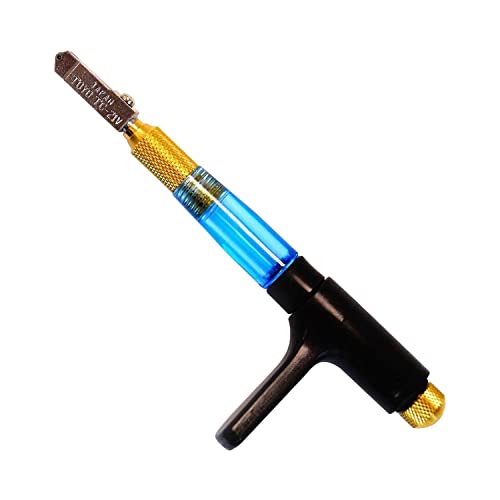
The Toyo Custom-Grip Supercutter is built around comfort during repeated scoring. Its clear acrylic grip doubles as the oil reservoir, so you can see the oil level at a glance, and the tool is self-oiling when pressure is applied, which keeps the wheel rolling freely and the score line consistent. A four-position saddle sits between the thumb and forefinger and adjusts for different hand sizes, letting your fingers stay straighter and reducing strain on long cuts. The patented TAP Wheel design improves axle lubrication and reduces rolling friction, supporting a cleaner score and an easier breakout.
This is a strong first choice for stained glass, mosaic, and general craft work where you score many pieces in one sitting. The cutting wheel is durable, replaceable carbide steel, and the maker notes that Supercutters outlast conventional cutters by a wide margin. Note that this model uses its own Custom Grip replacement head rather than the standard Toyo head, so keep that in mind when you order a spare.
Specs
- Brand and model: Toyo Custom-Grip Supercutter, model TCGSC
- ASIN: B00D9CDIAA
- Wheel: Replaceable carbide steel wheel with TAP Wheel technology
- Oil system: Self-oiling on pressure, spring-controlled oil flow, clear acrylic reservoir grip
- Grip: Adjustable four-position saddle, custom grip shape
- Dimensions and weight: 5.4 x 1.6 inches, 0.32 ounces
- Replacement head: Custom Grip head only, sold separately
2. Fletcher-Terry 01-122 Steel Wheel Glass Cutter

The Fletcher-Terry 01-122 is the traditional end of this lineup: a simple steel-wheel cutter with no reservoir, no interchangeable heads, and very little to go wrong. You dip or dab the wheel in cutting oil yourself, score once with steady pressure, and break the sheet along the line. That simplicity is why this pattern has stayed in hardware drawers for decades. It suits occasional straight cuts in window panes, picture frame glass, and thin sheet glass, and works well as an inexpensive backup next to a primary oil-fed tool.
Because the wheel is steel rather than carbide, expect it to dull sooner under heavy daily use. For a homeowner who cuts a few panes a year, that trade-off is reasonable, and the simple design makes technique easier to learn: one pass, even speed, and no second scoring. Keep a small dish of cutting oil nearby, since this dry design depends on manual lubrication.
Specs
- Brand and model: Fletcher-Terry, model 01-122
- ASIN: B000BZZ022
- Wheel: Steel cutting wheel
- Oil system: Dry cutter, oil applied manually to the wheel
- Handle: Traditional straight handle with ball end for tapping
- UPC on the listing record: 081777011222
- Best fit: Occasional straight cuts in thin sheet glass
3. Camdios Pencil Style Oil Feed Glass Cutter, 2mm-20mm

The Camdios pencil-style cutter is the wide-range option in this group. Its listing covers glass from 2mm to 20mm, which reaches from thin craft sheets to thick mirror, tile, and mosaic stock that lighter cutters struggle to score. The carbide alloy cutting head pairs with automatic oil dispensing, so the wheel stays lubricated through a long score without stopping to dip it. The pencil shape feels familiar if you already work with scribers, and it gives fine control on short pattern cuts as well as straight runs.
The package pairs the cutter with glass cutting oil, which makes it a practical starter set for a first thick-glass project. At 5.9 ounces it is the heaviest straight cutter here, so users doing delicate art glass all day may prefer the lighter Toyo, while anyone cutting thick mirror or tile will value the range and the steady oil feed more.
Specs
- Brand and model: Camdios pencil style oil feed glass cutter
- ASIN: B0DFQCJQ6V
- Wheel: Carbide alloy cutting head
- Oil system: Automatic oil dispensing, cutting oil included
- Cutting range: 2mm to 20mm glass, tile, mirror, and mosaic
- Dimensions and weight: 8.42 x 1.89 x 1.12 inches, 5.9 ounces
- Grip: Pencil style, ergonomic shape
4. B BLOOMOAK Heavy Duty Circular Glass Cutter, 24 Inch

Straight cutters cannot follow a round line, and that is where this B BLOOMOAK circular cutter earns its place. A suction cup anchors the center to the sheet, the round knob handle turns the arm around that fixed point, and the adjustable bar sets the circle size up to a 24 inch, or 60cm, diameter. The set includes an extra blade, and the metal construction gives it a solid feel at 226 grams. It suits round mirror pieces, circular tabletop inserts, clock faces, and porthole-style craft projects.
Setup takes more care than a straight score. The suction cup needs clean, smooth glass, the radius must be locked before you start, and the turn must stay continuous with even pressure so the score meets itself without a step. Practice on scrap first, and add a drop of oil at the wheel before each circle.
Specs
- Brand and model: B BLOOMOAK circular glass cutter, model bl0412
- ASIN: B07C1JQBY1
- Wheel: Diamond cutting wheel, extra blade included in the set
- Oil system: Manual, apply cutting oil to the wheel before scoring
- Capacity: Adjustable circles up to 24 inches (60cm) diameter
- Anchor: Suction cup center with round knob handle
- Material and weight: Metal, 226 grams
5. Silberschnitt Glass Circle Cutter, 24 Inch Capacity

The Silberschnitt circle cutter from Bohle is the German-made alternative for round work. Its listing describes a 135-degree cutting wheel for glass up to 1/4 inch thick, a 24 inch cutting capacity, and available replacement wheels, which matters on a tool you may keep for years. Delphi Glass, which sells the Silberschnitt Pro Circle Cutter, describes the same method: a strong suction cup holds the center, you set the width you need, and you keep continuous pressure through the turn while a multi-wheel turret carries the score.
Choose this model when circles are a regular part of your work, such as stained glass medallions and round suncatchers, and you want a tool from a long-established glazing brand. As with the other circle cutter here, it only works on flat, smooth sheets where the cup can seal, and textured glass should be scored from its smooth side whenever possible.
Specs
- Brand and model: Silberschnitt (Bohle) glass circle cutter
- ASIN: B00739EYK8
- Wheel: 135-degree cutting wheel, replacement wheels available
- Oil system: Manual, oil the wheel before scoring
- Capacity: Circles up to 24 inches, glass up to 1/4 inch thick
- Anchor: Suction cup center, multi-wheel cutting turret design
- Weight: 6.4 ounces, made in Germany
How to Choose the Right Glass Cutter
Start with wheel material. Steel wheels, like the Fletcher-Terry above, cost little and score thin glass well, but they dull faster. Carbide wheels, like those on the Toyo and Camdios cutters, hold their edge far longer and are the better default for regular cutting or thicker sheets. Diamond wheels appear on circle tools such as the B BLOOMOAK, where the wheel must stay consistent through a long curved score.
Next, decide on the oil system. Self-oiling and automatic-feed cutters keep the wheel wet through the whole score, which produces a more even line and less chipping on the break. Dry cutters work fine for short, occasional jobs, but you must oil the wheel yourself every few cuts. Whichever type you pick, never score the same line twice: a second pass damages the wheel and weakens the break.
Match the grip to the job, too. A saddle grip spreads pressure through the palm on long or thick cuts, a pencil grip gives fine control on small pattern pieces, and a circle cutter replaces grip questions with setup questions about suction and radius. Finally, check the thickness range against your material: window and art glass sits at the thin end, mirrors in the middle, and thick stock needs a wide-range head like the Camdios. No hand cutter here is made for tempered glass, which cannot be scored after tempering.
Frequently Asked Questions
Can I cut tempered glass with these tools?
No. Tempered glass shatters into small pieces when its surface is scored, so it must be cut to size before tempering. These cutters are for annealed sheet glass, mirrors, and art glass.
Why did my glass break away from the score line?
The usual causes are an uneven score, a dry or dull wheel, scoring the same line twice, or waiting too long between scoring and breaking. Oil the wheel, use one steady pass, and break the sheet soon after.
How do I break the glass after scoring?
Place the score over the edge of the work surface or a thin dowel, then press down firmly on both sides. For narrow strips, running pliers centered on the line give a cleaner break than bare hands.
Do I really need cutting oil?
Yes. Oil reduces friction, helps the wheel roll instead of skipping, and supports a cleaner break. Self-oiling models feed it automatically, while dry models need a dip or a drop by hand.
Conclusion
For most home glass work, the Toyo Custom-Grip Supercutter is the easiest recommendation: its carbide wheel, self-oiling action, and adjustable saddle make long scoring sessions comfortable and repeatable. The Fletcher-Terry 01-122 remains a dependable simple tool for occasional straight cuts, and the Camdios pencil cutter covers the widest thickness range when mirrors or thick stock are on the list. When the project turns round, the B BLOOMOAK and Silberschnitt circle cutters handle diameters no straight tool can follow. Pick by wheel material, oil system, and thickness range, practice on scrap, and a clean break will follow the score almost every time.
More from Amazon
Programs that pair well with the guide above. Offers and eligibility are set by Amazon and may change.
Collect the home and kitchen items you want in one registry that guests can shop from.
Create a wedding registrySet up recurring deliveries of everyday items on eligible products. Terms and savings are set by Amazon.
Explore Subscribe & SaveFree shipping on eligible items, Prime Video and more. Eligible new members can start with a free trial.
Start a Prime free trialAudiobooks and podcasts to listen to on the go. Eligible new members can start with a free trial.
Try Audible freeAs an Amazon Associate we earn from qualifying purchases.