Key takeaways
- Compare the best putty knives for spackle, drywall patches and paint prep, with flex and stiff blades in the sizes home repair jobs actually call for.
A putty knife is one of the cheapest tools in the house, and one of the easiest to buy badly. Pick a blade that is too stiff and your spackle drags and leaves ridges. Pick one that is too floppy and it will not scrape old paint or push filler into a deep crack. Pick the wrong width and a five-minute nail-hole repair turns into an hour of sanding.
The good news is that the differences are simple once you know what to look for. Putty knives divide cleanly by flexibility, blade width and blade material, and a small set of proven designs covers almost every painting and patching job in a home. This guide explains how to choose, then compares five dependable options — from a stiff scraper for prep work to a flexible knife for feathering patches smooth.
Disclosure: As an Amazon Associate, I earn from qualifying purchases.
How to Choose a Putty Knife
Start with flexibility, because it decides what the tool is actually for. Flexible blades bend under light pressure, which lets them lay spackle and joint compound on thin and feather the edges out until the patch disappears into the wall. They are the right choice for filling nail holes, smoothing small dents and spreading filler. Stiff blades barely bend at all. That rigidity is what you want for scraping loose paint, lifting old caulk, prying open paint can lids and pushing thick putty into window glazing. Many experienced painters keep one of each, because forcing a flex knife to scrape only springs the blade, and forcing a stiff knife to finish only leaves lines.
Next, match the width to the damage. Narrow blades around 1-1/4 to 2 inches suit nail holes, screw pops, small cracks and glazing work, where control matters more than coverage. A 3-inch blade is the general-purpose middle ground: wide enough to bridge a small patch or a dent from a door handle, narrow enough to stay precise along trim. Blades of 4 to 6 inches move into joint-knife territory, feathering compound over taped seams and wider repairs. Buying a single very wide knife for small holes is a common mistake — the blade bridges over the hole instead of pressing filler into it.
Then consider blade material. Carbon steel is the traditional option: it takes a fine, smooth edge, flexes predictably and spreads filler beautifully, but it will rust if you put it away wet, so it needs a quick dry and the occasional wipe of oil. Stainless steel gives up a little of that supple feel in exchange for corrosion resistance and easier cleanup. Some premium designs are welded from a single piece of stainless steel, which removes the handle joint entirely.
Finally, look at the handle and the tang. A full tang — the blade steel running the full length of the handle, usually riveted — survives prying and scraping without working loose. A metal cap or hammer end lets you tap protruding nails and drywall screws back flush before you fill over them, saving a tool swap mid-patch. Solvent-resistant nylon handles shrug off paint and cleaning chemicals, while soft grips earn their place on big patching jobs where you push the knife hundreds of times in an afternoon.
The 5 Best Putty Knives
1. Red Devil 4205 2-Inch Stiff Putty Knife — Best for Scraping and Prep

If your first job is getting a surface ready rather than finishing it, this stiff 2-inch knife from Red Devil’s professional 4200 series is the tool to reach for. The high-carbon steel blade is precision ground and lacquered to slow rust, and it extends through the handle as a full tang, so it stands up to scraping loose paint, digging out failed caulk and other prying-adjacent work that would loosen a cheaper knife. The black nylon handle resists solvents, and the brass-plated solid steel head on the end doubles as a nail setter for driving proud drywall nails below the surface before you fill. At 2 inches it is wide enough to clear paint from a sash or a trim board in a few passes, yet narrow enough to stay controlled in corners.
Specs
- Brand: Red Devil
- Model: 4205, 4200 Pro Series
- Blade width: 2 in (5.1 cm)
- Blade type: Stiff
- Blade material: High-carbon steel, precision ground, lacquered
- Handle: Black nylon, solvent-resistant
- Construction: Blade extends through handle (full tang)
- End cap: Brass-plated solid steel nail-setting head
- Weight: About 0.15 lb
2. Purdy Premium 3-Inch Stiff Putty Knife — Best Traditional Stiff Knife

Purdy built its name on tools for professional painters, and this 3-inch stiff knife follows that pattern: a broad, unyielding blade for the heavy end of prep work, finished with a hammerhead end for setting nails and screws. The wider blade covers more ground than a 2-inch scraper when you are clearing flaking paint from siding, pushing glazing putty or spreading filler over a broad shallow dent, and the stiff grind keeps the edge from chattering across rough surfaces. It pairs naturally with a flexible knife: scrape and set with this one, then finish with the flex blade.
Specs
- Brand: Purdy
- Model: 14A900130, Premium series
- Blade width: 3 in
- Blade type: Stiff
- Blade material: Carbon steel
- End cap: Hammerhead striking end for setting nails
- Intended use: Scraping, spreading putty and filler, surface prep
3. LEVEL5 3-Inch All Stainless Steel Joint Knife — Best Stainless One-Piece Design
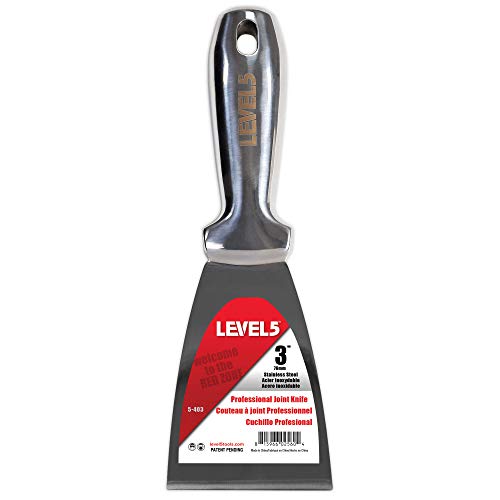
LEVEL5 makes tools for drywall finishers, and this 3-inch joint knife shows it. The blade and handle are welded from stainless steel as a single polished piece, so there is no riveted joint to loosen and no crevice where compound can harden out of reach. The precision-ground edge and the natural flex in the polished blade give it that broken-in feel finishers look for when feathering joint compound, and the all-metal build shrugs off water and daily rinsing without rust worries. The 3-inch width sits right in the patching sweet spot — taping short seams, filling screw dimples and smoothing repairs. Choose this one if you want a knife you can abuse, rinse and keep for years.
Specs
- Brand: LEVEL5
- Model: 5-403
- Blade width: 3 in
- Blade type: Flexible joint knife
- Blade material: Stainless steel, premium polished
- Construction: Welded one-piece all-metal design
- Edge: Precision ground
- Handle: Stainless steel, ergonomic profile
- Corrosion resistance: Rust-proof stainless build
4. DEWALT Clipped Putty Knife — Best for Corners and Detail Work

Most putty knives are simple rectangles, which makes inside corners and angled trim awkward. This DEWALT design clips the blade profile, giving you an angled point that reaches into corners, cleans out cracks and works along molding profiles where a square corner would gouge the adjoining surface. The stainless steel blade resists corrosion and wipes clean after compound work, while the glass-reinforced black nylon handle keeps the tool light — about 3.2 ounces — without feeling hollow when you lean on it for light scraping. A metal hammer end handles the usual nail-setting duty, and the full-tang, riveted build gives it a solid, one-piece feel. It is the detail specialist of this group, ideal for fiddly patches around trim and cabinets.
Specs
- Brand: DEWALT
- Model: DXTT-2-201
- Blade width: 6 in clipped profile
- Blade type: Clipped point for corners and angles
- Blade material: Stainless steel, polished finish
- Handle: Glass-reinforced nylon, black
- Construction: Full tang, riveted
- End cap: Metal hammer end for resetting nails
- Weight: About 3.2 oz
5. Amazon Basics 3-Inch Flex Putty Knife — Best Budget Finishing Knife

For pure filling and finishing work, a simple flexible knife is often the happiest tool in the bucket, and this Amazon Basics model sticks to the classic formula. The carbon steel blade is taper ground and mirror polished, so it bends in a smooth arc and lays spackle down thin, feathering the edges of a patch so it needs little sanding. The plain nylon handle is riveted to a full-length tang, which keeps the blade secure when you press hard over a deep dent. Carbon steel does ask for basic care — rinse it and dry it rather than leaving it in a water bucket — but in return you get the smooth spreading feel that made this design the standard home-repair knife.
Specs
- Brand: Amazon Basics
- Model: X3F-AZ
- Blade width: 3 in
- Blade type: Flex
- Blade material: Carbon steel, taper ground, mirror polished
- Handle: Nylon
- Construction: Full-length tang with heavy-duty rivets
- Intended use: Spreading spackle, filler and adhesive
Frequently Asked Questions
Do I need both a flex and a stiff putty knife?
For most home repair work, yes. The stiff knife handles scraping, prying lids and setting nails, while the flex knife does the actual filling and feathering. Using one tool for both jobs gives mediocre results at each end.
What size putty knife is best for nail holes?
A flexible blade between 1-1/4 and 3 inches works well. Narrower blades give the most control for single holes, while a 3-inch flex knife covers a cluster of holes and small dents in fewer passes. Avoid very wide blades for holes, because they bridge across the top instead of pressing filler in.
How do I stop a carbon steel putty knife from rusting?
Scrape off wet compound before it hardens, wash and dry the blade straight away, and store it dry. A thin wipe of household oil before long storage helps. Light surface rust can be removed with fine sandpaper, and the knife will work as before.
Can a putty knife be used for drywall taping?
A 3-inch knife handles screw dimples, short seams and patches comfortably. For full taped joints, step up to a wider joint or taping knife of 5 to 6 inches or more, which feathers compound over a broader area and leaves a flatter finish with less sanding.
Conclusion
The best putty knife setup for a home is a small, deliberate pair rather than one compromise tool. Keep the stiff Red Devil 4205 or the wide Purdy Premium on hand for scraping, prep and setting nails, and finish with a flexible blade — the one-piece stainless LEVEL5 for maximum durability, or the Amazon Basics flex knife for classic carbon-steel feel. Add the clipped DEWALT when corners and trim detail dominate your repair list. Match the width to the damage, keep carbon steel dry, and patches that used to show through the paint will simply disappear.
More from Amazon
Programs that pair well with the guide above. Offers and eligibility are set by Amazon and may change.
Collect the home and kitchen items you want in one registry that guests can shop from.
Create a wedding registrySet up recurring deliveries of everyday items on eligible products. Terms and savings are set by Amazon.
Explore Subscribe & SaveFree shipping on eligible items, Prime Video and more. Eligible new members can start with a free trial.
Start a Prime free trialAudiobooks and podcasts to listen to on the go. Eligible new members can start with a free trial.
Try Audible freeAs an Amazon Associate we earn from qualifying purchases.