Key takeaways
- Carbon mass, not just HEPA: HEPA captures dander, hair fragments, and litter dust, but odor molecules are gases and pass straight through. Prioritize units with a substantial pelletized or granular carbon stage; thin carbon-dusted mesh saturates within weeks in a multi-pet home.
- The decibel rating at speed one: Manufacturers advertise the quietest setting and the highest CADR, rarely together. For a bedroom, look for roughly 22–30 dB on sleep mode and confirm the fan tone is broadband rather than whiny — a low hum masks street noise, while high-frequency whistle fragments sleep.
- Light discipline: Air quality monitors are useful by day and disruptive at night. Insist on a display that fully extinguishes or auto-dims, since even a small blue indicator at bedside can suppress melatonin and pull you out of deeper stages.
- Size for air changes, not marketing square footage: Coverage claims usually assume a single air change per hour. For pet odor you want four to five. A practical rule: halve the advertised room rating, then buy the unit that comfortably covers your space at that halved figure.
- Maintenance you’ll realistically perform: Pet hair clogs pre-filters fast. A washable pre-filter is close to mandatory, and you should price a year of replacement filters before you buy — an inexpensive purifier with costly annual media is the more expensive machine.
What's inside
Pet odor is a sneaky problem because your nose stops reporting it. Olfactory habituation means you can walk past the litter box a dozen times and register nothing, while a guest clocks it from the entryway. Your body, however, doesn’t habituate the way your perception does. A closed bedroom door concentrates dander, litter dust, and the ammonia and sulfur compounds that drift off waste and damp fur — and that overnight load shows up as nasal congestion, mouth breathing, more frequent micro-arousals, and the specific grogginess of eight hours in bed that felt like five.
This guide evaluates pet-odor purifiers through a sleep-first lens rather than a spec-sheet one. That means weighting the noise floor at the lowest usable speed, whether the unit’s indicator lights can actually go dark, how much gas-phase filtration (activated carbon) sits behind the HEPA media, and whether the machine can deliver real air changes in a bedroom-sized space without being run at a setting that wakes you. The picks below span large open-plan living rooms and small nightstand-adjacent bedrooms, so match the unit to the room where your pet — and your sleep — actually lives.
As an Amazon Associate we earn from qualifying purchases.


🛒 Best Price Today on Amazon
Prime members get fast, free shipping on everything above, plus member-only deals. New members get a 30-day free trial — cancel anytime.
How to Choose an Air Purifier for Pet Odors (2026)
- Carbon mass, not just HEPA: HEPA captures dander, hair fragments, and litter dust, but odor molecules are gases and pass straight through. Prioritize units with a substantial pelletized or granular carbon stage; thin carbon-dusted mesh saturates within weeks in a multi-pet home.
- The decibel rating at speed one: Manufacturers advertise the quietest setting and the highest CADR, rarely together. For a bedroom, look for roughly 22–30 dB on sleep mode and confirm the fan tone is broadband rather than whiny — a low hum masks street noise, while high-frequency whistle fragments sleep.
- Light discipline: Air quality monitors are useful by day and disruptive at night. Insist on a display that fully extinguishes or auto-dims, since even a small blue indicator at bedside can suppress melatonin and pull you out of deeper stages.
- Size for air changes, not marketing square footage: Coverage claims usually assume a single air change per hour. For pet odor you want four to five. A practical rule: halve the advertised room rating, then buy the unit that comfortably covers your space at that halved figure.
- Maintenance you’ll realistically perform: Pet hair clogs pre-filters fast. A washable pre-filter is close to mandatory, and you should price a year of replacement filters before you buy — an inexpensive purifier with costly annual media is the more expensive machine.
The Best Air Purifiers for Pet Odors (2026), Reviewed
uahpet Pet Air Purifier
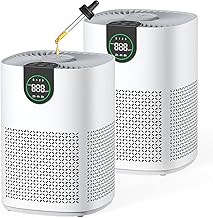
Engineered specifically around animal households, this model pairs H13 HEPA with a washable pre-filter that traps hair before it strangles airflow, and the 2,100 sq ft rating gives it enough headroom for open-plan homes where the pet roams. The onboard air quality monitor is genuinely useful for spotting the litter-box spike before you smell it.
WINIX 5510
The strongest all-rounder here, updated from the well-regarded 5500-2 with app control and a deep deodorization carbon filter that outperforms most thin carbon sheets on ammonia and sulfur compounds. Auto mode is responsive enough to leave alone, and the sleep setting is quiet enough for a bedroom door away from the main living space.
MOOKA KJ190H
A sensible value pick for large bedrooms, combining true HEPA, a washable pre-filter, and a dedicated quiet sleep mode that dims the display and drops the fan to a background whisper. The 2,200 sq ft rating means you can run it on low overnight and still achieve meaningful turnover.
Shark NeverChange HP152
Built for people who forget filter schedules, its long-life, HEPA-exceeding media with an odor neutralizer is designed to run for years rather than months — which matters enormously with pets, since lapsed filter changes are the single most common cause of a purifier that “stopped working.”
YARIKI P280
At a rated 22 dB, this is the light-sleeper’s choice and the one I’d put on a nightstand. H13 HEPA plus a washable pre-filter handles dander and hair in rooms up to 1,500 sq ft, and the acoustic profile is soft enough to function as low-level masking noise.
Frequently Asked Questions
Will a purifier completely eliminate litter box odor?
No — filtration is downstream of the source. Scoop daily, keep the box out of the bedroom, and treat carbon filtration as the tool that clears residual airborne gases rather than a substitute for hygiene.
Should I run it all night or only before bed?
Run it continuously on a low setting. Odor and dander are replenished constantly by a sleeping animal, and steady low-speed operation maintains cleaner air with far less acoustic disruption than intermittent bursts on high.
Where should I place the unit in a bedroom?
Six to eight feet from the bed, elevated off the floor if possible, with at least a foot of clearance from walls and nothing blocking the intake. Placing it between the pet’s usual sleeping spot and your pillow gives the best practical benefit.
How often do carbon filters need replacing with pets?
More often than the manual suggests. Particulate filters may last a year, but carbon saturates on a chemical timeline — if odors return while airflow still feels strong, the carbon is spent even though the HEPA layer looks clean.
Final Thoughts
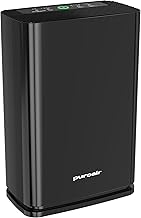
For most pet owners, the WINIX 5510 offers the best balance of serious carbon deodorization, coverage, and sane running costs. Light sleepers sharing a room with a dog or cat should look hard at the YARIKI P280 for its exceptionally low noise floor, while anyone who wants to buy once and stop thinking about maintenance will be best served by the Shark NeverChange HP152. Smaller bedrooms and dorms can also be handled capably by the PuroAir 240.