You spend roughly a third of your life inside one room, face inches from a mattress that quietly sheds skin cells, dust mite allergen and — if you share the bed with a dog — a steady drift of dander. Bedrooms are also the worst-ventilated space in most homes: door shut, window closed, HVAC cycling on a thermostat that has no idea what your sinuses are doing at 3 a.m. The pattern that shows up again and again in sleep coaching is people who fall asleep easily but surface four or five times a night, wake with a dry throat and a blocked nose, and blame stress when the real variable is the particulate load hanging in still air.
A purifier is one of the few bedroom upgrades that pays off within a week — but only if it is quiet enough to vanish, sized for the room you actually have, and dark enough not to leak light into your sleep architecture. Below, we cover the specs that matter in 2026, then review the bedroom-specific units worth buying, from a compact bedside cleaner to a machine that can handle an open-plan primary suite.
Our top picks


As an Amazon Associate we earn from qualifying purchases at no extra cost to you.
🛒 Best Price Today on Amazon
Prime members get fast, free shipping on everything above, plus member-only deals. New members get a 30-day free trial — cancel anytime.
How to Choose an Air Purifier For Bedrooms (2026)
- Sleep-mode decibels, not peak output: The only speed that matters is the one you’ll sleep on. Aim for a rated 24–28 dB on low, and confirm the unit still moves real air at that setting instead of simply idling.
- Verified coverage, not marketing square footage: Most headline ft² figures assume a single air change per hour. Allergy and asthma relief needs four to five, so divide the advertised number by four to get your realistic room size, and favour models carrying an AHAM Verifide seal.
- H13 HEPA plus an activated carbon layer: HEPA traps pollen, dander and smoke particulate; carbon is what neutralises litter box odour, cooking smells and off-gassing from new furniture. Bedrooms need both.
- Total darkness on command: AQI screens, status rings and power LEDs are melatonin’s enemy. Insist on a full display-off function, and treat any built-in night light as a bonus only if it’s warm and dimmable.
- Filter running costs: Price the replacements before you price the machine. A washable pre-filter that catches hair and lint will stretch a HEPA cartridge close to its full 12-month life instead of choking it in six.
The Best Air Purifiers for Bedrooms (2026), Reviewed
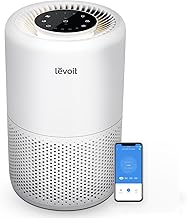
LEVOIT Core 300-P
The Core 300-P remains the reference point for bedroom air cleaning: AHAM-verified performance, a genuinely inaudible sleep mode, and a footprint small enough for a nightstand. It’s the unit we recommend first to anyone in a standard 120–250 sq ft bedroom who wants results without a learning curve.
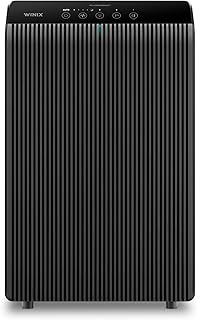
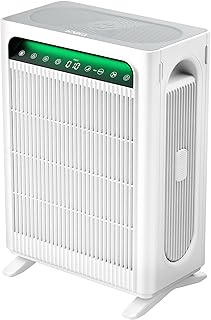
WINIX 5510
Built for larger rooms and loft-style bedrooms, the 5510 pairs true HEPA with a heavy deodorisation carbon filter and an auto mode that reacts to overnight spikes — pet activity, a window left open near traffic — without you touching it. App control means you can drop it to sleep speed from bed rather than crossing a dark room.
KNKA APH4000
The APH4000 earns its place on the strength of its washable pre-filter and dedicated pet mode, which together handle shedding season far better than most units in its class. The AQI display is useful during the day and, crucially, switches off completely at night.
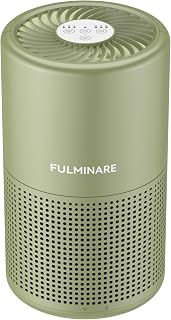
FULMINARE 360° H13 (Sage Green)
A 360-degree intake means placement is far more forgiving — it will still perform tucked beside a dresser where a rear-intake unit would suffocate. At 24 dB with a timer and three speeds, it’s a tidy, low-commitment choice for smaller bedrooms and nurseries.
FULMINARE H13 with Night Light
The most portable option here, and the one we’d suggest for guest rooms, dorms or a home office that doubles as a spare bedroom. The soft night light is genuinely calm rather than clinical, though larger rooms will out-pace it.
Frequently Asked Questions
Should I run it all night, or just before bed?
All night. Particulate settles and re-suspends every time you turn over, so a purifier running on low for eight hours does far more than an hour of high-speed blasting before you climb in.
Where should I position the unit?
Roughly six to ten feet from your pillow, with at least a foot of clearance on the intake side. Close enough to create clean air in your breathing zone, far enough that airflow isn’t drying out your eyes and throat.
Will a purifier help with congestion or snoring?
It can. Reducing allergen exposure lowers nasal inflammation, which for allergy-driven sleepers often means less mouth breathing and fewer micro-arousals. It won’t resolve structural snoring or sleep apnea — see a clinician for that.
Is the fan noise disruptive or helpful?
For most people, a steady low hum acts as gentle sound masking and helps blunt sudden noises from outside. Avoid units whose motors pulse or whine, and never sleep on a speed you’d notice if the room went silent.
Final Thoughts
For the majority of bedrooms, the LEVOIT Core 300-P is the safest, smartest buy — quiet, verified and cheap to maintain. Scale up to the WINIX 5510 if your bedroom is large or opens onto a living space, and consider the KNKA APH4000 if pets are your primary concern and you want a washable pre-filter doing the heavy lifting.