Key takeaways
- Positional adjustability: Head elevation of roughly 10 to 30 degrees is the range most often used clinically for reflux and positional snoring, while modest leg lift eases lumbar load and lower-limb swelling. Confirm the base offers independent head and foot incline rather than head-only tilt.
- Motion isolation: The split design already halves partner disturbance, but the mattress still matters if you toss frequently on your own side. Foam and pocketed-coil hybrids absorb movement far better than interconnected innerspring units.
- Thermal behaviour: Core body temperature must drop to initiate and sustain deep sleep. Prioritise open-cell grid structures, perforated gel foam, or coil layers that allow convective airflow — especially if one sleeper is menopausal or chronically overheats.
- Independent firmness: A split king lets each half differ. As a rough guide, side sleepers and lighter frames do better around medium-soft, while back and stomach sleepers or heavier builds need medium-firm support to keep the spine neutral.
- Trial period and logistics: Give yourself at least 90 nights; adaptation to a new surface commonly takes two to four weeks. Also check weight capacity, whether the base needs clearance beneath it, and how many people setup realistically requires.
Sharing a bed rarely means sharing the same sleep needs. One partner runs hot and sleeps flat on their stomach; the other wants their head raised to quiet reflux or snoring, and prefers a surface with more give at the shoulder and hip. On a conventional king, someone always concedes — and that nightly compromise shows up as fragmented sleep, morning stiffness, and the slow accumulation of sleep debt that no weekend lie-in fully repays.
A split king solves this at the hardware level: two twin XL halves sitting side by side under one headboard, each with its own feel and, on adjustable models, its own articulation. This guide covers the split king systems worth considering in 2026, the specifications that actually predict good sleep, and the practical questions buyers ask before committing to a bed that arrives in several very heavy boxes.
Our top picks




As an Amazon Associate we earn from qualifying purchases at no extra cost to you. Ratings are shown as listed on Amazon.
🛒 Best Price Today on Amazon
Prime members get fast, free shipping on everything above, plus member-only deals. New members get a 30-day free trial — cancel anytime.
How to Choose a Split King Mattress (2026)
- Positional adjustability: Head elevation of roughly 10 to 30 degrees is the range most often used clinically for reflux and positional snoring, while modest leg lift eases lumbar load and lower-limb swelling. Confirm the base offers independent head and foot incline rather than head-only tilt.
- Motion isolation: The split design already halves partner disturbance, but the mattress still matters if you toss frequently on your own side. Foam and pocketed-coil hybrids absorb movement far better than interconnected innerspring units.
- Thermal behaviour: Core body temperature must drop to initiate and sustain deep sleep. Prioritise open-cell grid structures, perforated gel foam, or coil layers that allow convective airflow — especially if one sleeper is menopausal or chronically overheats.
- Independent firmness: A split king lets each half differ. As a rough guide, side sleepers and lighter frames do better around medium-soft, while back and stomach sleepers or heavier builds need medium-firm support to keep the spine neutral.
- Trial period and logistics: Give yourself at least 90 nights; adaptation to a new surface commonly takes two to four weeks. Also check weight capacity, whether the base needs clearance beneath it, and how many people setup realistically requires.
The Best Split King Mattresses (2026), Reviewed
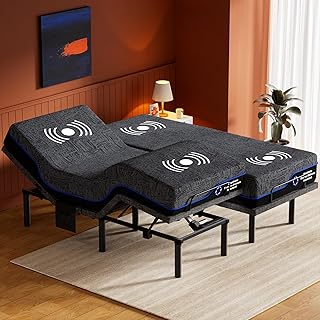
Smart App Control Split King Adjustable Bed with 14″ Luxury Hybrid
App-based control is genuinely useful here — it lets you fine-tune incline without fumbling for a remote in the dark, which protects sleep continuity. The medium-soft 14-inch hybrid suits side sleepers, and the anti-snore and zero-gravity presets cover the two positions most people actually use.
Premium Split King Adjustable Bed with 14″ Prime Gel Memory Foam
The standout feature is programmable memory positions: once you find the angle that settles your breathing or your back, you can return to it in one press every night. Zero-clearance construction, USB charging, and underbed lighting make it a sensible choice for older sleepers or anyone navigating night-time bathroom trips.
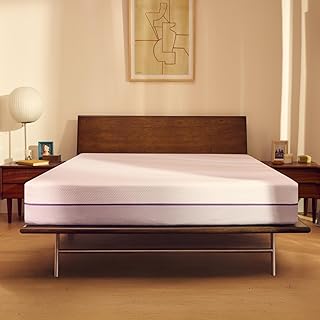
Purple Mattress – Split King, 9.25″ GelFlex Grid
Purple’s elastic polymer grid buckles precisely under pressure points while staying supportive elsewhere, which is why it performs so well for sleepers with hip and shoulder pain. The open grid architecture is also the most temperature-neutral surface on this list, though the buoyant feel is distinctive enough that the trial period matters.
Nectar Ultra Split King Adjustable Base & 15″ Hybrid
At 15 inches with innerspring coils beneath cooling memory foam, this is the most substantial build here and the one I’d point heavier sleepers toward for durable edge and lumbar support. The 365-night trial removes essentially all of the risk from a large, hard-to-return purchase.
Amada Split King Adjustable Bed & 14″ Cooling Gel Memory Foam Set
A well-judged value package: medium-firm gel foam, independent head and foot incline, massage, USB ports, and a night light, without the premium price attached to app control. The firmness leans supportive rather than plush, making it a strong fit for back sleepers.
Frequently Asked Questions
Is a split king just two twin XL mattresses?
Dimensionally, yes — two 38 by 80 inch halves form a 76 by 80 inch king. The difference is that split king sets are sold as matched pairs with adjustable bases, sharing a frame and headboard so the bed reads as one piece.
Will I feel the gap down the middle?
Most couples stop noticing within a week or two, since the seam sits well outside normal sleeping positions. If it bothers you, a foam gap filler or a fitted split-king topper closes it without restricting independent articulation.
What sheets do I need?
Buy two twin XL fitted sheets, or a purpose-made split king set with a king flat sheet. Standard king fitted sheets won’t work on an adjustable base — they’ll pull free as soon as one side inclines.
Do I have to use the adjustable base?
No. Every mattress here works flat on a solid platform. That said, the elevation is where the clinical benefit lives — for reflux, positional snoring, and circulation — so most buyers find the base earns its place.
Final Thoughts
For pressure relief and heat management, the Purple Split King remains the most technically interesting surface available and my pick for sleepers with joint pain. The Nectar Ultra is the better choice for larger builds or anyone who wants a full year to decide, while the Amada set delivers the core split king experience — independent incline, cooling foam, real support — at a noticeably gentler price.