Key takeaways
- Sustained CFM over peak PSI: Tornador guns typically consume 4–7 CFM at 90 PSI in continuous use. Pressure ratings look impressive on the box, but airflow is what keeps the vortex spinning. Aim for a compressor rated at or above your gun’s stated draw, not merely close to it.
- Tank volume as a buffer: A larger tank doesn’t create more air, it simply spaces out motor cycles. Six gallons will run a Tornador in short passes; twenty gallons or more lets you work a full interior with fewer interruptions and far less start-stop racket.
- Decibel rating and where you’ll run it: Standard direct-drive pumps sit around 78–90 dBA — loud enough to disturb sleep two rooms away. Ultra-quiet models near 60 dBA change the calculation entirely. If your garage shares a wall with a bedroom, treat this as a primary spec rather than a bonus.
- Oil-free versus oil-lubricated: Oil-free pumps need no upkeep and won’t mist lubricant into your air line, which matters when you’re spraying interior fabric. Oil-lubricated units run quieter and last longer under heavy load, but demand periodic attention.
- Moisture management: Any dry-cleaning gun will spit condensate without a filter or water separator inline. Look for an accessible tank drain, and drain it after every session — trapped moisture rusts tanks and stains upholstery.
What's inside
Anyone who has run a Tornador-style dry-cleaning gun in a garage attached to the house knows the real bottleneck isn’t the tool — it’s the compressor feeding it. These vortex guns are air-hungry by nature, drawing a continuous stream rather than short bursts, so an undersized pump cycles constantly, the motor drones, and the noise bleeds straight through the wall into a bedroom or nursery. As someone who spends most of my working life advising people on protecting their sleep environment, I see this pattern often: a weekend detailing habit quietly turning into a household noise problem, especially for early risers and shift workers trying to nap.
This guide approaches the question from both directions. First, the mechanical side: what CFM, tank volume, and recovery rate a Tornador gun genuinely needs to run without stalling. Second, the acoustic and lifestyle side: decibel ratings, duty cycles, and placement choices that let you detail on a Sunday morning without waking anyone. Below are the compressors and gun pairings I recommend most often, followed by a short buying framework and answers to the questions readers send me.
As an Amazon Associate we earn from qualifying purchases.



🛒 Best Price Today on Amazon
Prime members get fast, free shipping on everything above, plus member-only deals. New members get a 30-day free trial — cancel anytime.
How to Choose a/an Air Compressor For Tornador (2026)
- Sustained CFM over peak PSI: Tornador guns typically consume 4–7 CFM at 90 PSI in continuous use. Pressure ratings look impressive on the box, but airflow is what keeps the vortex spinning. Aim for a compressor rated at or above your gun’s stated draw, not merely close to it.
- Tank volume as a buffer: A larger tank doesn’t create more air, it simply spaces out motor cycles. Six gallons will run a Tornador in short passes; twenty gallons or more lets you work a full interior with fewer interruptions and far less start-stop racket.
- Decibel rating and where you’ll run it: Standard direct-drive pumps sit around 78–90 dBA — loud enough to disturb sleep two rooms away. Ultra-quiet models near 60 dBA change the calculation entirely. If your garage shares a wall with a bedroom, treat this as a primary spec rather than a bonus.
- Oil-free versus oil-lubricated: Oil-free pumps need no upkeep and won’t mist lubricant into your air line, which matters when you’re spraying interior fabric. Oil-lubricated units run quieter and last longer under heavy load, but demand periodic attention.
- Moisture management: Any dry-cleaning gun will spit condensate without a filter or water separator inline. Look for an accessible tank drain, and drain it after every session — trapped moisture rusts tanks and stains upholstery.
The Best Air Compressor For Tornador (2026)s Reviewed
Klutch 29-Gallon Vertical Compressor
With 5.1 CFM at 90 PSI and a 29-gallon vertical tank, this is the most capable option here for long detailing sessions — the buffer is deep enough that the motor rarely interrupts your workflow. The vertical footprint and large wheels make it practical in a crowded garage, though it’s a full-volume machine, so plan on scheduling around household sleep.
DEWALT 6-Gallon Pancake (DWFP55126)
The default recommendation for good reason: 165 max PSI, a maintenance-free oil-free pump, and a shape that stores under a bench. At 2.6 SCFM it will run a Tornador in measured passes rather than continuously, which suits interior touch-ups more than full-vehicle work.
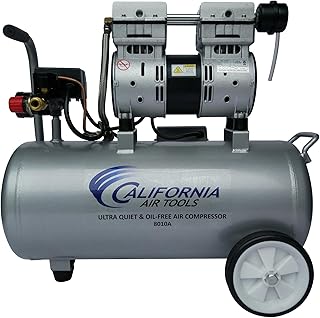
California Air Tools 8010A Ultra Quiet
At roughly 60 dBA, this is the one I point to when a reader tells me their compressor wakes a child or a partner on nights. The aluminum 8-gallon tank keeps it genuinely portable, and while the 1.0 HP motor asks for patience on recovery, the acoustic trade-off is usually worth it.
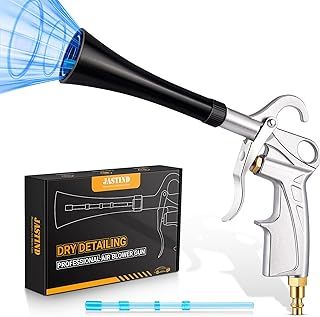
Tornado Car Cleaning Gun
A well-built vortex gun with a brass 1/4″ quick plug, a 60–150 PSI working range, and a spare blasting tube — the metal body holds up far better than the plastic-shell imitations. Pair it with a compressor rated above 4 CFM to get the full swirling action it’s designed for.
Car Detailing Air Gun Kit with 5 Hoses
A sensible starter bundle if you don’t yet own a gun: multiple hose attachments let you reach vents, seams, and seat rails without swapping tools. Build quality is a step below dedicated units, but the value is hard to argue with.
Frequently Asked Questions
Will a small pancake compressor run a Tornador gun?
Yes, in intervals. Expect to pause every minute or two while the tank refills. For dashboards and vents that’s fine; for a full interior, you’ll want more capacity.
How loud is too loud if someone is sleeping nearby?
Sustained exposure above roughly 45 dBA at the sleeper’s ear can fragment sleep architecture even when it doesn’t cause full waking. A 60 dBA compressor behind a closed garage door usually lands under that threshold; an 85 dBA unit generally does not.
Do I need a water separator?
Strongly recommended. Compressed air carries condensate, and spraying it into upholstery creates damp spots and, eventually, musty odors.
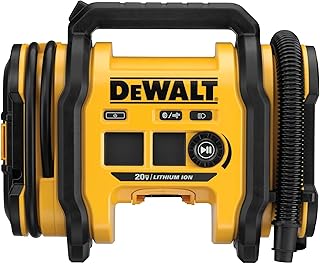
Is a cordless inflator like the DEWALT DCC020IB an option?
Not for a Tornador gun — inflators deliver pressure, not volume. They’re excellent for tires and sports equipment, and worth owning alongside a tank compressor.
Final Thoughts
If noise is your constraint, the California Air Tools 8010A is the clearest choice — quiet enough to use without disrupting anyone resting in the house. For uninterrupted power, the Klutch 29-Gallon delivers the airflow a Tornador really wants, and the DEWALT DWFP55126 remains the best compact compromise for occasional detailing.