Key takeaways
- Rung behavior: Fixed or flat-lying rungs are the single most important feature for indoor use. Rungs that curl or twist create trip hazards, and a stumble in a dim hallway undoes any benefit the session was meant to provide.
- Length versus your space: A 20-foot ladder needs roughly 25 feet of clear runway with a deceleration zone. Measure honestly; adjustable or segmented models let you deploy four or eight rungs in a smaller room without compromising the drill.
- Surface compatibility: Low-profile plastic rungs sit safely on hardwood, laminate, and low-pile carpet. Anything with raised plastic feet or metal hardware belongs outdoors or on turf, not on a finished floor.
- Setup friction: If a ladder takes three minutes to untangle, you will skip the session. Prioritize tangle-free designs with a carry bag, since the practical barrier to consistent training is almost always convenience, not motivation.
- Whether you need the full kit: Cones, hurdles, a jump rope, and a parachute expand your options considerably and help sustain interest across months. If you already have space and a plan, a standalone ladder is the cleaner, cheaper choice.
What's inside
Most people who lie awake at 1 a.m. assume the problem is their mattress, their room temperature, or the blue light from their phone. Often it is something less obvious: the body never accumulated enough physical demand during the day to earn a deep night. Sleep pressure builds through movement, and short bursts of coordinated, high-effort work — the kind that raises your heart rate, taxes your nervous system, and then lets it settle — do more for slow-wave sleep than another slow evening walk. This is where an agility ladder becomes a surprisingly relevant piece of home equipment rather than a niche athletic toy.
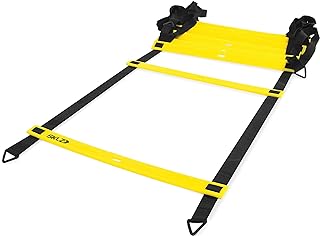
An agility ladder occupies almost no storage space, unrolls across a hallway or living room floor in seconds, and delivers a genuine cardiovascular and neuromuscular stimulus in eight to twelve minutes. Done in the late afternoon or early evening — ideally finishing at least two hours before bed so core temperature can fall — footwork drills produce the daytime exertion that healthy sleep architecture depends on. Below, I’ve assessed the ladders worth owning in 2026, judged on flat-lying rungs, tangle resistance, floor safety on hard surfaces, and whether they’ll survive being rolled up and shoved behind a sofa several hundred times.
As an Amazon Associate we earn from qualifying purchases.



🛒 Best Price Today on Amazon
Prime members get fast, free shipping on everything above, plus member-only deals. New members get a 30-day free trial — cancel anytime.
How to Choose a/an Agility Ladder (2026)
- Rung behavior: Fixed or flat-lying rungs are the single most important feature for indoor use. Rungs that curl or twist create trip hazards, and a stumble in a dim hallway undoes any benefit the session was meant to provide.
- Length versus your space: A 20-foot ladder needs roughly 25 feet of clear runway with a deceleration zone. Measure honestly; adjustable or segmented models let you deploy four or eight rungs in a smaller room without compromising the drill.
- Surface compatibility: Low-profile plastic rungs sit safely on hardwood, laminate, and low-pile carpet. Anything with raised plastic feet or metal hardware belongs outdoors or on turf, not on a finished floor.
- Setup friction: If a ladder takes three minutes to untangle, you will skip the session. Prioritize tangle-free designs with a carry bag, since the practical barrier to consistent training is almost always convenience, not motivation.
- Whether you need the full kit: Cones, hurdles, a jump rope, and a parachute expand your options considerably and help sustain interest across months. If you already have space and a plan, a standalone ladder is the cleaner, cheaper choice.
The Best Agility Ladder (2026)s Reviewed
GHB Pro Agility Ladder (12 Rung, 20ft)
The GHB Pro is the reference point: sturdy webbing, adjustable rungs that stay put once positioned, and a length that suits a garage, driveway, or long hallway. It’s the one I recommend to anyone who wants a single durable ladder and no accessories to keep track of.
Teenitor Agility Ladder (13 Rungs, 23 Feet)
At 23 feet, the Teenitor gives you two extra strides per pass, which matters if you’re using the ladder for conditioning rather than pure footwork precision. Best suited to outdoor use or a large open room, given the runway it demands.
SOFTSOUL Tangle Free Agility Ladder (12 Fixed Rungs)
Fixed rungs mean this one unrolls flat and stays flat, with no mid-session adjusting — the most household-friendly option here, especially where children will be using it unsupervised. My pick for anyone whose main obstacle to consistency is setup hassle.
Foldable Instant Set-Up Agility Ladder (4/8/12 Rung)
The modular configuration is genuinely useful in apartments: run four rungs beside the bed, or link the full twelve when you have the floor. Rung stiffness is slightly lower than the GHB, but the flexibility earns its place.
X-UMEUS Agility Ladder Speed Training Set
A complete circuit in one bag — 20-foot ladder, twelve cones, four hurdles, jump rope, and parachute — which makes it easy to build varied twenty-minute sessions instead of repeating the same drill. Excellent value for households with more than one user.
Frequently Asked Questions
How late in the day can I train without hurting my sleep?
Most people tolerate vigorous exercise up to about two hours before bed. Finish earlier if you notice a racing heart or restlessness at lights-out; the goal is elevated exertion during the day, not arousal at night.
How long should a session be?
Eight to fifteen minutes of work is plenty. Footwork drills are neurologically demanding, and quality degrades quickly — short, sharp, and frequent beats long and sloppy.
Can I use one indoors on hardwood?
Yes, with flat plastic rungs and clean, dry socks or supportive trainers. Clear a deceleration zone at both ends and avoid rugs that can slide.
Is this suitable for beginners or older adults?
Walking the pattern before running it builds coordination safely. Anyone with balance concerns or a history of falls should train near a wall or handrail and consult a clinician first.
Final Thoughts
For most homes, the SOFTSOUL Tangle Free ladder is the easiest to actually use, the GHB Pro is the most durable long-term investment, and the X-UMEUS set offers the widest range of drills for households that want variety — any of the three will give your body the honest daytime work that good sleep quietly depends on.