Key takeaways
- CFM before horsepower: Match delivered SCFM at 90 PSI to your thirstiest tool, then add roughly 40% headroom. A die grinder or DA sander can pull 10–12 SCFM continuously; horsepower ratings alone won’t tell you whether the pump keeps up.
- Duty cycle and cycling frequency: Fewer, longer run cycles are easier on the pump and far less intrusive in a shared home. A pump that hits 175 PSI stores more usable air in the same tank, meaning longer quiet stretches between starts.
- Oil-lubricated vs. oil-free: Oil-lubricated pumps run cooler, quieter, and longer, but need annual oil changes and a level footprint. Oil-free trades acoustic comfort and lifespan for zero maintenance — a reasonable swap for a detached shop, less so for an attached garage.
- Electrical reality check: These are 230V machines drawing 15–24 amps. Confirm you have a dedicated circuit with correct breaker sizing before purchase; several models ship with no plug so you can match your receptacle.
- Vibration isolation and siting: Bolting a vertical tank directly to a slab transmits low-frequency energy through the structure. Use rubber isolation pads, leave clearance for airflow, and if you can put the unit on an exterior wall away from bedrooms, do it.
What's inside
Most people shopping for a 60-gallon air compressor are solving a workflow problem: the little pancake unit cycles constantly, stalls the impact wrench mid-job, and turns a twenty-minute task into an hour of waiting. What they rarely account for is the second problem that arrives with the bigger tank — a 230V motor kicking on at 6:45 a.m. one wall away from a bedroom. As someone who works on sleep environments for a living, I can tell you that intermittent, low-frequency mechanical noise is far more disruptive to sleep architecture than steady sound at the same volume. A compressor that surges on and off all morning is exactly the profile that fragments light sleep in a shift worker, a napping toddler, or anyone whose bedroom shares a wall with the garage.
So this guide looks at 60-gallon stationary compressors from both angles: the shop performance you’re actually paying for, and how each one behaves as a permanent fixture in a home you also sleep in. Below you’ll find our current picks, a buying checklist that includes placement and duty cycle, short reviews of the top five, and answers to the questions that come up most often once the unit is bolted to the slab.
As an Amazon Associate we earn from qualifying purchases.


🛒 Best Price Today on Amazon
Prime members get fast, free shipping on everything above, plus member-only deals. New members get a 30-day free trial — cancel anytime.
How to Choose a/an Air Compressor 60 Gallon (2026)
- CFM before horsepower: Match delivered SCFM at 90 PSI to your thirstiest tool, then add roughly 40% headroom. A die grinder or DA sander can pull 10–12 SCFM continuously; horsepower ratings alone won’t tell you whether the pump keeps up.
- Duty cycle and cycling frequency: Fewer, longer run cycles are easier on the pump and far less intrusive in a shared home. A pump that hits 175 PSI stores more usable air in the same tank, meaning longer quiet stretches between starts.
- Oil-lubricated vs. oil-free: Oil-lubricated pumps run cooler, quieter, and longer, but need annual oil changes and a level footprint. Oil-free trades acoustic comfort and lifespan for zero maintenance — a reasonable swap for a detached shop, less so for an attached garage.
- Electrical reality check: These are 230V machines drawing 15–24 amps. Confirm you have a dedicated circuit with correct breaker sizing before purchase; several models ship with no plug so you can match your receptacle.
- Vibration isolation and siting: Bolting a vertical tank directly to a slab transmits low-frequency energy through the structure. Use rubber isolation pads, leave clearance for airflow, and if you can put the unit on an exterior wall away from bedrooms, do it.
The Best Air Compressor 60 Gallon (2026)s Reviewed
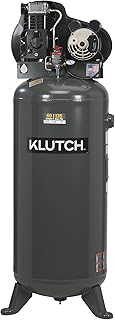
Klutch 60-Gallon Vertical, 3.7 HP
A well-balanced single-stage unit that delivers steady air for demanding garage and shop tool use, with genuinely maintenance-friendly access to the pump and drain. It’s our default recommendation for a first serious stationary compressor.
Campbell Hausfeld 60 Gallon Vertical, 175 PSI
The 175 PSI ceiling is the story here: more stored air per cycle means the motor starts less often, which is both mechanically kinder and noticeably less disruptive in a home with an attached garage. Long-standing brand support is a bonus.
VEVOR 60 Gallon Heavy-Duty, 5HP
At 12 SCFM at 90 PSI, this oil-lubricated model has the most usable output of the group and will feed a sander or media blaster without gasping. Best suited to a detached shop, since the 5HP pump is the loudest performer in the lineup.
DEWALT 60 Gallon Vertical, 3.7 HP
A conservative, dependable choice with 155 max PSI and the fit-and-finish you’d expect from the brand. Nothing about it is exotic, which is exactly what you want from a machine intended to sit in one place for fifteen years.
VEVOR 60 Gallon Oil-Free, 4HP
Ten SCFM at 90 PSI with no oil changes ever — ideal if the compressor lives somewhere you’d rather not do maintenance. Expect a harder-edged sound signature than oil-lubricated equivalents, so plan placement accordingly.
Frequently Asked Questions
Will a 60-gallon compressor in my garage keep my family awake?
It can, if it’s poorly sited. The disruptive element isn’t peak volume so much as the abrupt onset of each cycle. Isolation pads, a longer air line so you can shift the unit away from shared walls, and avoiding early-morning tank fills solve most complaints.
Is single-stage enough, or do I need two-stage?
Single-stage covers virtually all home and hobby work up to 175 PSI. Two-stage matters when you’re running high-demand tools continuously for hours, at which point you’re in small-commercial territory.
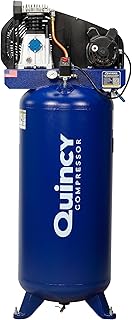
What about the Quincy Q13160VQ?
The 3.5 HP, 220V Quincy is a strong value from a respected industrial name and worth a look if you prioritize pump longevity over headline CFM figures.
How often should I drain the tank?
After every significant session, or weekly at minimum. Condensate is the leading cause of tank corrosion, and an auto-drain valve is the cheapest upgrade you’ll make.
Final Thoughts
For most home shops, the Klutch 60-Gallon hits the best balance of output and serviceability, while the Campbell Hausfeld’s 175 PSI ceiling makes it the smarter pick if your compressor shares a wall with anyone who sleeps. If you’re working in a detached space where noise is a non-issue, the 5HP VEVOR gives you the most air for the money.