Key takeaways
- Backing material: Look for natural rubber or latex bonded to felt. Avoid cheap PVC and plasticized adhesive-style grips — those are the ones that can react with polyurethane finishes and leave a cloudy residue or discoloration that no amount of buffing removes.
- Thickness: A quarter inch is the sweet spot for bedrooms. It absorbs footfall noise and softens impact without lifting the rug high enough to catch a door swing or a toe at night. Go thinner only for low-clearance areas or under thin flatweaves.
- Grip vs. cushion: Dense wool or hand-knotted rugs mostly need grip; thin cotton or machine-woven rugs need cushion too. Dual-surface felt-and-rubber pads handle both, which is why they dominate this list.
- Sizing: Buy the pad to match your rug and trim it one inch shorter on each side so the pad disappears under the edge. Felt-rubber pads cut cleanly with sharp scissors or a utility knife.
- Off-gassing: If the pad is going in a bedroom, prioritize low-VOC natural rubber over synthetic alternatives, and unroll it in a ventilated space for a day or two before installing. Your air quality while you sleep is worth the wait.
What's inside
As someone who spends most days talking with people about what wrecks their sleep, I’ve learned that the culprit is rarely the mattress. It’s the small friction points in a home — the bedroom rug that slides half a foot every time you swing your legs out of bed, the hollow slap of bare feet on cold hardwood at 3 a.m., the creak-and-shift underfoot that snaps a half-asleep brain back to full alert. A floor that feels unstable keeps the nervous system on low-grade watch duty, and that’s the opposite of what a bedroom should do. A proper rug pad is one of the cheapest fixes in the entire sleep-environment toolkit.
This guide looks at rug pads specifically through that lens: quiet underfoot, genuinely stable, and safe against hardwood finishes so you’re not trading a peaceful bedroom for a hazy adhesive stain in two years. I’ve broken down what actually matters when you’re comparing felt-and-rubber constructions, where thickness helps and where it becomes a tripping nuisance, and which options make the most sense for bedrooms, hallway runners, and bedside landing zones. Below are the picks worth your money in 2026.
As an Amazon Associate we earn from qualifying purchases.




How to Choose a Rug Pad For Hardwood Floor (2026)
- Backing material: Look for natural rubber or latex bonded to felt. Avoid cheap PVC and plasticized adhesive-style grips — those are the ones that can react with polyurethane finishes and leave a cloudy residue or discoloration that no amount of buffing removes.
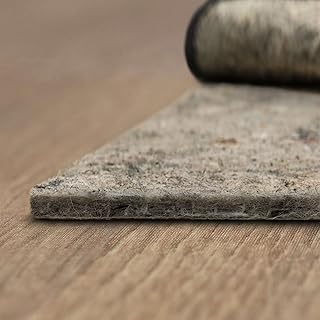
- Thickness: A quarter inch is the sweet spot for bedrooms. It absorbs footfall noise and softens impact without lifting the rug high enough to catch a door swing or a toe at night. Go thinner only for low-clearance areas or under thin flatweaves.
- Grip vs. cushion: Dense wool or hand-knotted rugs mostly need grip; thin cotton or machine-woven rugs need cushion too. Dual-surface felt-and-rubber pads handle both, which is why they dominate this list.
- Sizing: Buy the pad to match your rug and trim it one inch shorter on each side so the pad disappears under the edge. Felt-rubber pads cut cleanly with sharp scissors or a utility knife.
- Off-gassing: If the pad is going in a bedroom, prioritize low-VOC natural rubber over synthetic alternatives, and unroll it in a ventilated space for a day or two before installing. Your air quality while you sleep is worth the wait.
The Best Rug Pad For Hardwood Floor (2026)s Reviewed
RUGPADUSA Dual Surface 8’x10′
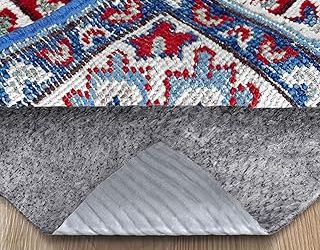
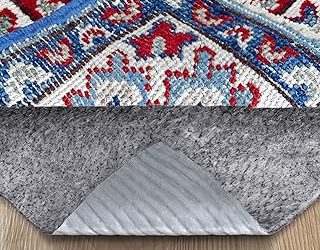
This is the pad I recommend most often for primary bedrooms — a dense recycled felt layer bonded to natural rubber, with enough mass to deaden footstep noise rather than just muffle it. The finish-safe construction means you can leave it down for years without checking underneath in a panic.
Veken Cushioned Rug Pad Gripper
Veken’s felt-and-silicone build uses a dotted anti-slip pattern that holds well on sealed hardwood while staying easy to lift and reposition. It’s a smart middle option if you want real cushion at a friendlier price and don’t mind slightly less heft than a full rubber-backed pad.
BAGAIL Felt and Natural Rubber 5’x7′
The 5×7 size makes this a natural fit for the strip of rug beside a bed or under a nursery glider, where you want quiet landing and zero slide. Natural rubber backing keeps it in the finish-safe category, and the quarter-inch felt takes the sting out of cold morning floors.
Mohawk Home Non Slip Rug Pad 8’x10′
A reliable felt-and-latex option made in the USA, with a firm profile that works well under heavier rugs on wide-plank floors. Grip is strong out of the box, and it holds its loft better than budget pads after repeated vacuuming.
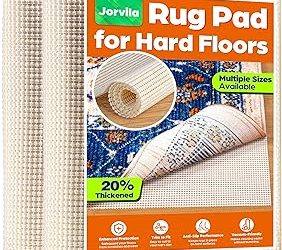
Jorvila Non-Slip Rug Pad Gripper 8×10
Jorvila leans toward the thicker, plusher end of the range, which is worth considering if your priority is impact absorption over a rock-solid anchor. Best matched with mid-weight area rugs in low-traffic bedrooms.
Frequently Asked Questions
Will a rug pad damage my hardwood finish?
A quality felt-and-natural-rubber pad won’t. Damage almost always comes from PVC, adhesive-backed, or heavily plasticized pads, which can bond with or discolor polyurethane over time — especially in warm rooms.
Does a thicker pad make a room quieter?
Somewhat, but density matters more than thickness. A dense quarter-inch felt pad dampens footfall noise better than a thick, airy foam one, because mass is what stops sound from transmitting into the subfloor.
Can I use one pad under two overlapping rugs?
Not effectively. Layered rugs need their own pads, or at minimum a grip pad under the bottom rug and a thin low-profile pad between layers to stop shifting.
How often should a rug pad be replaced?
Good felt-rubber pads last five to ten years. Replace yours when the rubber feels chalky or slick, or when the felt has compressed flat — at that point it’s no longer gripping or cushioning.
Final Thoughts
For most bedrooms, the RUGPADUSA Dual Surface is the pad I’d buy without hesitation — quiet, dense, and genuinely safe on finished wood. The Mohawk Home pad is the value-minded alternative with nearly the same construction, and for small bedside or runner areas, the GORILLA GRIP pad handles the job at a size that’s hard to find elsewhere. Any of the three will make your floors feel steadier, which is a smaller thing than a new mattress and, in my experience, noticed just as often.