
Key takeaways
- Buy the accessory that removes a blocker: If you cannot progress push-ups, a vest solves it. If your pressing is all flat, a bench solves it. Identify the specific thing you cannot currently do rather than buying broadly.
- Storage accessories pay off twice: A wall rack costs little and returns floor space permanently, which makes every other piece of equipment easier to use. It is the least glamorous purchase and often the most useful.
- Check bench adjustment range: A bench that goes flat, to 30 degrees, and to a steep incline covers everything. Decline is rarely necessary; a proper flat position absolutely is.
- Weighted vests need fit, not just weight: A vest that shifts during movement is worse than no vest. Look for adjustable straps and a snug torso fit, and size up if you train in bulky clothing.
- Match cardio tools to your ceiling: Cordless ropes exist because standard ropes need about 9 feet of clearance. In a basement or low-ceilinged room, that is the difference between training and not.
What's inside
The gap between a home gym that works and one that gathers dust is rarely the big machine. It is the missing bench that means you never press at an incline, the absence of anywhere to hang a mat so it lives in a heap, the lack of anything to add resistance once bodyweight movements get easy. Accessories are what turn a collection of equipment into a programme, and they cost a fraction of the headline purchases.
The six items below each unlock something specific: a bench for pressing angles, an ab wheel for anti-extension core work, a cordless rope for cardio in a low-ceilinged room, a wall rack that reclaims floor space, a push-up board for guided pressing variety, and a weighted vest for progressive overload on bodyweight movements. None of them requires a dedicated room. All of them change what your existing setup can do.
As an Amazon Associate we earn from qualifying purchases.

#1 Pick

#2 Pick

#3 Pick

#4 Pick

#5 Pick
#6 Pick
#7 Pick

Quick Comparison
| Product | Best For | Standout Feature | Watch Out For |
|---|---|---|---|
| YOLEO Adjustable Bench | Unlocking press angles | 827 lb rating, 98% pre-built | Needs dumbbells to matter |
| VINSGUIR Ab Roller | Anti-extension core work | Wide wheel with knee pad | Punishing for beginners |
| YOTTOY Cordless Jump Rope | Low ceilings | Weighted ball, built-in counter | Different feel to a real rope |
| Yoga Mat Wall Rack | Reclaiming floor space | 4 tiers plus a top shelf | Wall fixings must be solid |
| MQRW Push Up Board | Pressing variety | Guided hand positions | Board is bulky to store |
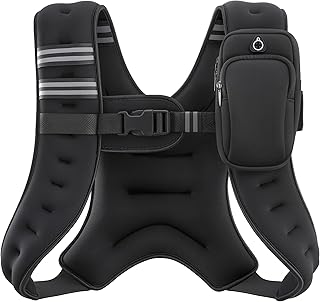
| ZELUS Weighted Vest | Progressive bodyweight work | 6 to 30 lb options | Sizing runs snug on some |
How to Choose
- Buy the accessory that removes a blocker: If you cannot progress push-ups, a vest solves it. If your pressing is all flat, a bench solves it. Identify the specific thing you cannot currently do rather than buying broadly.
- Storage accessories pay off twice: A wall rack costs little and returns floor space permanently, which makes every other piece of equipment easier to use. It is the least glamorous purchase and often the most useful.
- Check bench adjustment range: A bench that goes flat, to 30 degrees, and to a steep incline covers everything. Decline is rarely necessary; a proper flat position absolutely is.
- Weighted vests need fit, not just weight: A vest that shifts during movement is worse than no vest. Look for adjustable straps and a snug torso fit, and size up if you train in bulky clothing.
- Match cardio tools to your ceiling: Cordless ropes exist because standard ropes need about 9 feet of clearance. In a basement or low-ceilinged room, that is the difference between training and not.
Top Picks Reviewed
Biggest Single Upgrade: YOLEO Adjustable Bench
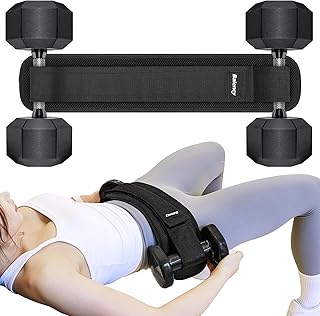
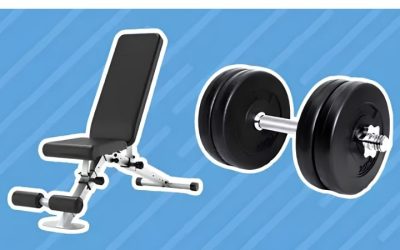
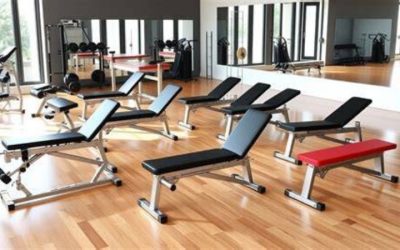
Adding a bench multiplies what a pair of dumbbells can do — incline press, supported rows, step-ups, seated shoulder work, and hip thrusts all become available. With an ASTM-certified 827 lb rating and 98% pre-assembled delivery, it is usable within minutes of arriving.
On its own it does nothing. If you do not already own weights, buy those first and add the bench second, or it becomes storage furniture.
Best Progression Tool: ZELUS Weighted Vest
Once push-ups, squats, and pull-ups get easy, the only ways forward are more reps or more weight. Options from 6 to 30 lb let you add load in sensible increments and keep bodyweight training productive for years.
Fit is critical and sizing runs snug for some builds. A vest that rides up during push-ups is distracting enough that it stops being used.
Best Space Recovery: Yoga Mat Wall Rack
Four tiers plus a top shelf holds mats, blocks, bands, and rollers off the floor, which transforms how usable a small training area feels. It is the cheapest way to make an existing setup feel organised rather than cluttered.
It must go into studs or use proper heavy-duty anchors. Loaded with mats and equipment, drywall plugs alone will eventually pull out.
Best Core Addition: VINSGUIR Ab Roller
Anti-extension work is the one thing most home routines skip, and a wheel trains it better than any crunch variation while also loading the lats and serratus. The wide wheel tracks straight and the knee pad is included.
It is hard. Beginners should start with short-range kneeling rollouts and expect wrist and back soreness if they push distance too early.
Best for Low Rooms: YOTTOY Cordless Jump Rope
Weighted balls on short cords replicate the wrist action and conditioning effect of skipping without needing overhead clearance, and the built-in counter keeps sessions structured.
It does not feel like a real rope. There is no feedback from the cable passing under your feet, so timing and rhythm work transfers imperfectly to actual skipping.
Best Pressing Variety: MQRW Push Up Board
Guided hand positions genuinely shift emphasis between chest, shoulders, and triceps, which turns one exercise into several. Combined with the included bands and handles it covers a complete upper-body session.
The board is rigid and wide, so storage means sliding it under something rather than folding it away.
Frequently Asked Questions
Which accessory should I buy first?
If you own dumbbells, a bench. If you train bodyweight only, a weighted vest. Both remove the specific ceiling that stops progress in those setups.
How heavy should a weighted vest be?
Start at around 5 to 10 percent of bodyweight. Heavier vests are useful for walking and squats but make push-ups and pull-ups disproportionately harder.
Are cordless jump ropes as effective as real ones?
For heart rate and calorie burn, close. For coordination and timing, no — the missing cable feedback means the skill does not transfer fully. They are a solution for low ceilings, not an upgrade.
How do I mount a wall storage rack safely?
Locate the studs and fix into them wherever possible. Where you cannot, use heavy-duty toggle anchors rated well above the loaded weight, and keep the heaviest items on the lowest tier.
Final Thoughts
The YOLEO Adjustable Bench changes more about a dumbbell-based setup than anything else on this list, while the ZELUS Weighted Vest does the same job for bodyweight training. If your problem is clutter rather than capability, the Yoga Mat Wall Rack costs little and makes the whole space workable again.
Write Your Review
No reviews yet. Be the first to share your experience!