Key takeaways
- Freezer bowl vs. compressor: Nearly every affordable machine uses a pre-frozen bowl rather than a built-in compressor. That means planning ahead — 12 to 24 hours in the freezer — but it also means a fraction of the cost, weight, and running noise. Measure your freezer before you buy.
- Batch size honesty: A 4-quart churn is wonderful for a family gathering and a liability if you’re trying to keep evening portions modest. Half-pint and single-serve formats build restraint into the hardware, which is often more effective than willpower at 9 p.m.
- Noise output: Motorized churns run anywhere from a gentle hum to a genuine racket for 20 to 40 minutes. If you’re making dessert after children are asleep, or you’re winding down yourself, quieter models are worth prioritizing over raw capacity.
- Recipe flexibility: Look for machines that handle sorbet, frozen yogurt, and coconut or oat bases well, not just heavy custard. Lighter bases sit better before bed, and versatility keeps a cheap machine in rotation year after year.
- Cleanup reality: Dishwasher-safe paddles and lids, and a bowl you can rinse in the sink, decide whether you use the thing weekly or twice a summer. Avoid designs with sealed motor housings that trap splatter.
What's inside
As someone who spends my working hours helping people build better nights, I get asked about dessert more often than you’d expect. The evening ritual matters — and for a lot of households, that ritual involves something cold and sweet an hour or two before lights out. The problem isn’t the ice cream itself so much as what’s in the carton: heavy sugar loads that spike and crash blood glucose overnight, and portion sizes designed by marketing departments rather than by anyone thinking about your 3 a.m. wake-up. Making it yourself changes the equation. You control the sugar, the fat, the caffeine (that late-night coffee gelato is doing you no favors), and — crucially — how much you make in the first place.
The second problem is budget. Churning machines have a reputation for costing as much as a small piece of furniture, which puts them squarely in the “someday” pile. They don’t need to. This guide covers the genuinely affordable end of the market: compact freezer-bowl units, old-fashioned electric churns, single-serve countertop machines, and one clever outlier that has quietly rewritten what a home ice cream maker can do. I’ve weighed each on noise level, batch size, ease of cleaning, and how well it supports lower-sugar and dairy-alternative recipes — the things that actually determine whether a machine lives on your counter or in the garage.
As an Amazon Associate we earn from qualifying purchases.



How to Choose a Low Cost Ice Cream Maker (2026)
- Freezer bowl vs. compressor: Nearly every affordable machine uses a pre-frozen bowl rather than a built-in compressor. That means planning ahead — 12 to 24 hours in the freezer — but it also means a fraction of the cost, weight, and running noise. Measure your freezer before you buy.
- Batch size honesty: A 4-quart churn is wonderful for a family gathering and a liability if you’re trying to keep evening portions modest. Half-pint and single-serve formats build restraint into the hardware, which is often more effective than willpower at 9 p.m.
- Noise output: Motorized churns run anywhere from a gentle hum to a genuine racket for 20 to 40 minutes. If you’re making dessert after children are asleep, or you’re winding down yourself, quieter models are worth prioritizing over raw capacity.
- Recipe flexibility: Look for machines that handle sorbet, frozen yogurt, and coconut or oat bases well, not just heavy custard. Lighter bases sit better before bed, and versatility keeps a cheap machine in rotation year after year.
- Cleanup reality: Dishwasher-safe paddles and lids, and a bowl you can rinse in the sink, decide whether you use the thing weekly or twice a summer. Avoid designs with sealed motor housings that trap splatter.
The Best Low Cost Ice Cream Maker (2026)s Reviewed
Cuisinart ICE-21P1ES (1.5 qt)
The reference point for affordable churning: a double-insulated freezer bowl, an easy-lock lid, and a finished batch in roughly 20 minutes with minimal fuss. Its 1.5-quart capacity is the sweet spot for two to four sensible servings, and it handles reduced-sugar and non-dairy bases more gracefully than its price suggests.
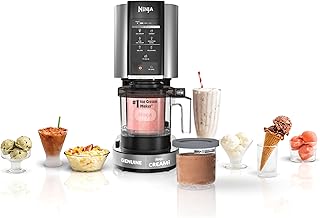
Ninja CREAMi (NC301)
Rather than churning, the CREAMi shaves a fully frozen base into a smooth texture, which makes it unusually forgiving with low-sugar, high-protein, and dairy-free recipes that defeat traditional machines. It’s loud in short bursts and requires overnight freezing of the pint itself — plan for it and you’ll get the most consistent results on this list.
Hamilton Beach 68330N (4 qt)
A straightforward automatic churn with real capacity, well suited to households feeding a crowd or batching gelato and sherbet ahead. The tradeoff is size and volume: it’s not a quiet-evening appliance, and 4 quarts invites larger portions than I’d generally recommend close to bedtime.
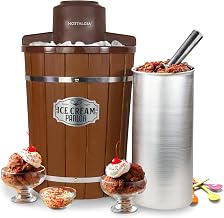
Nostalgia Electric (4 qt, Blue)
The old-fashioned bucket format, updated with an electric motor and priced accessibly. It’s a genuinely enjoyable family project — worth doing in the late afternoon rather than after dark, since the ice-and-salt setup and running noise are both substantial.
Dash My Mug Bundle
Two half-pint freezer mugs, an ingredient chute, and a footprint smaller than a toaster. This is my quiet recommendation for anyone managing evening portions: it makes exactly enough, cleans up in a minute, and removes the leftover-carton temptation entirely.
Frequently Asked Questions
Is eating ice cream before bed genuinely bad for sleep?
It depends far more on composition than timing. Large sugar loads and any caffeinated flavor within a few hours of bed can fragment sleep; a small, lower-sugar portion with some protein and fat is much less disruptive for most people.
How long does the freezer bowl really need?
Plan on a full 24 hours at the back of the freezer, not the door. Underfrozen bowls are the single most common cause of soupy results — and storing the bowl permanently in the freezer means you’re always ready.
Can these machines handle dairy-free bases?
Yes, though results vary. Coconut and full-fat oat bases perform best; almond and skim alternatives tend toward iciness. The CREAMi is the most reliable of this group with lighter bases.
Do I need a compressor model eventually?
Only if you make back-to-back batches regularly. For most households, a freezer bowl machine used once or twice a week is entirely sufficient and considerably cheaper to run.
Final Thoughts
If you want one machine that quietly does nearly everything, the Cuisinart ICE-21P1ES remains the most sensible entry point at this price. Choose the Ninja CREAMi if low-sugar or high-protein recipes are your priority, or the Dash My Mug bundle if built-in portion control matters more to you than volume — a decision your sleep will thank you for.