Key takeaways
- Head and neck support first: An independently adjustable power headrest is the single most valuable feature for anyone who dozes in their chair. Without it, a reclined backrest pushes your chin toward your chest and narrows your airway — a recipe for snoring, reflux, and a stiff morning neck.
- Recline depth over recline count: Most people rest best somewhere between 25 and 40 degrees off vertical, where the legs are elevated enough to ease venous return. Check the maximum recline angle and whether the footrest rises high enough to keep your knees above hip level.
- Glide quality and noise: A solid wood or steel glider base with sealed bearings should travel silently and stop without a clunk. Listen for the motor, too — a loud actuator will rouse a sleeping infant every time you adjust.
- Thermal comfort of the upholstery: Body temperature drops as you fall asleep, then heat builds where your back meets the chair. Breathable performance fabrics and bouclé run cooler than vinyl-coated materials; genuine leather sits in the middle and improves with use.
- Power logistics: Confirm cord length, whether a USB port is built in, and whether the chair accepts a rechargeable battery pack. Also verify wall clearance behind the backrest — many models need four to six inches to recline fully.
What's inside
Anyone who has spent a 3 a.m. feeding session in the wrong chair knows the problem: your body finally begins to drift, your neck folds sideways, and you jerk awake with a knot under your shoulder blade. The same thing happens in living rooms every evening — people fall asleep upright in furniture that was never designed to support a sleeping head. From a sleep-wellness standpoint, a recliner isn’t a luxury item; it’s a piece of equipment that either protects your cervical spine and circulation during rest, or quietly sabotages both. A power swivel glider recliner is one of the few chairs that can do the first job well, because it lets you reach a supported reclined angle without bracing your abdomen or waking a baby on your chest.
This guide looks at the 2026 crop of power swivel glider recliners through that lens: how far they recline, whether the headrest actually meets your head at the angle you’ll use, how quietly and smoothly the glide travels, and how the upholstery behaves during long, warm, sweaty stretches of near-sleep. Below you’ll find our current picks, followed by the specifications that matter most and answers to the questions buyers ask us most often.
As an Amazon Associate we earn from qualifying purchases.


How to Choose a Power Swivel Glider Recliner (2026)
- Head and neck support first: An independently adjustable power headrest is the single most valuable feature for anyone who dozes in their chair. Without it, a reclined backrest pushes your chin toward your chest and narrows your airway — a recipe for snoring, reflux, and a stiff morning neck.
- Recline depth over recline count: Most people rest best somewhere between 25 and 40 degrees off vertical, where the legs are elevated enough to ease venous return. Check the maximum recline angle and whether the footrest rises high enough to keep your knees above hip level.
- Glide quality and noise: A solid wood or steel glider base with sealed bearings should travel silently and stop without a clunk. Listen for the motor, too — a loud actuator will rouse a sleeping infant every time you adjust.
- Thermal comfort of the upholstery: Body temperature drops as you fall asleep, then heat builds where your back meets the chair. Breathable performance fabrics and bouclé run cooler than vinyl-coated materials; genuine leather sits in the middle and improves with use.
- Power logistics: Confirm cord length, whether a USB port is built in, and whether the chair accepts a rechargeable battery pack. Also verify wall clearance behind the backrest — many models need four to six inches to recline fully.
The Best Power Swivel Glider Recliners of 2026, Reviewed
CHITA Genuine Leather Power Recliner, Swivel Glider (Grey)
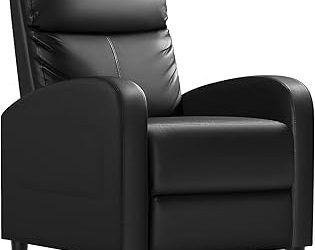
The standout here is a genuine leather seat paired with a manually adjustable headrest, which lets you dial in neck position independently of the powered backrest — the combination we recommend most often for people who fall asleep sitting up. FSC-certified construction and a stable base make it the most grown-up looking option of the group, equally at home in a nursery or a reading corner.
CHITA Power Swivel Glider Recliner (Crockery Gray)
This version trades leather for a soft neutral upholstery and upgrades to a fully powered headrest, so you can fine-tune head support without shifting a baby or a book. The solid wood glider base is exceptionally quiet in motion, which matters more than almost any other spec during night feedings.
Delta Children Mercer Power Recliner & Swivel Glider
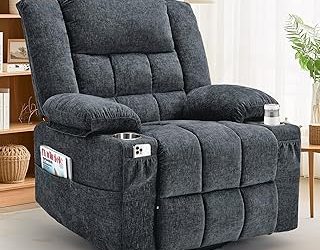
Delta’s LiveSmart performance fabric is water-repellent and stain-resistant, making this the most forgiving pick for spit-up, spilled coffee, and the general chaos of the first year. The built-in USB port keeps a phone or monitor charged within arm’s reach, which discourages the midnight trip across the room that ends any hope of falling back asleep.
Oversized Power Swivel Rocker Recliner with Lumbar Support (White)
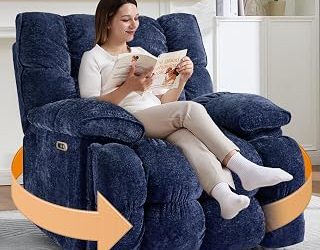
Genuinely wide seating plus dedicated lumbar support makes this the best fit for taller and broader adults, who tend to be poorly served by nursery-scaled gliders. The adjustable headrest travels far enough to support a fully reclined head, not just a semi-upright one.
Bouclé Power Swivel Glider Recliner with USB (Cream)
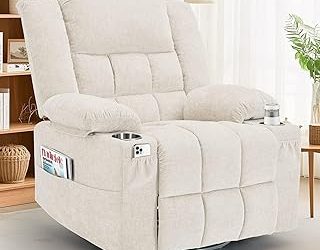
Bouclé breathes noticeably better than faux leather during long stretches of stillness, and the included lumbar pillow lets you tune spinal support to your own curve. A large seat, USB charging, and a smooth glide round out a chair designed for extended rest rather than brief sitting.
Frequently Asked Questions
Is it safe to sleep in a power recliner?
Occasional napping in a well-supported reclined position is fine and can even help people with reflux or nasal congestion. What you should avoid is sleeping while holding an infant — always transfer the baby to a flat, firm sleep surface before you drift off.
Do I need an adjustable headrest?
If you plan to rest in the chair, yes. A reclined backrest without matching head support forces the neck into flexion, which restricts the airway and produces the classic “recliner crick” the next morning.
How much clearance does a power glider need?
Plan on four to six inches behind the chair for full recline, plus room for the base to swivel and glide. Measure before you buy; a chair pushed flush against a wall can’t reach the angles you paid for.
Are these chairs useful after the baby years?
Very. Once nursing ends, the same features — quiet glide, powered recline, adjustable head support — make these excellent reading, recovery, and television chairs, which is why we favor upholstery and silhouettes that suit a living room.
Final Thoughts
For most buyers, the CHITA Power Swivel Glider in Crockery Gray is the best all-around choice, thanks to its powered headrest and near-silent solid wood base. Choose the CHITA Genuine Leather model if you want a chair that will still look intentional in a living room a decade from now, or the Delta Children Mercer if easy-clean performance fabric and USB charging matter more than materials — any of the three will support genuine rest rather than merely holding you upright.