Key takeaways
- Recline geometry over recline angle: A chair that lays flat is only useful if your hips and heels land in line with your spine. Look for lay-flat or infinite-position mechanisms rather than a fixed three-stop recline if extended rest is the goal.
- Independent power headrest: The single most overlooked sleep feature. Without it, reclining drops your chin toward your chest, narrowing the airway and inviting morning neck pain. A motorized headrest lets you open the throat angle without sitting up.
- Lift function vs. recline function: A lift chair uses a second motor to tilt you toward standing. If getting out of the chair unaided is part of the problem, dual-motor lift is non-negotiable — a standard power recliner won’t help.
- Heat and massage, used correctly: Gentle lumbar heat before bed can help peripheral warming, which supports the core-temperature drop that precedes sleep. Treat massage as a wind-down tool with an auto-shutoff, not something to run all night.
- Honest capacity and footprint: Check stated weight limits and seat width against the actual user, and measure wall clearance. Wall-hugger designs recline with only a few inches behind them; standard frames need considerably more.
What's inside
Ask anyone who has spent a night in a recliner and you’ll hear one of two stories: either it was the best sleep they’d had in months, or their neck paid for it until Thursday. As someone who spends most days talking with people about sleep positioning — post-surgical recovery, reflux, swelling in the lower legs, breathing that gets noisier the moment the head drops flat — I’ve watched the power recliner quietly become a piece of sleep equipment rather than just a piece of furniture. The trouble is that shoppers are handed a wall of specs about motors and charging ports, and almost nothing about whether the chair will actually hold a body kindly at 2 a.m.
This guide looks at today’s leading Home Furnishings power recliners through that lens. Below you’ll find the models worth your attention, followed by the criteria I’d hand to a family member before they spent four figures: how far the chair truly reclines, whether the head and lumbar support can be tuned independently, what heat and massage do (and don’t do) for sleep onset, and which builds are honest about supporting larger frames. Everything here is chosen for people who may nap, doze, or occasionally sleep the whole night in the chair.
As an Amazon Associate we earn from qualifying purchases.


How to Choose a Home Furnishings Power Recliner (2026)
- Recline geometry over recline angle: A chair that lays flat is only useful if your hips and heels land in line with your spine. Look for lay-flat or infinite-position mechanisms rather than a fixed three-stop recline if extended rest is the goal.
- Independent power headrest: The single most overlooked sleep feature. Without it, reclining drops your chin toward your chest, narrowing the airway and inviting morning neck pain. A motorized headrest lets you open the throat angle without sitting up.
- Lift function vs. recline function: A lift chair uses a second motor to tilt you toward standing. If getting out of the chair unaided is part of the problem, dual-motor lift is non-negotiable — a standard power recliner won’t help.
- Heat and massage, used correctly: Gentle lumbar heat before bed can help peripheral warming, which supports the core-temperature drop that precedes sleep. Treat massage as a wind-down tool with an auto-shutoff, not something to run all night.
- Honest capacity and footprint: Check stated weight limits and seat width against the actual user, and measure wall clearance. Wall-hugger designs recline with only a few inches behind them; standard frames need considerably more.
The Best Home Furnishings Power Recliners (2026), Reviewed
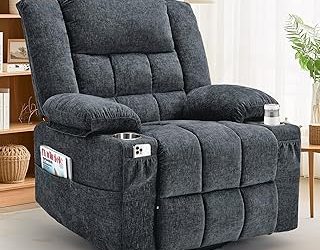
MCombo Power Lift Recliner 7040 with Heat and Massage
A sensible entry point for anyone who needs assisted standing without committing to a hospital-adjacent aesthetic, and the FSC-certified frame plus multiple size options mean you can match seat depth to leg length rather than guessing. The USB and Type-C ports matter more than they sound — a CPAP remote, phone, or reading light within arm’s reach keeps people from getting up at night.
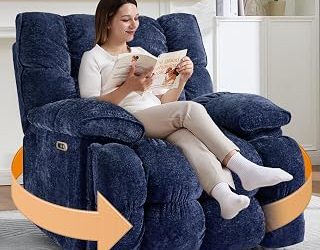
Watson & Whitely Oversized Genuine Leather Power Recliner, Navy
My pick for big-and-tall sleepers: the extra-wide seat lets the shoulders settle rather than being braced by the arms, which is often what wakes larger users repeatedly. The wall-hugger mechanism and power headrest together make it unusually apartment-friendly for its size.
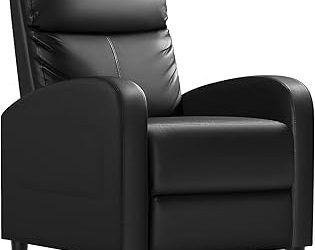
Watson & Whitely Lay Flat Power Recliner, Saddle
The most sleep-capable chair in this group, thanks to a genuine lay-flat range paired with a power headrest you can fine-tune once you’re already horizontal. Genuine leather also breathes better than faux over a long night, which reduces the clammy overheating that fragments sleep.
Signature Design by Ashley Boyington Zero Gravity Recliner
Zero-gravity positioning raises the knees above the heart, which many people find eases lower-back load and leg swelling during long rests. The air massage and heat are well-calibrated for wind-down; just note the 250-lb capacity before choosing it for a heavier user.
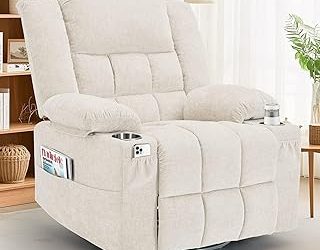
Dual Motor Infinite Position Lift Recliner with Wireless Charging
Infinite positioning is the real story here — back and footrest move independently, so you can build a reflux-friendly incline with the legs still supported. Arm storage, a lumbar pillow, and wireless charging make it the most self-contained option for someone who rests in the chair most of the night.
Frequently Asked Questions
Is sleeping in a recliner bad for you?
Not inherently. Many people with reflux, sleep apnea, sinus congestion, or post-surgical restrictions rest better at an incline. The risks are prolonged immobility and poor neck support, so prioritize an adjustable headrest and get up to move regularly.
What incline should I use for acid reflux?
Roughly 30 to 45 degrees at the torso is the range most people find effective, with the footrest slightly raised so you don’t slide down. Infinite-position chairs make this easy to dial in and repeat.
Do I need a lift chair or a power recliner?
Choose a lift chair if standing up unassisted is difficult or unsafe. If mobility is fine and you simply want effortless positioning, a standard power recliner gives you more style options for less money.
How much space do I need behind the chair?
Wall-hugger models typically need three to six inches; conventional recliners often need a foot or more. Measure before ordering, since oversized frames are difficult to return.
Final Thoughts
If genuine overnight comfort is the priority, the Watson & Whitely Lay Flat Power Recliner is the one I’d point most people toward, with the oversized Navy model taking its place for broader frames. For anyone who needs help getting to their feet, the dual-motor infinite-position lift recliner delivers the same positioning flexibility with the added safety of assisted standing.