Key takeaways
- Backing chemistry: Look for pads explicitly labeled LVP- or vinyl-safe. Natural rubber and specialty polymer grips are generally inert against modern wear layers, while unlabeled synthetic rubber, adhesive-tack, and PVC-based films are the usual suspects behind discoloration and residue.
- Thickness versus door clearance: A 1/8″ low-profile pad slips under doors and transitions without binding; 1/4″ adds noticeable softness; 1/2″ delivers genuine cushioning but needs headroom and works best on rugs that aren’t in a doorway’s swing path.
- Grip strategy: Heavy rugs mainly need friction against the floor, which a felt-and-rubber composite handles well. Lightweight, thin, or machine-washable rugs need a pad that also grips the rug’s own backing, or the rug will wander across a stationary pad.
- Acoustic performance: Vinyl plank sits on a hard subfloor and transmits impact sound readily. Denser felt is the best absorber here — a real consideration in bedrooms, nurseries, upstairs hallways, and apartments with neighbors below.
- Breathability and moisture: Solid waterproof films can trap humidity against the plank seams. Open-structure felt or perforated designs let the floor breathe, which matters most in kitchens, entryways, and anywhere spills are routine.
What's inside
Vinyl plank flooring has a reputation for being nearly indestructible, which is exactly why so many homeowners are caught off guard when they lift an area rug and find a hazy yellow shadow, a grid of pressure marks, or a faint chemical bloom stamped into the surface. The culprit is almost never the rug itself — it’s the pad underneath it. LVP wear layers are sensitive to certain plasticizers and adhesives, and a cheap all-rubber or PVC-backed pad can react with the finish over months of quiet contact. Add in the daily reality of a rug that creeps, curls, or slides underfoot, and you have a flooring problem and a safety problem in the same square footage.
As someone who spends most of my working life on sleep environments, I look at rug pads through a slightly different lens than most reviewers: what happens underfoot at 2 a.m. matters. A stable, cushioned rug beside the bed reduces the startle of a cold, slick step, muffles footfall so a partner or child doesn’t stir, and eliminates the sliding-rug stumble that ends a night’s rest in the emergency room. Below, I’ve assessed six of the most reliable LVP-safe pads available in 2026 — comparing backing chemistry, thickness, grip performance, and acoustic damping — so you can choose one that protects your floor and your nights.
As an Amazon Associate we earn from qualifying purchases.


How to Choose a Rug Pad For Vinyl Plank Flooring (2026)
- Backing chemistry: Look for pads explicitly labeled LVP- or vinyl-safe. Natural rubber and specialty polymer grips are generally inert against modern wear layers, while unlabeled synthetic rubber, adhesive-tack, and PVC-based films are the usual suspects behind discoloration and residue.
- Thickness versus door clearance: A 1/8″ low-profile pad slips under doors and transitions without binding; 1/4″ adds noticeable softness; 1/2″ delivers genuine cushioning but needs headroom and works best on rugs that aren’t in a doorway’s swing path.
- Grip strategy: Heavy rugs mainly need friction against the floor, which a felt-and-rubber composite handles well. Lightweight, thin, or machine-washable rugs need a pad that also grips the rug’s own backing, or the rug will wander across a stationary pad.
- Acoustic performance: Vinyl plank sits on a hard subfloor and transmits impact sound readily. Denser felt is the best absorber here — a real consideration in bedrooms, nurseries, upstairs hallways, and apartments with neighbors below.
- Breathability and moisture: Solid waterproof films can trap humidity against the plank seams. Open-structure felt or perforated designs let the floor breathe, which matters most in kitchens, entryways, and anywhere spills are routine.
The Best Rug Pad For Vinyl Plank Flooring (2026)s Reviewed
RUGPADUSA Vinyl Lock
This is the only pad here engineered specifically for LVP, pairing felt with an EVA grip layer that holds firmly without the plasticizer migration that stains vinyl wear layers. In the 2’x3′ size it’s an ideal bedside or bathroom-threshold solution — small footprint, real grip, no chemical risk to the floor.
RUGPADUSA Basics 1/2″ Felt
At half an inch of pure needled felt, this is the plushest option reviewed and by far the best sound absorber, which makes it my first recommendation for bedrooms and nurseries where footfall noise breaks sleep. It has no gripping layer, so reserve it for large, heavy rugs that hold their own position or pair it with furniture anchoring the corners.
Felt Rubber Dual Surface 1/8″ Pad
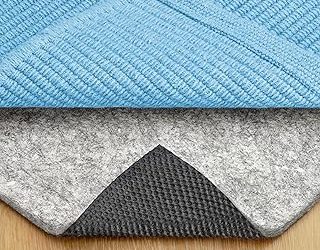
A well-executed budget composite: felt topside for a little give, rubber underside for friction, and a slim profile that clears doors and transition strips cleanly. The 3×5 size suits runners, entry mats, and small accent rugs where you want stability more than cushioning.
RUGPADUSA Dual Surface 1/8″
The dependable middle path — natural-rubber grip with a felt face, low enough to disappear under the rug but dense enough to stop creep on slick plank. Sizing is cut slightly under nominal rug dimensions, which is exactly right: you want the pad set back about an inch from the rug’s edge so the border can drape naturally instead of tenting.
Veken Cushioned Rug Pad Gripper
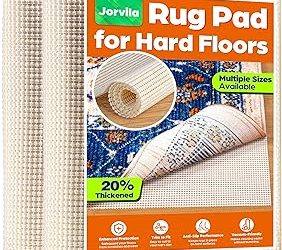
Veken’s silicone-strip pattern grips the rug’s underside as well as the floor, which solves the specific frustration of thin, flat-woven rugs migrating across a pad. At 1/4″ thick in an 8×10, it’s a strong living-room choice, and the silicone is safe against vinyl finishes.
Frequently Asked Questions
Will a rug pad discolor my vinyl plank floor?
A vinyl-rated pad won’t. Discoloration comes from plasticizers and adhesives in unrated synthetic rubber or PVC backings reacting with the wear layer over months of contact — which is why the labeling matters far more than the price.
How long until I need to check underneath?
Lift the rug and inspect at the six-month mark, then annually. Any staining shows up gradually, and catching it early means a cleanable haze rather than a permanent shadow.
Does a thicker pad really help with noise?
Yes, and measurably so. Dense felt at 1/4″ to 1/2″ absorbs impact energy that vinyl plank would otherwise transmit straight into the subfloor — the difference between a sleeping partner hearing your footsteps and not.
What size pad should I buy?
Order the size matching your rug, then trim so the pad sits roughly an inch inside each edge. Felt cuts easily with a utility knife or heavy shears.
Final Thoughts
For most homes, the RUGPADUSA Dual Surface 1/8″ is the safest all-round pick — inert against LVP, genuinely grippy, and thin enough to go anywhere. If your priority is a quieter, softer floor in a bedroom, step up to the RUGPADUSA Basics 1/2″ felt; and if you’re fighting a lightweight rug that refuses to stay put, the Veken gripper’s dual-sided silicone pattern is the one that will actually solve it.