Key takeaways
- Frame material over frame marketing: Kiln-dried solid wood or hardwood plywood with corner blocking is the baseline. Particleboard and softwood pine crack at the joints under repeated concentrated load — usually within 18 months, usually at the seat you always use.
- Foam density, not foam thickness: A six-inch cushion at 1.5 lb density will compress permanently; a four-inch cushion at 2.2 lb or higher with a high-resilience core will hold. Ask for density specs, and treat “ultra-plush” as a comfort claim rather than a durability one.
- Per-seat weight rating: Divide any advertised total capacity by the seat count to find the real number. Look for 350 lbs or more per module, and prefer brands that publish this openly rather than quoting a vague whole-sofa figure.
- Seat depth and height for spinal alignment: A 40-inch-deep seat is wonderful for lounging and terrible for standing up if it sits too low. Aim for 17–19 inches of seat height so your knees rest at or slightly below hip level, and use the ottoman to fill excess depth.
- Sleep-surface honesty: Pull-out mechanisms add steel and stress points. If you’ll sleep on it more than occasionally, favor a modular design you can reconfigure into a flat platform over a thin-mattress sleeper, or plan to add a 3-inch topper.
What's inside
Weight capacity is the specification furniture brands bury deepest, and it’s the one that matters most if you’re shopping at a heavier body weight. A sectional that lists “700 lbs total” across seven seats is telling you something very different from one built on a kiln-dried hardwood frame with reinforced corner blocks and sinuous spring suspension. Add in the fact that many oversized “cloud” sofas double as sleep surfaces — for naps, for guests, for the nights when the bedroom just isn’t happening — and the stakes rise. A seat that bottoms out under load doesn’t just feel cheap; it forces your spine into flexion, tightens the hip flexors, and turns a restorative nap into a stiff, unrefreshing hour.
I approach furniture the way I approach mattresses: as sleep architecture. Below, I’ve evaluated six oversized modular sectionals through that lens — frame integrity, foam density and rebound, seat depth relative to torso length, and how each performs as an actual sleep surface rather than a decorative one. You’ll find what to look for before you buy, honest notes on the strongest options, and answers to the questions readers send me most.
As an Amazon Associate we earn from qualifying purchases.


How to Choose a Sectional Sofa For Heavy Person (2026)
- Frame material over frame marketing: Kiln-dried solid wood or hardwood plywood with corner blocking is the baseline. Particleboard and softwood pine crack at the joints under repeated concentrated load — usually within 18 months, usually at the seat you always use.
- Foam density, not foam thickness: A six-inch cushion at 1.5 lb density will compress permanently; a four-inch cushion at 2.2 lb or higher with a high-resilience core will hold. Ask for density specs, and treat “ultra-plush” as a comfort claim rather than a durability one.
- Per-seat weight rating: Divide any advertised total capacity by the seat count to find the real number. Look for 350 lbs or more per module, and prefer brands that publish this openly rather than quoting a vague whole-sofa figure.
- Seat depth and height for spinal alignment: A 40-inch-deep seat is wonderful for lounging and terrible for standing up if it sits too low. Aim for 17–19 inches of seat height so your knees rest at or slightly below hip level, and use the ottoman to fill excess depth.
- Sleep-surface honesty: Pull-out mechanisms add steel and stress points. If you’ll sleep on it more than occasionally, favor a modular design you can reconfigure into a flat platform over a thin-mattress sleeper, or plan to add a 3-inch topper.
The Best Sectional Sofa For Heavy Person (2026)s Reviewed
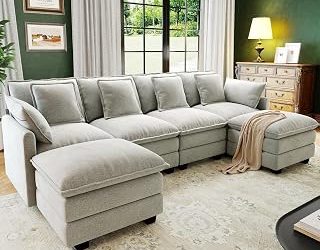
108″ L-Shaped Modular Sleeper with Hidden Storage
The corduroy upholstery here is more functional than it looks — the ribbed texture grips slightly, which keeps you from sliding into a slumped posture on a deep seat. Removable covers and under-seat storage make it a genuinely practical choice for a room doing double duty as a guest sleeping space.
108″ U-Shaped 7-Seat Modular Sleeper
The U configuration creates a long, unbroken lounging run on each arm, which is where this one earns its place: you can lie fully extended without your calves dangling over a gap. The pull-out bed is best treated as occasional-use, and I’d pair it with a mattress topper before hosting anyone for more than two nights.
EEASE Moose Oversized Modular Sofa
A solid wood frame plus washable covers is the combination I recommend most often to heavier buyers, because it addresses both structural longevity and the reality that a heavily used sofa gets dirty. The deep seat is generous enough that shorter users will want a cushion behind the lumbar curve.
Legend Vansen Oversized Reversible Sectional
The reversible L/U layout and included ottoman give you real control over effective seat depth, which is the single best lever for spinal comfort on an oversized piece. Plush polyester wears well, though I’d expect some cushion softening in the primary seat within the first year.
108″ Chenille Modular Sleeper with Reclining Backrest
Adjustable backrests are underrated for sleep quality — a slight incline reduces reflux and eases breathing, which matters if you nap after meals or deal with snoring. USB charging and integrated storage make it the most complete option here for a room where the sofa is also the bed.
Frequently Asked Questions
What weight capacity should I look for?
Target at least 350 lbs per seat module rather than relying on a total figure. If a brand won’t specify per-seat capacity, treat that as a data gap and weigh the frame material more heavily instead.
Are cloud-style sofas durable enough for heavier users?
It depends entirely on what’s under the fluff. Cloud styling with a hardwood frame and high-resilience foam holds up fine; cloud styling over engineered wood and low-density fill will develop permanent seat impressions quickly.
Can I sleep on one of these every night?
I’d advise against it long-term. Sofa cushions aren’t engineered for the sustained pressure distribution a mattress provides, and nightly use accelerates both cushion collapse and morning stiffness — use them for guests and naps, and invest properly in your mattress.
Do modular designs hold up as well as one-piece sectionals?
Well-made modular pieces can actually outlast fixed sectionals, because you can rotate modules to distribute wear and replace a single failed section. The weak point is the connector hardware, so check that clips or brackets are metal rather than plastic.
Final Thoughts
If I had to narrow it to three, the EEASE Moose earns the top spot on frame construction and washability alone, the 108″ Chenille Modular Sleeper is the smartest buy for anyone who genuinely sleeps on their sofa thanks to its reclining backrest, and the Legend Vansen offers the most configurability for dialing in a seat depth that actually supports your posture. Any of the three will serve better than a low-density plush sofa that looks inviting in photos and gives out by spring.