Key takeaways
- Recline geometry over recline count: A backrest with three or four positions is plenty if one of them lands between 20 and 40 degrees from horizontal. That window is where most bodies drift off without the neck strain that comes from a too-upright “lounge” setting. Sit in it, hold it, and notice whether your chin tucks toward your chest — if it does, the angle is wrong regardless of how many clicks it offers.
- Foam density, not foam thickness: Deep cushions feel luxurious in the showroom and go flat under a hip within a season. Look for high-resilience or layered foam and reviews that mention performance after several months. A 10-inch cushion of soft filler will support you worse than 6 inches of properly specified foam.
- Thermal behavior of the upholstery: Core body temperature has to drop slightly for sleep to begin, and dense corduroy over sealed foam insulates well — which is comfortable in January and stifling in July. Plan on a breathable throw as a barrier layer, and skip any piece wrapped in vinyl or coated polyester if you nap on it regularly.
- Length relative to your actual height: A 56-inch chaise is a generous chair and a short bed. If you’re over about 5’6″ and intend to sleep full-length rather than curled, look at the 64-inch models or the double-width configurations. Unsupported calves and dangling feet create pressure points that wake you before you reach deeper sleep.
- Frame construction and floor contact: A hardwood or engineered wood internal frame resists the racking that turns a two-year-old lounger into a creaking one. Check that legs are bolted rather than screwed into particleboard, and confirm the footprint won’t chew up the flooring you care about.
What's inside
Most people shopping for an oversized chaise lounge aren’t really shopping for a chair. They’re shopping for the place they’ll actually fall asleep — the spot where a movie ends at 11 p.m. and the lights don’t get turned off until 2 a.m. As someone who spends most of my working hours on sleep environments, I see the same pattern constantly: the bed is dialed in, and then the living room does something the bed can’t, because reclining at a shallow angle with your legs supported feels effortless in a way that lying flat sometimes doesn’t. That’s not a character flaw. It’s physiology.
The trouble is that most furniture in this category is designed for the photograph, not the body. Foam that reads “cloud” in a listing can bottom out in six weeks. Backrests lock at angles that force your neck forward. Fabric traps heat, and heat is the single most reliable way to fragment a nap. This guide looks at the current crop of oversized corduroy chaise lounges through a sleep-quality lens — support geometry, thermal behavior, convertibility, and whether the thing will still hold its shape next winter — and tells you which ones earn the floor space.
As an Amazon Associate we earn from qualifying purchases.




How to Choose a/an Oversized Chaise Lounge Chair (2026)
- Recline geometry over recline count: A backrest with three or four positions is plenty if one of them lands between 20 and 40 degrees from horizontal. That window is where most bodies drift off without the neck strain that comes from a too-upright “lounge” setting. Sit in it, hold it, and notice whether your chin tucks toward your chest — if it does, the angle is wrong regardless of how many clicks it offers.
- Foam density, not foam thickness: Deep cushions feel luxurious in the showroom and go flat under a hip within a season. Look for high-resilience or layered foam and reviews that mention performance after several months. A 10-inch cushion of soft filler will support you worse than 6 inches of properly specified foam.
- Thermal behavior of the upholstery: Core body temperature has to drop slightly for sleep to begin, and dense corduroy over sealed foam insulates well — which is comfortable in January and stifling in July. Plan on a breathable throw as a barrier layer, and skip any piece wrapped in vinyl or coated polyester if you nap on it regularly.
- Length relative to your actual height: A 56-inch chaise is a generous chair and a short bed. If you’re over about 5’6″ and intend to sleep full-length rather than curled, look at the 64-inch models or the double-width configurations. Unsupported calves and dangling feet create pressure points that wake you before you reach deeper sleep.
- Frame construction and floor contact: A hardwood or engineered wood internal frame resists the racking that turns a two-year-old lounger into a creaking one. Check that legs are bolted rather than screwed into particleboard, and confirm the footprint won’t chew up the flooring you care about.
The Best Oversized Chaise Lounge Chair (2026)s Reviewed
Amsleekey 64″ Oversized Chaise Lounge with Wood Frame
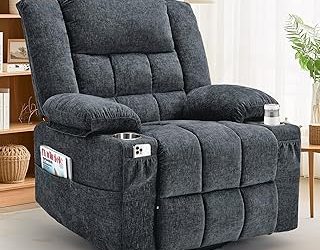
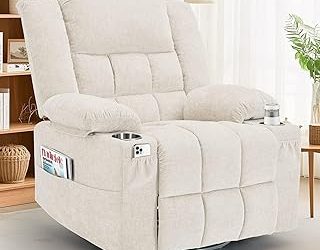
The wood frame and the extra eight inches of length make this the most credible sleep surface in the group — long enough to support the calves of an average-height adult, which matters more than any cushion spec. Cup holders and storage pockets are conveniences, but the real advantage is that you can keep water and a book within reach without sitting up and breaking the wind-down.
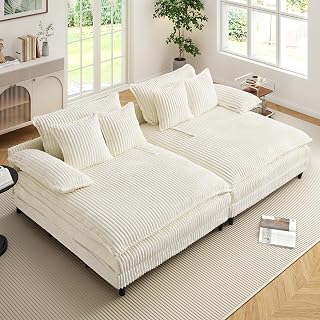
110″ Oversized Double Chaise Lounge Sofa with Adjustable Backrest
This is the choice for households where two people want to recline without negotiating, and the adjustable backrest lets each side settle into a genuinely different angle. Deep seating and modular width mean you should measure your room twice; it dominates a space rather than furnishing it.
VINGLI 56″ Oversized Chaise Lounge, Beige
The most consistently reported build quality at this size, with corduroy that has held its nap and cushions that resist the early flattening common to unbranded competitors. It’s a chair you nap in rather than a bed you sit on — ideal beside a reading lamp, less so as a nightly substitute for a mattress.
56″ Oversized Chaise Lounge, Dark Grey
Functionally identical to its beige sibling, with the practical advantage that darker corduroy hides the oils and dust that accumulate wherever heads rest repeatedly. A sensible pick for a bedroom corner or a shared media room.
56″ Oversized Chaise Lounge, Black
The lowest-visual-noise option, which is worth more than it sounds in a bedroom where you’re trying to keep the space calm and dim. Same platform, same throw pillows, same caveat about length if you’re tall.
Frequently Asked Questions
Can I sleep on an oversized chaise lounge every night?
Occasionally, yes; habitually, I’d advise against it. These cushions aren’t engineered for eight hours of static pressure the way a mattress is, and nightly use tends to produce morning stiffness in the lower back and hips. Treat it as an excellent nap and overflow-guest surface.
Does corduroy get too warm for sleeping?
It can. Corduroy is a warm, dense weave, and combined with foam it holds heat close to the body. A cotton or linen throw between you and the upholstery solves most of the problem and washes easily.
Is 56 inches long enough to lie down?
For adults up to roughly 5’6″, comfortably. Taller sleepers should either accept a curled position or step up to a 64-inch model, since unsupported legs create the kind of low-grade discomfort that quietly interrupts sleep.
How do I keep the cushions from flattening?
Rotate and flip anything removable every few weeks, vary where you sit, and don’t leave heavy objects parked on one section. Foam recovers if you give it the chance; it won’t if you compress the same six inches nightly for a year.
Final Thoughts
If sleep quality is the deciding factor, the Amsleekey 64″ with its wood frame and added length is the strongest all-around choice, and the VINGLI 56″ in beige is the better buy for smaller rooms where build quality matters more than sprawl. For couples or anyone furnishing a dedicated media room, the 110″ Double Chaise is the only option here that genuinely accommodates two reclining adults — just measure the room before you commit.