Key takeaways
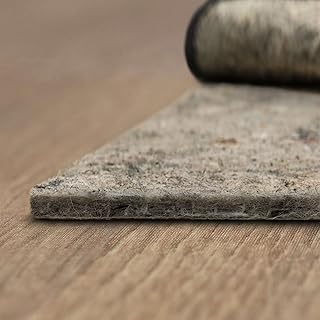
- Thickness and cushion: A quarter-inch felt core is the sweet spot for bedrooms — enough mass to absorb footfall noise and soften the first step of the morning, without lifting the rug high enough to catch a door sweep. Go thinner only under low-clearance furniture or in high-traffic hallways.
- Backing material: Natural rubber and silicone grip without the plasticizers found in cheap PVC-coated pads, which can degrade, off-gas, and leave a sticky residue on finished wood. If a pad smells strongly out of the box, air it out in a garage or spare room for several days before it goes near where you sleep.
- Floor compatibility: Confirm the pad is rated for your specific finish — polyurethane, oil-finished hardwood, luxury vinyl, and sealed tile all react differently. Manufacturer language about being “safe for all floors” is worth verifying against your flooring warranty.
- Full pad versus corner grippers: Grippers stop curling and creeping but do nothing for sound, insulation, or cushioning. If the rug is in a bedroom or nursery, choose a full-coverage pad; save the tape-style grippers for entryway runners and layered accent rugs.
- Sizing and trimming: Order the pad to match your rug’s nominal size, then trim it one to two inches smaller on each side so no edge peeks out. Good felt pads cut cleanly with a utility knife and a straightedge — no special tools required.
What's inside
Most people shopping for a rug pad are solving a visible problem: a rug that creeps toward the doorway, curls at the corners, or slides underfoot every time someone crosses the room. Those are real annoyances. But there’s a quieter set of consequences that rarely makes the product page — the ones that show up in your bedroom at 2 a.m. A rug sitting directly on a hard floor transmits impact noise, radiates cold, and offers no grip when you swing your legs out of bed half-awake. Anyone who has been jolted out of light sleep by a partner’s footsteps, or who has learned to brace for a chilly floor at 6 a.m., has felt the difference a pad makes.
This guide approaches rug pads the way I’d approach any bedroom fixture that touches your rest: on the basis of acoustic damping, thermal buffering, off-gassing, and honest slip resistance. Below you’ll find our current picks for 2026 — from full-coverage felt-and-rubber pads for large bedroom rugs to reusable corner grippers for smaller runners — along with the criteria worth checking before you commit to a size and thickness.
As an Amazon Associate we earn from qualifying purchases.




How to Choose an Area Rug Pad (2026)
- Thickness and cushion: A quarter-inch felt core is the sweet spot for bedrooms — enough mass to absorb footfall noise and soften the first step of the morning, without lifting the rug high enough to catch a door sweep. Go thinner only under low-clearance furniture or in high-traffic hallways.
- Backing material: Natural rubber and silicone grip without the plasticizers found in cheap PVC-coated pads, which can degrade, off-gas, and leave a sticky residue on finished wood. If a pad smells strongly out of the box, air it out in a garage or spare room for several days before it goes near where you sleep.
- Floor compatibility: Confirm the pad is rated for your specific finish — polyurethane, oil-finished hardwood, luxury vinyl, and sealed tile all react differently. Manufacturer language about being “safe for all floors” is worth verifying against your flooring warranty.
- Full pad versus corner grippers: Grippers stop curling and creeping but do nothing for sound, insulation, or cushioning. If the rug is in a bedroom or nursery, choose a full-coverage pad; save the tape-style grippers for entryway runners and layered accent rugs.
- Sizing and trimming: Order the pad to match your rug’s nominal size, then trim it one to two inches smaller on each side so no edge peeks out. Good felt pads cut cleanly with a utility knife and a straightedge — no special tools required.
The Best Area Rug Pads (2026), Reviewed
RUGPADUSA Dual Surface Felt + Rubber (8’x10′)
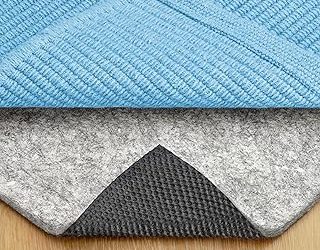
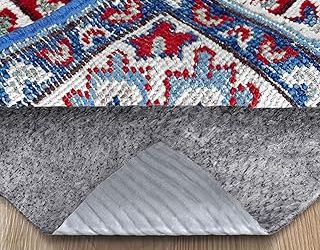
This is the pad I recommend when someone tells me their bedroom feels acoustically live — the dense felt layer does genuine work on impact noise, and the natural rubber underside holds a heavy rug without adhesives. It’s the most substantial option here and the one least likely to disappoint over a decade of use.
Mohawk Home Non Slip Rug Pad (8′ x 10′)
A quarter-inch felt-and-latex construction with an excellent balance of grip, cushion, and price, made in the USA. It holds its loft well under bed frames and dressers, which matters if you plan to leave the rug in place for years.
Veken Cushioned Rug Pad Gripper (8 x 10 Ft)
The silicone-dot backing grips reliably on sealed hardwood and vinyl while staying easy to lift and reposition — useful in rooms where you vacuum under the rug regularly. Slightly less acoustic mass than the two picks above, but very comfortable underfoot.
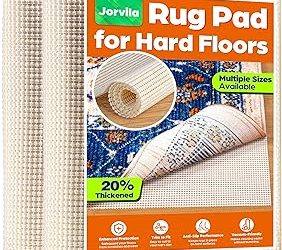
Jorvila Non-Slip Rug Pad Gripper (8×10)
A well-cushioned mid-tier pad that keeps rugs firmly in position and adds a noticeable layer of softness to a cold floor. A sensible choice for guest rooms and secondary bedrooms where you want the comfort without the premium spend.
Rabenda Rug Tape Gripper (12 Pcs)
The targeted fix for curling corners and wandering runners, and it’s reusable and washable rather than single-use. Just don’t expect it to do anything for noise or insulation — it solves a mechanical problem, not a comfort one.
Frequently Asked Questions
Does a rug pad actually make a bedroom quieter?
Yes, measurably so for impact sound — footsteps, dropped objects, a chair scraping. A dense felt pad absorbs energy that a bare rug simply passes into the subfloor, which is why upstairs bedrooms benefit most.
Should I worry about off-gassing near my bed?
It’s worth a moment’s thought. Natural rubber, latex, wool felt, and silicone are low-concern; adhesive-heavy PVC pads are the ones that produce lingering odors. Unroll any new pad in a ventilated space for a few days before installing it in a sleeping area.
What thickness is best under a bed?
A quarter inch. It cushions the step out of bed and dampens sound without making the rug unstable under bed legs or awkward to slide furniture across.
Will a rug pad damage my hardwood finish?
A quality felt-and-natural-rubber pad won’t. Damage almost always traces back to plasticized synthetic backings or adhesive tapes left in place for years on a soft or oil-based finish.
Final Thoughts
For a bedroom where rest is the priority, the RUGPADUSA Dual Surface pad is the strongest all-around performer, with the Mohawk Home felt-and-latex pad close behind at a friendlier price. If your only complaint is a corner that won’t lie flat, the reusable Rabenda rug tape grippers will solve that for a few dollars — just pair them with a proper pad if the rug is anywhere you walk barefoot at night.