Key takeaways
- Recline lock quality: This is the single most important component. A friction-bar or ratcheting lock that slips under load will jolt you awake — precisely the opposite of what you want. Look for chairs with dual-side locking hardware and a stated weight capacity comfortably above your own body weight, since capacity ratings correlate strongly with frame rigidity and lock durability.
- Seat width and shoulder clearance: Standard frames run roughly 25–26 inches across; oversized models reach 33 inches. If you sleep on your side or shift positions often, narrow frames force your arms inward and create pressure at the shoulders. Measure your favorite armchair’s seat width and match or exceed it.
- Fabric breathability versus padding: Textilene mesh sheds body heat well, which supports the core-temperature drop that initiates sleep. Thick padded cushions feel more luxurious but trap warmth. The best compromise is a mesh base with a thin removable cushion you can pull off on warm nights.
- Head and lumbar support: A sliding headrest pillow is worth insisting on. Without one, your cervical spine hyperextends in full recline — the classic cause of “I napped and woke up with a stiff neck.” Adjustability beats plushness here.
- Indoor footprint and floor safety: Reclining a zero gravity chair sweeps 55–65 inches of depth. Confirm your clearance, and check that the feet have intact rubber or plastic caps; bare steel tubing will mark hardwood and shred a rug’s pile within weeks.
What's inside
Most people shopping for a recliner are chasing comfort, but what they actually need is circulatory relief. If you spend your evenings fighting to get comfortable — shifting your legs, propping a pillow behind your lumbar spine, waking at 2 a.m. with a heavy, aching calf — the problem usually isn’t your cushion. It’s geometry. Sitting upright with your feet below your hips keeps blood pooling in the lower extremities and keeps your nervous system in a low-grade “ready” state. A zero gravity chair fixes that by raising your knees above heart level and distributing your body weight across a broad, evenly tensioned surface, which is why so many sleep clinicians quietly recommend them for pre-bed wind-down, restless legs, and daytime restorative naps.
Indoors, though, the buying calculus changes. You’re no longer choosing a chair for a deck — you’re putting a piece of engineered furniture into a bedroom or living room where footprint, fabric breathability, floor protection, and lock reliability all matter far more than weather resistance. This guide evaluates the strongest indoor-capable zero gravity chairs available in 2026, explains the specs that genuinely affect rest quality, and flags the trade-offs that product listings tend to bury.
As an Amazon Associate we earn from qualifying purchases.



How to Choose an Indoor Zero Gravity Chair (2026)
- Recline lock quality: This is the single most important component. A friction-bar or ratcheting lock that slips under load will jolt you awake — precisely the opposite of what you want. Look for chairs with dual-side locking hardware and a stated weight capacity comfortably above your own body weight, since capacity ratings correlate strongly with frame rigidity and lock durability.
- Seat width and shoulder clearance: Standard frames run roughly 25–26 inches across; oversized models reach 33 inches. If you sleep on your side or shift positions often, narrow frames force your arms inward and create pressure at the shoulders. Measure your favorite armchair’s seat width and match or exceed it.
- Fabric breathability versus padding: Textilene mesh sheds body heat well, which supports the core-temperature drop that initiates sleep. Thick padded cushions feel more luxurious but trap warmth. The best compromise is a mesh base with a thin removable cushion you can pull off on warm nights.
- Head and lumbar support: A sliding headrest pillow is worth insisting on. Without one, your cervical spine hyperextends in full recline — the classic cause of “I napped and woke up with a stiff neck.” Adjustability beats plushness here.
- Indoor footprint and floor safety: Reclining a zero gravity chair sweeps 55–65 inches of depth. Confirm your clearance, and check that the feet have intact rubber or plastic caps; bare steel tubing will mark hardwood and shred a rug’s pile within weeks.
The Best Indoor Zero Gravity Chairs (2026), Reviewed
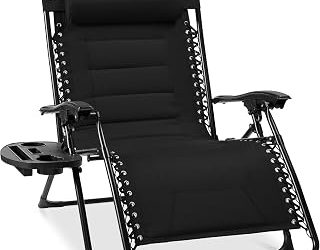
33-Inch XXL Oversized Zero Gravity Chair (500 lb)
The most genuinely restful option here for larger bodies and side-sleepers, thanks to a 33-inch seat span that lets your shoulders and arms settle rather than compress. The 500-pound rating translates into a stiff frame with almost no flex at the hip pivot, and the removable cushion plus adjustable headrest give you real control over heat and neck angle.
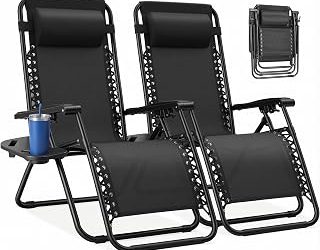
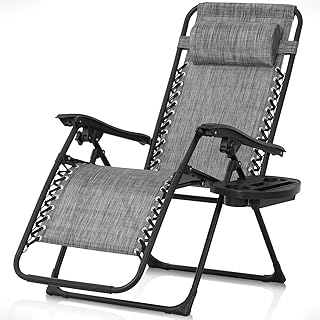
CAPHAUS Grey Zero Gravity Recliner
The best-looking choice for a living room you don’t want to make look like a patio, with a muted grey finish and a clean side tray that reads as furniture rather than camping gear. Recline action is smooth and the lock holds confidently, though the standard-width seat suits average frames better than broad ones.
VEVOR 26-Inch Zero Gravity Recliner
A strong value pick that pairs a 500-pound capacity with a full complement of extras — cushion, headrest, footrest, cupholder — in a compact 26-inch footprint that fits tight bedrooms and apartment corners. Build quality outpaces the price, but confirm your clearance before committing to the narrower seat.
Slsy Zero Gravity Lounge Chair (0–170°)
The standout for micro-adjustment: the 0–170° range lets you dial in the near-flat angle that suits your particular lower back instead of settling for three preset stops. The removable cushion and tray make it easy to convert between reading chair and nap station.
NEWBULIG Folding Patio Recliner
The most practical pick for anyone short on space, since it folds slim enough to slide behind a door or into a closet between uses. Padding is modest compared with the oversized models, so pair it with a lumbar pillow if you plan on long sessions.
Frequently Asked Questions
Can I actually sleep overnight in a zero gravity chair?
Many people do, particularly those managing reflux, sleep apnea, or post-surgical recovery, and the elevated-leg position is generally well tolerated. That said, these chairs lack the mattress depth for pressure redistribution over eight hours, so treat overnight use as a medically guided exception rather than a default — and check with your clinician if you’re using one to manage a diagnosed condition.
How high should my legs be?
Knees slightly above heart level is the target — roughly the neutral zero gravity stop on most frames. Going dramatically higher offers little added benefit and can feel like head pressure for some people.
Will an outdoor-rated chair be uncomfortable indoors?
Not inherently. Textilene mesh is used outdoors because it’s durable and breathable, and breathability is an asset for indoor rest. Just verify the feet won’t damage your flooring and add caps or felt pads if needed.
How long do these chairs last with daily use?
Expect three to seven years, with the fabric and the lock bar failing well before the frame does. Higher weight ratings, powder-coated steel, and double-stitched bungee attachment points are the specs most predictive of longevity.
Final Thoughts
If you want the most restorative indoor experience regardless of price, the 33-Inch XXL Oversized chair earns the recommendation on seat width and frame rigidity alone — the two variables that most reliably determine whether you drift off or keep fidgeting. For a chair that disappears into a well-furnished room, the CAPHAUS Grey Recliner is the sensible choice, while the VEVOR 26-Inch delivers close to flagship comfort in a footprint and price that suit smaller homes.