Key takeaways
- Backing chemistry: Look for natural rubber or a labeled finish-safe adhesive. Cheap PVC and plasticized vinyl can off-gas and, worse, bond with polyurethane floor finishes over time, leaving a cloudy film that won’t buff out.
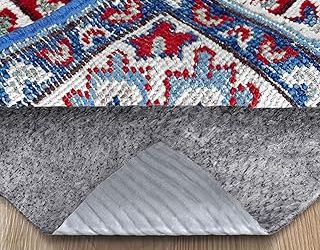
- Full pad vs. corner gripper: Full-coverage pads stop sliding across the whole surface and add cushion underfoot. Corner grippers solve curling edges and small-rug creep at a fraction of the cost and bulk — different problems, different tools.
- Thickness against your door swing: A 1/4″ felt-and-rubber pad feels wonderful barefoot but can raise a rug enough to catch a bedroom or closet door. Measure your clearance before committing to anything over 1/8″.
- Cut-to-size flexibility: Buy roughly an inch smaller than your rug on each side so the pad disappears under the edges. Felt composites trim cleanly with scissors; molded open-weave pads fray, so size up carefully.
- Reusability and washability: Grippers that rinse clean and re-tack are far more practical than single-use tape, especially if you vacuum aggressively or shift furniture seasonally.
What's inside
As someone who spends most days talking with people about how their bedrooms are built, I’ve learned that the floor gets almost no attention until it becomes a problem. A rug that creeps a few inches every week turns the first step out of bed into a small gamble, and the muffled thud of a shifting rug is exactly the kind of low-grade irritation that keeps a light sleeper alert instead of drifting. On hardwood, the stakes double: the wrong adhesive or the wrong backing can leave hazy residue, discoloration, or scuffs that outlast the rug itself.
This guide looks at rug pads and grippers through that lens — quiet footing, stable footing, and finish-safe materials. Below you’ll find the standouts for 2026, a short checklist for matching a pad to your floor and rug, honest notes on where each option earns its keep, and answers to the questions that come up most often once the rug is already unrolled.
As an Amazon Associate we earn from qualifying purchases.


How to Choose a Non Slip Rug Pad For Hardwood Floors (2026)
- Backing chemistry: Look for natural rubber or a labeled finish-safe adhesive. Cheap PVC and plasticized vinyl can off-gas and, worse, bond with polyurethane floor finishes over time, leaving a cloudy film that won’t buff out.
- Full pad vs. corner gripper: Full-coverage pads stop sliding across the whole surface and add cushion underfoot. Corner grippers solve curling edges and small-rug creep at a fraction of the cost and bulk — different problems, different tools.
- Thickness against your door swing: A 1/4″ felt-and-rubber pad feels wonderful barefoot but can raise a rug enough to catch a bedroom or closet door. Measure your clearance before committing to anything over 1/8″.
- Cut-to-size flexibility: Buy roughly an inch smaller than your rug on each side so the pad disappears under the edges. Felt composites trim cleanly with scissors; molded open-weave pads fray, so size up carefully.
- Reusability and washability: Grippers that rinse clean and re-tack are far more practical than single-use tape, especially if you vacuum aggressively or shift furniture seasonally.
The Best Non Slip Rug Pad For Hardwood Floors (2026)s Reviewed
RUGPADUSA Dual Surface Felt + Rubber, 8’x10′
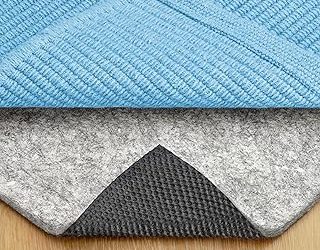
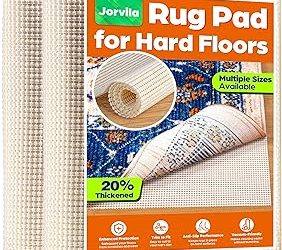
This is the pad I recommend when the rug lives in a bedroom and comfort matters as much as grip: the felt layer absorbs impact and deadens footstep noise, while the natural rubber underside holds position without chemically attacking a finished floor. At 1/4″ it’s substantial, so confirm door clearance, but the payoff is a rug that feels considerably more expensive than it is.
Songrey Non-Slip Rug Pad, 8×10 FT
An extra-thick full-coverage option for hard surfaces that leans toward cushioning and floor protection, making it a sensible choice under a thin flatweave that otherwise telegraphs every board seam. It stays put reliably on sealed hardwood and trims down without much fuss for odd room shapes.
GORILLA GRIP Strong Rug Pad Gripper, 2×3 FT
For runners, bath-adjacent mats, and the small bedside rug that gets kicked out of place every morning, this skid-resistant pad is the dependable workhorse — grippy on both tile and hardwood, low-profile enough to stay invisible. It’s the version of this product category that consistently behaves as advertised.
Veken Rug Gripper Pad, 2×3 Ft
A thicker take on the small-format gripper, which is what you want if the rug itself is plush and needs a bit of counter-pressure rather than a thin membrane. Anti-skid performance is strong on smooth floors, and the added loft slightly improves how the rug feels underfoot at the bedside.
Rabenda Rug Tape Gripper, 12 Pcs
The most targeted fix here: double-sided, reusable, washable corner stickers that flatten curled edges and stop small rugs from wandering, all without a full pad underneath. Applied to a clean, fully cured floor and removed gently, they’re a low-commitment way to eliminate the tripping hazard at a rug’s corners.
Frequently Asked Questions
Will a rug pad damage my hardwood finish?
A natural rubber or felt-and-rubber pad is generally safe on cured, sealed floors. The real culprits are plasticized PVC pads and aggressive permanent tapes, which can soften or cloud polyurethane over months of contact — and on floors finished within the last 30 days, skip pads entirely until the finish has fully hardened.
Do I need a full pad if I already use corner grippers?
Not necessarily. Grippers solve curling and minor creep; a full pad is what you want if you’re also after cushioning, sound dampening, or protection from grit trapped under the rug. In a bedroom, the noise and comfort benefits usually justify the full pad.
Which thickness is best next to a bed?
Around 1/4″ hits the sweet spot for a soft first step in the morning without creating a lip you can catch a toe on. If the rug tucks under the bed frame or sits near an inward-swinging door, drop to 1/8″.
How do I stop a rug pad from sliding itself?
Usually it’s dust. Vacuum the floor, wipe with a damp cloth, let it dry completely, and rinse a washable gripper to restore tack. If a pad still travels, it’s likely oversized — trim it an inch inside the rug’s perimeter so the rug’s own weight holds the edges.
Final Thoughts
For a bedroom rug you’ll step onto barefoot every morning, the RUGPADUSA Dual Surface pad is the most complete answer — quiet, cushioned, and genuinely finish-safe. Choose the Songrey 8×10 if you want maximum thickness under a thin rug, and keep a set of Rabenda corner grippers on hand for the small mats and stubborn curled edges that no full pad will fix.